
|
|
Part One: Fundamental Theory and Core Principles of Liquid Mixing
Liquid mixing is one of the most fundamental and common unit operations in laboratory research and industrial production, it includes Shaker, Mixer and Stirrer ( Discover HINOTEK full lineup of advanced Shaker, Mixer and Stirrer) . Its goal is to transform a heterogeneous physical system composed of one or more components into a more homogeneous system. Understanding the physical principles behind mixing is the cornerstone for correctly selecting and using mixing equipment, optimizing experimental protocols, and ensuring the reproducibility of results.
1.1 The Physics of Mixing: From Molecular Diffusion to Macroscopic Turbulence
From a physical mechanism perspective, the liquid mixing process is co-dominated by two distinct phenomena: Molecular Diffusion and Advection/Convection.
Molecular Diffusion is the fundamental driving force of mixing. It originates from the ceaseless Brownian motion of liquid molecules themselves, i.e., their random thermal movement. At the interface between two different liquids, molecules will spontaneously migrate from regions of high concentration to regions of low concentration until the entire system’s concentration is uniform. However, molecular diffusion is an extremely slow process, with its efficiency being inversely proportional to the square of the distance. On a macroscopic scale (such as in a beaker or flask), relying solely on diffusion to achieve uniform mixing could take hours or even days, which is unacceptable for the vast majority of laboratory applications.
Advection/Convection refers to the bulk movement of a liquid under the action of a macroscopic flow field. The core purpose of almost all laboratory mixing equipment, whether it involves stirring, shaking, or rocking, is to generate strong advection within the liquid. Advection rapidly increases the interfacial area between different components by thousands or even millions of times by stretching, folding, and shearing the fluid, forming thin liquid layers (lamellae). On this microscopic scale, the distance for molecular diffusion is drastically shortened, thereby exponentially increasing the rate of the entire mixing process.
To quantitatively describe the fluid behavior during the mixing process, the scientific community has introduced several key dimensionless numbers:
- Reynolds Number (Re): This parameter is defined as the ratio of inertial forces to viscous forces in a fluid (Re=ηρvL, where ρ is density, v is flow velocity, L is a characteristic length, and η is dynamic viscosity). The Reynolds number is the most important indicator for determining the state of a fluid.
- Low Reynolds Number (Re<1): Viscous forces are absolutely dominant, and the fluid exhibits a smooth, predictable state known as Laminar Flow. In this state, there is almost no exchange between different fluid layers, and mixing relies mainly on slow molecular diffusion. This is the norm in microfluidic chips.
- High Reynolds Number (Re>1): Inertial forces are much greater than viscous forces, and the fluid flow becomes unstable, generating a large number of randomly varying eddies of different sizes, forming Turbulent Flow. The eddy structures in turbulence can greatly promote mass exchange between different fluid regions and are key to efficient mixing on a macroscopic scale.
- Péclet Number (Pe): This parameter is defined as the ratio of the advective transport rate to the diffusive transport rate (Pe=DLv, where D is the diffusion coefficient). It directly measures the relative importance of the two mixing mechanisms.
- High Péclet Number (Pe>1): This means that advection is the dominant mechanism for mixing. The design goal of all macroscopic mixing equipment is to create conditions with a high Pe value.
- Low Péclet Number (Pe<1): This means that diffusion is the dominant mechanism for mixing. This is the core challenge that must be faced and solved when designing mixers in microfluidic systems.
The divergence of these two physical paradigms is rooted in the fundamental constraints of physical scale. In the macroscopic world, larger characteristic dimensions and flow velocities make it relatively easy to generate high-Reynolds-number turbulence, so the core technical strategy is to “create turbulence.” In the microscopic world, micrometer-scale channel dimensions give viscous forces an overwhelming advantage, forcing the fluid to be in a laminar flow state. Therefore, completely different strategies must be adopted, such as extremely increasing the diffusion area through geometric design or introducing external energy fields to create local micro-disturbances. This paradigm shift, determined by physical scale, is the fundamental starting point for understanding the diversity of laboratory mixing technologies.
1.2 Key Liquid Properties Determining Mixing Behavior
In addition to fluid dynamics parameters, the physicochemical properties of the liquid itself also profoundly affect the difficulty of mixing and the choice of equipment.
- Viscosity: Viscosity is a measure of a liquid’s resistance to shear deformation and is the primary factor to consider when selecting mixing equipment (we use viscometer to test this parameter)
- Newtonian Fluids: Their viscosity does not change with the shear rate, and their behavior is simple and predictable. Water, alcohol, and mineral oils are typical Newtonian fluids.
- Non-Newtonian Fluids: Their viscosity changes with the shear rate, making their mixing behavior more complex. For example, shear-thinning fluids (like most polymer solutions and emulsions) decrease in viscosity when stirred, while shear-thickening fluids (like some high-concentration starch slurries) do the opposite. Handling high-viscosity or non-Newtonian fluids usually requires equipment capable of providing high torque. (HINOTEK also have other Kinematic Viscometer)
- Density: When two immiscible or slowly dissolving liquids have a significant density difference, gravity will cause them to stratify. The mixing process needs to provide enough energy to overcome this gravitational stratification effect to maintain the suspension of particles or droplets.
- Miscibility: Miscibility describes the ability of two liquids to mix with each other, which is fundamentally based on molecular polarity, following the “like dissolves like” principle. Polar liquids (like water) and non-polar liquids (like oil) are inherently immiscible and will form a clear interface. To mix them into a stable emulsion, strong mechanical energy (such as high shear force) must be applied to break one phase into tiny droplets, and surfactants are usually needed to stabilize these droplets.
Part Two: A Comprehensive Classification and Technical Analysis of Laboratory Mixing Equipment
Laboratory mixing equipment is diverse, ranging from simple manual stirring rods to complex high-energy homogenizers, with different designs and application scenarios. To establish a systematic and profound understanding, HINOTEK report adopts a classification framework based on the physical mechanism of how energy is transferred to the liquid. This framework divides all equipment into three major categories: internal element driven, external container driven, and high-energy localized action.
2.1 Internal Element Driven: Stirrers
This category of equipment transfers mechanical energy directly to the fluid by immersing a moving element into the liquid. It is characterized by direct action and high energy transfer efficiency.
2.1.1 Magnetic Stirrers
(View HINOTEK Magnetic Stirrers)
 |
 |
- Working Principle: The main unit of a magnetic stirrer contains a rotating permanent magnet or electromagnet, which generates a rotating magnetic field. When a container with liquid (usually made of non-metallic material like glass or plastic) is placed on the unit’s platform, the magnetic stir bar inside the container (a small magnet coated with an inert material like PTFE) rotates in sync with the external magnetic field. The rotation of the stir bar creates a vortex in the liquid, driving the entire liquid to circulate and mix.
- Applications: Magnetic stirrers are one of the most common mixing devices in the laboratory, ideal for mixing low-viscosity liquids (typically below 1,000 cP), dissolving solids, catalyzing chemical reactions, and acid-base titrations. They typically handle volumes from a few milliliters to about 4 liters.6 Since the stir bar is inside a sealed container, it is also an ideal choice for mixing in closed systems, such as under sterile or anaerobic conditions.
- Features and Variants:
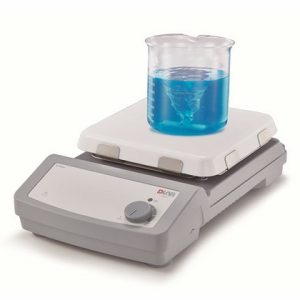
Hotplate Stirrers:(View HINOTEK Hotplate Stirrers)
This is the most common variant, integrating a magnetic stirring function with a temperature-controlled heating plate. This allows for simultaneous heating and stirring, widely used in scenarios requiring precise temperature control, such as chemical synthesis and media preparation.
 |
 |
 |
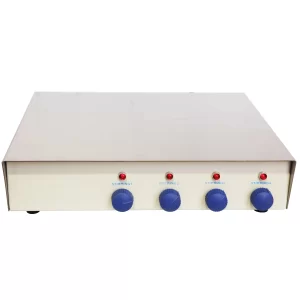
Multi-position Stirrers:
(View HINOTEK Multi-position Stirrers)
These stirrers integrate multiple independent stirring points under one platform, allowing for simultaneous and independent stirring of multiple samples, greatly increasing experimental throughput.
 |
 |
 |
- Stir Bar Morphology: The shape and size of the stir bar have a decisive impact on mixing efficiency and stability. Improper selection can lead to poor stirring, jumping, or even stalling. Common types of stir bars include:
Type A (Olive-shaped): Suitable for use in round-bottom containers.
Type B (Cylindrical with pivot ring): Suitable for use in flat-bottom containers.
Type C (Cylindrical straight-body): Suitable for use in low-concentration solutions within flat-bottom cylindrical containers that have concave or convex bottoms.
Gear-shaped, Cross-shaped, Triangular Type:
1: Suitable for mixing viscous liquids and for applications where splashing needs to be prevented.
2: For dispersing sediment at the bottom; the container must have a flat bottom.
3: Suitable for low-speed operation.Length Selection:
Generally, select the length of the stir bar to be 1/2 or 1/3 of the container’s outer diameter.Diameter Selection:
This is determined by the concentration of the solution being stirred. For higher concentrations, choose a larger diameter if possible.
 |
To understand the fundamental principles common to all types of Magnetic Mixer, be sure to read our main article: How does a magnetic stirrer work: The Ultimate Guide to Magnetic Stirrers: How They Work, Types, and Uses.
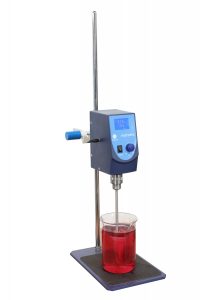
2.1.2 Overhead Stirrers (View HINOTEK Electronic Overhead Stirrer)
 |
 |
 |
- Working Principle: An overhead stirrer is driven by a high-power motor suspended on a stand. The motor is connected to a stirring rod via a chuck, and the end of the rod is fitted with a specifically shaped impeller or blade. The impeller is immersed directly into the liquid and applies strong mechanical force through rotation to achieve mixing. Unlike magnetic stirrers that rely on magnetic field coupling, overhead stirrers are direct mechanical drives, thus providing much higher torque.
- Applications: Overhead stirrers are the preferred solution for handling medium to high viscosity and large volume liquids. Their applications include mixing high-polymer solutions, resins, glues, pastes, as well as large-scale solution preparation and chemical reactions. They can handle viscosities up to hundreds of thousands of centipoise (cP) and volumes from several liters to over a hundred liters.
- Key Parameters: The core performance of an overhead stirrer is determined by both Torque and Speed (RPM).
- Torque: Refers to the magnitude of the rotational force the motor can output, which is key to overcoming the viscous resistance of the liquid. High-viscosity fluids require high-torque stirrers for effective driving.
- Speed: Determines the linear velocity at the tip of the impeller, which in turn affects the shear rate of the fluid. Generally, low-viscosity liquids require high speeds to generate sufficient turbulence and shear, while high-viscosity liquids require low speeds and high torque to achieve overall macroscopic flow, avoiding “spinning in place” or generating excessive heat at high speeds.
2.2 External Container Driven: Shakers, Rockers, and Rotators
This type of equipment does not insert any element into the liquid but achieves mixing by driving the entire sample container in a specific mechanical motion, utilizing the liquid’s own inertia and gravity. This method is generally gentler and can process multiple samples simultaneously.
2.2.1 Shakers
- Working Principle: The core of a shaker is a platform driven by a motor, on which sample containers (such as Erlenmeyer flasks, petri dishes, microplates) are fixed. The motor drives the platform in a preset trajectory, causing the liquid inside the containers to slosh and mix.
- Types and Motion Trajectories:
Orbital Shakers (View HINOTEK Orbital Shakers): The platform moves in a smooth, horizontal circular motion. This motion creates a gentle vortex in the liquid inside the container, allowing for thorough mixing while increasing the liquid-gas contact area, which is beneficial for gas exchange. Therefore, orbital shakers are ideal for applications requiring gentle mixing and good aeration, such as cell culture (bacteria, yeast, mammalian cells), hybridization membrane washing, and gel staining. For a complete overview of Orbital Shaker basics, return to our page: What Is An Orbital Shaker?
Reciprocating/Linear Shakers: (View HINOTEK Reciprocating/Linear Shakers)
The platform moves back and forth or side to side in a linear motion. This motion produces a wave-like “sloshing” effect, and the mixing action is usually more vigorous than that of orbital shakers, making it suitable for scenarios requiring stronger mixing dynamics, such as solvent extraction and chemical reactions.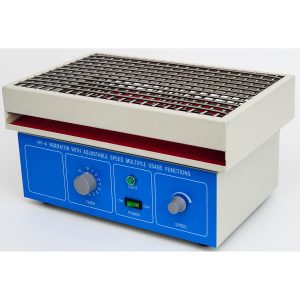
Integrated Functions: To meet the demanding requirements of biological research, many modern shakers integrate environmental control functions, forming Incubator Shakers. They not only provide precise shaking motion but also accurately control temperature, humidity, and even CO2 concentration, providing the optimal environment for the growth of microorganisms and cells.
2.2.2 Rockers
(View HINOTEK Rocker)
|
|

- Working Principle: The platform of a rocker performs a gentle tilting motion. The most common is the 2D rocker, whose motion trajectory is like a seesaw. The 3D rocker (or nutating rocker) adds a horizontal rotational component to the 2D tilt, creating a wave-like, more three-dimensional mixing pattern.
- Applications: Rockers provide the gentlest mixing action of all mechanical mixing equipment. They are very suitable for applications that are extremely sensitive to shear forces, such as washing membranes in Western Blots, staining and destaining gels, and other scenarios that require preventing sample foaming or cell damage.
2.2.3 Tube Rotators/Rotary Mixer/End-over-end Mixer
 |
- Working Principle: Test tubes rotate in a circular motion around a central point, while also undergoing an end-over-end inversion. This results in a 360-degree tumbling and inversion of the liquid for thorough mixing.
- Applications: Suitable for mixing biological samples that need to be kept in uniform suspension, prevent sedimentation, and are sensitive to shear forces.
2.2.4 Tube Roller/Roller Mixer (Classic)
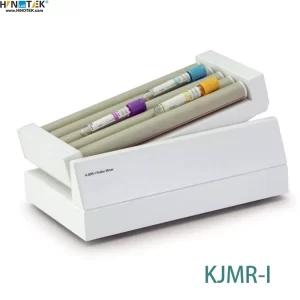 |
- Working Principle: Test tubes are placed directly on parallel rollers. The rollers rotate, causing the test tubes themselves to roll. This motion is a purer form of rolling, primarily aimed at preventing sample sedimentation.
- Applications: Provides a more uniform and gentle mixing intensity, particularly well-suited for blood samples as it simulates natural blood flow, preventing red blood cell damage.
2.2.5 Mixer/3D Shaker
 |
- Working Principle: Test tubes roll or rock around their own axis or a fixed pivot. The liquid mixing primarily occurs through a rolling motion along the test tube’s longitudinal axis, creating a “wave-like” movement.
- Applications: The mixing intensity might be slightly higher than a pure Tube Roller, offering more complex mixing patterns, such as generating a wave effect. This is suitable for applications requiring more thorough yet still gentle mixing, such as cell culture, gel staining/destaining, etc.
2.2.6 Vortex Mixers
 |
- Working Principle: The vortex mixer is one of the simplest and fastest mixing devices in the laboratory. Its top features a rubber cup mounted eccentrically on a motor-driven shaft. When the motor starts, the rubber cup undergoes high-speed, small-amplitude circular oscillations. The operator simply presses the bottom of a test tube or centrifuge tube against the rubber cup, and this high-frequency vibration is transmitted to the liquid inside, rapidly forming a strong vortex that completely mixes the sample in a few seconds.
- Applications: The vortex mixer is a standard piece of equipment in molecular biology and biochemistry labs. It is mainly used for the rapid resuspension of small-volume samples (usually in test tubes, centrifuge tubes, or small vials), such as resuspending DNA pellets, bacterial or cell pellets, or for mixing, such as mixing enzyme reaction systems.
2.2.7 Decoloring Shaker
(view HINOTEK Decoloring Shaker)
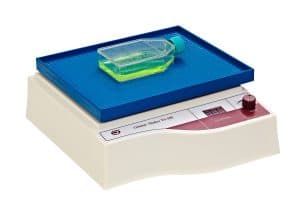 |
(Typically an Orbital Shaker or a Rocker used for gel destaining)
- Working Principle: The device utilizes a gentle, consistent motion to facilitate the diffusion of stain out of a gel matrix and into a surrounding buffer.
- Typical Applications: The primary application is destaining polyacrylamide or agarose gels after electrophoresis (e.g., removing excess Coomassie Blue from protein gels or ethidium bromide from DNA gels). It is also used for the staining process itself and for general, gentle washing of membranes or tissues.
2.2.8 Transference Shaker
(view HINOTEK Transference Shaker)
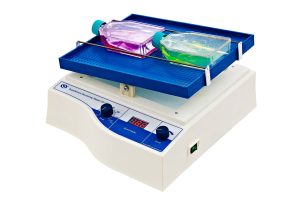 |
(Typically a Rocker used for membrane blotting procedures)
- Working Principle: This shaker provides extremely gentle and uniform agitation, most often through a rocking (see-saw) motion. The goal is to keep the transfer buffer flowing consistently around the “sandwich” of the gel and transfer membrane. This gentle flow ensures uniform wetting, aids in the removal of air bubbles that could block transfer, and facilitates the even migration of molecules (proteins, DNA, RNA) from the gel onto the membrane.
- Typical Applications: Primarily used during wet blot transfer procedures (Western, Southern, Northern blotting). It is also ideal for the subsequent steps of blotting protocols, such as membrane blocking, primary/secondary antibody incubations, and washing steps, which all require gentle, consistent agitation over long periods.
2.3 High-Energy Localized Action: Homogenizers
Homogenizers are a special class of mixing equipment whose purpose is not just to mix, but to disperse, emulsify, crush, or lyse samples by applying extremely high localized energy. They achieve this by creating extreme physical conditions (such as high shear, cavitation, impact) in a small space.
2.3.1 Homogenizers (Rotor-Stator)
(View HINOTEK Rotor-Stator Homogenizers)
 |
- Working Principle: The core component of this type of homogenizer is a high-speed rotating rotor and a tightly enclosing stationary sleeve with slits or holes, the stator. During operation, the rotor rotates at extremely high speeds (up to tens of thousands of RPM), generating strong centrifugal force that sucks the sample in from the bottom of the stator. As the sample is flung towards the stator slits, it is forced through the extremely narrow gap between the rotor and stator (usually only tens to hundreds of micrometers). In this tiny gap, the sample is simultaneously subjected to a combination of three intense effects: 1) extremely high mechanical shear, generated by the relative motion of the rotor and stator; 2) violent turbulence; and 3) cavitation, where bubbles form in low-pressure zones due to high-speed fluid flow and then collapse in high-pressure zones, creating shock waves. The combination of these three effects can rapidly break down tissues and disperse droplets.
- Applications: Rotor-stator homogenizers are powerful and versatile, with applications including homogenizing plant and animal tissues, breaking cells to extract intracellular substances, preparing fine emulsions and suspensions, and dispersing hard-to-dissolve powders. They have important applications in the pharmaceutical, cosmetic, food, and biotechnology industries.
2.3.2 Bead Mill Homogenizers
(View HINOTEK Bead Mill Homogenizers)

|
- Working Principle: Bead mill homogenizers use a completely different strategy. They place the sample to be processed together with a large number of tiny, high-density grinding beads (materials can be glass, ceramic, or stainless steel, with diameters ranging from tens of micrometers to several millimeters) in a sealed sample tube. The entire sample tube is then vigorously shaken by an external high-speed shaker (usually reciprocating or vortexing). Under high-speed vibration, countless grinding beads collide violently and randomly inside the tube. The sample is caught between these colliding beads and is repeatedly impacted, crushed, and sheared, thus being efficiently broken down.
- Applications: The bead milling method is particularly effective for processing extremely tough samples that are difficult to handle with traditional methods. This includes lysing microorganisms with tough cell walls (such as bacteria, yeast, fungi), spores, plant tissues (such as seeds, roots), and hard animal tissues (such as bones, cartilage). Since the sample processing is done in completely sealed, disposable sample tubes, bead milling naturally avoids cross-contamination and aerosol generation, and is very suitable for high-throughput applications, as an array (24, 48, or 96) of sample tubes can be processed simultaneously.
2.3.3 Ultrasonic Homogenizers / Sonicators
(View HINOTEK Ultrasonic Homogenizers)
|
|

- Working Principle: Ultrasonic homogenizers utilize the principle of Acoustic Cavitation. The core of the device is a probe or horn that converts electrical energy into high-frequency (usually 20-40 kHz) mechanical vibrations. When the probe is immersed in a liquid and vibrates, it propagates high-intensity sound waves through the liquid. The sound waves consist of alternating compression (high-pressure) and rarefaction (low-pressure) cycles. During the low-pressure cycle, the liquid is “pulled apart,” forming tiny vacuum bubbles. These bubbles cannot be sustained in the subsequent high-pressure cycle and undergo a violent collapse or implosion. At the moment of bubble implosion, the liquid in the immediate vicinity experiences extreme physical conditions: temperatures can momentarily reach about 5,000 K, pressures can reach about 2,000 atm, and high-speed micro-jets with velocities up to 1000 km/hr are generated. It is this immense energy from cavitation that achieves the disruption and dispersion of the sample.
- Applications: Ultrasonic homogenizers are versatile tools with applications including: cell lysis (especially for bacteria and suspension cells), random shearing of DNA/RNA (for next-generation sequencing library construction), dispersion of nanomaterials (such as carbon nanotubes, graphene), preparation of nanoemulsions, and degassing of liquids.
There is no “one-size-fits-all” solution when choosing a homogenization technology. Proponents of different technological routes often have conflicting claims; for example, bead milling is referred to as the “method of choice” in some literature , while supporters of the rotor-stator method emphasize its speed and efficiency advantages.31 Behind this apparent contradiction lies the fundamental trade-off of different technologies in various application scenarios.
- The advantages of rotor-stator homogenizers lie in their extremely high processing efficiency (for a single sample), powerful shear force, and good scalability from the lab to industrial production. However, their main disadvantages are lower throughput (usually only one sample can be processed at a time), time-consuming cleaning of the probe between samples with a risk of cross-contamination, and limited ability to process large or hard solid samples.
- The core advantages of bead mill homogenizers are their high-throughput capability and excellent performance in processing tough samples. Since samples are processed in sealed, disposable tubes, the risk of cross-contamination and aerosol leakage is completely avoided, which is crucial for handling pathogens or conducting high-throughput screening. Their limitations are that the processing volume is usually small (microliter to milliliter level), it is difficult to scale up linearly, and there may be trace contamination from the abrasion of the grinding beads.
- The uniqueness of ultrasonic homogenizers lies in their non-contact energy transfer (for some applications) and their ability to generate extremely high local energy, making them excellent for preparing nano-scale dispersions. But their main challenges are that the probe generates a large amount of heat, which is a huge threat to heat-sensitive samples, and the probe tip can corrode under intense cavitation, potentially leading to metal particle contamination of the sample.
Therefore, the final choice is a comprehensive decision-making process based on multiple dimensions such as throughput demand, sample type (soft tissue, hard tissue, liquid), sample volume, heat sensitivity, tolerance for contamination, and whether future scale-up production is needed.
Table One: Overview and Core Parameter Comparison of Major Laboratory Mixing Equipment
| Equipment Type | Working Principle | Typical Applications | Applicable Viscosity Range (cP) | Applicable Volume Range | Shear Force Generated | Key Advantages | Key Limitations |
| Magnetic Stirrer (Link)
|
A rotating magnetic field drives a stir bar within the container, creating a vorte | Low-viscosity liquid mixing, dissolving, titration, chemical reaction | < 1,000 | mL – ~4 L | Low | Simple operation, can be used in closed systems, low cost, can be heate | Limited to low-viscosity liquids, low torque, uneven mixing in large volumes |
| Overhead Stirrer (Link) | A motor directly drives the liquid via a stirring impeller, providing high torque | High-viscosity liquids, large volume solutions, pastes, polymer mixin | < 100,000+ | ~1 L – 100+ L | Adjustable (Low to High) | High torque, can handle high viscosity, good scalability | More complex setup, open system, higher cost |
| Orbital Shaker (Link) | The platform moves in a horizontal circular motion, creating a gentle vortex | Cell culture, gel staining, membrane washing, gentle mixin | Low to Medium | Microplates – several liter flasks | Low | Gentle mixing, good gas exchange, high throughput (multiple containers) | Limited mixing intensity, not suitable for high-viscosity liquids |
| Reciprocating/Linear Shakers (Link) | The platform moves back and forth or side to side in a linear motion. This motion produces a wave-like “sloshing” effect, and the mixing action is usually more vigorous than that of orbital shakers. | Solvent extraction, chemical reactions, and scenarios requiring stronger mixing dynamics. | Low to Medium (based on the more vigorous mixing compared to orbital shakers, it can handle slightly higher viscosity than low, but still not high viscosity). | Microplates – several liter flasks (similar to orbital shakers, suitable for various container sizes). | Medium (more vigorous than orbital/rockers, but less than homogenizers). | More vigorous mixing than orbital shakers, good for promoting dissolution and reactions. | Can cause foaming in sensitive samples, not ideal for very fragile cells. |
| Rockers (Link) | The platform of a rocker performs a gentle tilting motion. The most common is the 2D rocker, whose motion trajectory is like a seesaw. The 3D rocker (or nutating rocker) adds a horizontal rotational component to the 2D tilt, creating a wave-like, more three-dimensional mixing pattern. | Washing membranes in Western Blots, staining and destaining gels, and other scenarios that require preventing sample foaming or cell damage. They are very suitable for applications that are extremely sensitive to shear forces. | Low | Microplates – several liter flasks (similar to shakers, accommodating various lab containers). | Very Low (the gentlest mixing action). | Provides the gentlest mixing action of all mechanical mixing equipment, ideal for shear-sensitive samples, prevents foaming. | Limited mixing intensity, not suitable for applications requiring vigorous mixing. |
| Tube Rotators/Rotary Mixer/End-over-end Mixer (Link) | Test tubes rotate in a circular motion around a central point, while also undergoing an end-over-end inversion. This results in a 360-degree tumbling and inversion of the liquid for thorough mixing. | Suitable for mixing biological samples that need to be kept in uniform suspension, prevent sedimentation, and are sensitive to shear forces. | Low to Medium (gentle but thorough mixing). | mL – tens of mL (typically designed for standard test tubes/conical tubes). | Low | Gentle mixing, ideal for preventing cell damage and blood clotting, ensures uniform suspension. | Limited to specific tube sizes, lower throughput compared to shakers for plate-based applications. |
| Tube Roller/Roller Mixer (Classic) (Link) |
Test tubes are placed directly on parallel rollers. The rollers rotate, causing the test tubes themselves to roll. This motion is a purer form of rolling, primarily aimed at preventing sample sedimentation. | Particularly well-suited for blood samples as it simulates natural blood flow, preventing red blood cell damage. Provides a more uniform and gentle mixing intensity. | Low to Medium | mL – tens of mL (designed for standard test tubes). | Very Low | Extremely gentle mixing, prevents cell lysis (e.g., hemolysis in blood samples), silent operation | Primarily designed for rolling motion, may not be suitable for samples requiring significant agitation or vortexing |
| Mixer/3D Shaker (Link) |
Test tubes roll or rock around their own axis or a fixed pivot. The liquid mixing primarily occurs through a rolling motion along the test tube’s longitudinal axis, creating a “wave-like” movement. | Suitable for applications requiring more thorough yet still gentle mixing, such as cell culture, gel staining/destaining, etc. The mixing intensity might be slightly higher than a pure Tube Roller, offering more complex mixing patterns, such as generating a wave effect. | Low to Medium | mL – several liters (can accommodate various containers depending on design) | Low | More versatile than pure rollers with more complex mixing patterns, good for gentle yet thorough mixing | May not achieve the vigorous mixing of linear shakers or vortexers, limited by the types of vessels that can be secured |
| Vortex Mixer (Link) |
A high-speed oscillating rubber cup creates a strong vortex in a test tube | Rapid resuspension of cell/DNA pellets, small-volume sample mixin | Low | < 50 mL | High | Extremely fast, easy to use, small footprint | Limited to small volumes, manual operation, low throughput |
| Rotor-Stator Homogenizer (Link) |
The gap between a high-speed rotor and a stator generates high shear and cavitation | Tissue homogenization, cell disruption, emulsion preparation, dispersio | Low to High | mL – L | Very High | High efficiency, fast, can process tough tissues, scalable | Heat generation, tedious probe cleaning, risk of cross-contamination |
| Bead Mill Homogenizer (Link) |
High-speed vibration drives grinding beads to collide with and grind the sample | Lysis of microbes, spores, tough plant and animal tissue | Sample is a suspension | µL – mL | Very High | High throughput, processes tough samples, no cross-contamination | Small processing volume, difficult to scale up, potential bead wear contamination |
| Ultrasonic Homogenizer (Link) |
High-frequency sound waves create acoustic cavitation, and bubble implosion releases immense energy | Cell lysis, DNA shearing, nanoparticle dispersion, emulsification, degassin | Low to Medium | µL – L | Very High | Non-contact (some), high energy intensity, can prepare nanomaterials | Severe heat generation, probe corrosion may contaminate samples, noisy |
Part Three: Mixing Technologies in Microfluidic Systems
Microfluidics, also known as “Lab-on-a-Chip,” completes complex biological or chemical experiments by manipulating trace amounts of fluid in micrometer-scale channels. As mentioned in Part One, in microfluidic systems, the fluid is in a state of extremely low Reynolds number, exhibiting strict laminar flow, where turbulent mixing completely disappears. Therefore, promoting mixing has become one of the core challenges of microfluidic technology. The design goal of micromixers is to achieve rapid and efficient mixing under the constraints of laminar flow through clever physical design.4 They are mainly divided into two major categories: passive and active.
Passive mixers do not rely on any external energy fields and only enhance mixing by optimizing the geometry of the microchannels. Their core strategy is to manipulate laminar flow to maximize the contact area and time between fluids, or to induce Chaotic Advection—a phenomenon that makes fluid paths complex and unpredictable in a laminar flow state.
Active mixers, on the other hand, use micro-actuators integrated on the chip to apply active disturbances to the fluid using external energy fields, artificially creating a “micro-stirring” effect in the laminar flow.
Table Three: Comparison of Active and Passive Micromixing Technologies
| Feature | Passive Mixer | Active Mixer |
| Driving Principle | No external energy required; driven by the pressure from a fluid pum | Requires an external energy field (acoustic, electric, magnetic, thermal) to drive |
| Mixing Mechanism | Stretches and folds the fluid through geometric structures, induces chaotic advection, increases diffusion interfac | Utilizes external energy to generate micro-vortices, acoustic streaming, or disturbances in the fluid |
| Fabrication Complexity | High. Often requires complex 3D structures or multi-layer microfabrication processes | Low to Medium. Channel structure can be simple, but requires integration of functional components (e.g., electrodes) |
| Operational Complexity | Low. Usually only requires controlling the flow rate | High. Requires external controllers (power supplies, signal generators) and parameter optimization |
| Energy Consumption | Low. Limited to the energy consumed by pumping the fluid | High. Requires continuous external energy input |
| Typical Examples | T/Y-junctions, serpentine channels, herringbone groove mixers, SAR mixers | Acoustic mixers, electroosmotic flow mixers, magnetic bead stirring mixers |
| Advantages | Stable structure, no moving parts, easy to integrate, simple operation | High mixing efficiency, controllable mixing intensity, less dependent on channel geometry |
| Disadvantages | Mixing efficiency is sensitive to flow rate, complex channel structure, large chip area footprint | Complex system, high cost, may generate heat or affect samples (e.g., electrolysis) |
Part Four: A Selection Framework and Application Guide for Mixing Equipment
Faced with a dazzling array of laboratory mixing equipment, making a scientific and rational choice is key to ensuring experimental success and the effective use of resources. A successful selection process does not rely on intuition but is a systematic, multi-level decision-making process. This section aims to provide a complete selection framework, from core parameters to specific applications.
4.1 Core Selection Criteria: The Viscosity-Volume Matrix
Among all the factors to consider, the sample’s Viscosity and Volume are the two most fundamental and important physical parameters. They largely determine the basic type of mixing equipment required.6 We can construct a “Viscosity-Volume” matrix as the first step in equipment selection to quickly narrow down the choices.
Table Two: Viscosity-Volume-Equipment Selection Matrix
| Micro-volume (< 1 mL) | Small Volume (1 mL – 100 mL) | Medium Volume (100 mL – 5 L) | Large Volume (> 5 L) | |
| Low Viscosity (< 100 cP) | Vortex Mixer, Microplate Shaker | Vortex Mixer, Magnetic Stirrer, Orbital Shaker | Magnetic Stirrer, Overhead Stirrer (high-speed impeller), Orbital Shaker | Overhead Stirrer (high-speed impeller) |
| Medium Viscosity (100 – 5,000 cP) | Bead Mill Homogenizer, Small Overhead Stirrer | Magnetic Stirrer (heavy-duty), Overhead Stirrer | Overhead Stirrer | Overhead Stirrer |
| High Viscosity (5,000 – 50,000 cP) | Rotor-Stator Homogenizer (micro), Bead Mill Homogenizer | Overhead Stirrer, Rotor-Stator Homogenizer | Overhead Stirrer (anchor/helical ribbon impeller), Planetary Mixer | Overhead Stirrer (anchor/helical ribbon impeller), Industrial-grade Homogenizer |
| Very High Viscosity (> 50,000 cP) | N/A | Overhead Stirrer (heavy-duty), Planetary Mixer | Overhead Stirrer (anchor/helical ribbon impeller), Planetary Mixer | Industrial-grade high-viscosity mixing equipment |
How to use this matrix: First, find the corresponding cell in the matrix based on the typical volume and estimated viscosity of your experimental sample. The equipment types listed in that cell are your primary candidates. For example, to mix 50 mL of a water-like viscosity solution, you should consider a vortex mixer or a magnetic stirrer. To mix 1 L of a honey-like viscosity gel, you must choose an overhead stirrer.
4.2 Other Key Considerations: A Multi-Dimensional Decision Filter
After initially screening candidate equipment with the viscosity-volume matrix, a series of more refined “filters” must be applied to make the final decision.
- Mixing Intensity/Shear Force Requirement:
- Gentle Mixing: If your sample is sensitive to shear force, such as in suspension cell culture, immunoprecipitation of protein complexes, or preventing foaming in emulsions, you should choose equipment that provides low shear force. Rockers, tube rotators, and low-speed orbital shakers are ideal choices.
- Vigorous/High-Shear Mixing: If your goal is to break cells, prepare nano-scale emulsions, or disperse agglomerated solid particles, you need equipment that can provide high shear force. Vortex mixers, high-speed overhead stirrers, and all types of homogenizers (rotor-stator, bead mill, ultrasonic) fall into this category.
- Sample Sensitivity:
- Heat Sensitivity: Many mixing processes generate heat, especially high-energy homogenization. If the sample is temperature-sensitive (like many proteins and enzymes), you must choose equipment with low heat generation (e.g., bead mill homogenizers generally produce less heat and are easier to control than ultrasonic homogenizers), or choose equipment with a cooling system, such as a cooling water bath shaker or a homogenizing vessel with a cooling jacket.
- Chemical Compatibility: Ensure that all parts in contact with the sample (such as impellers, stir bars, containers, seals) are made of materials resistant to the sample’s corrosiveness. Common corrosion-resistant materials include PTFE (polytetrafluoroethylene), 316L stainless steel, borosilicate glass, and certain specialty plastics.
- Throughput and Scalability:
- Throughput: If you need to process a large number of samples simultaneously, you should prioritize equipment that supports high throughput, such as multi-position magnetic stirrers, shakers that can accommodate multiple microplates, or bead mill homogenizers that can process dozens of sample tubes at once.
- Scalability: If your experiment has the potential to be scaled up from lab scale to pilot or industrial production in the future, it is more advantageous to choose equipment types that have corresponding industrial-grade models. Overhead stirrers and rotor-stator homogenizers generally have good scalability, while vortex mixers or bead mill homogenizers are difficult to scale up linearly.
- Ease of Use and Safety:
- Ease of Cleaning: The cleaning and maintenance of the equipment directly affect experimental efficiency and sample purity. Choosing a design that is simple in structure and easy to disassemble and clean can minimize cross-contamination between batches.
- Safety: Consider whether the equipment has necessary safety features, such as overload and overheat protection when handling high-viscosity liquids, aerosol containment for handling hazardous materials (bead mills have an advantage here) , and anti-spill designs.
This entire selection process forms a multi-stage “decision funnel.” It first determines the required energy level by defining the ultimate purpose of the mixing (dissolving, suspending, emulsifying, lysing, etc.), which is the top-level decision. Next, it uses the viscosity-volume matrix as a second-level filter to quickly eliminate a large number of unsuitable devices. Finally, it uses a series of secondary but critical constraints such as shear force, sample sensitivity, and throughput as a third-level filter to finely screen the few candidate devices and lock in the most suitable model. This structured methodology transforms a complex selection problem into a systematic, scientific decision-making process.
4.3 Analysis of Typical Application Scenarios
The following specific experimental scenarios demonstrate how to apply the selection framework described above.
- Scenario One: Mammalian Cell Suspension Culture
- Analysis of Needs:
- Purpose: To promote cell growth, not destruction.
- Viscosity/Volume: Low viscosity, volume ranging from tens of milliliters to several liters.
- Shear Force: Must be extremely low to protect fragile cell membranes.
- Other: Requires good gas exchange (O2/CO2), strict sterile conditions, and precise control of temperature (usually 37°C) and CO2 concentration.
- Equipment Recommendation: Orbital Incubator Shaker. Its smooth orbital motion creates a gentle vortex that can keep cells suspended while minimizing shear damage. The increased liquid surface area is also beneficial for gas exchange. The integrated temperature and CO2 control perfectly meet the environmental requirements for cell culture.
- Scenario Two: Plasmid Extraction from E. coli (Alkaline Lysis Method)
- Analysis of Needs:
- Purpose: To completely and uniformly resuspend the centrifuged bacterial pellet in Buffer P1 before adding lysis buffer P2.
- Viscosity/Volume: Low viscosity, volume is typically a few hundred microliters.
- Shear Force: Requires rapid, vigorous mixing to break up the tight bacterial pellet.
- Other: The operation needs to be completed quickly.
- Equipment Recommendation: Vortex Mixer. Its strong vortex can completely break up and suspend the tight bacterial pellet in the buffer within seconds, making it the standard tool for this step.
- Scenario Three: Preparation of a Water-in-Oil (W/O) Cosmetic Emulsion
- Analysis of Needs:
- Purpose: To disperse the aqueous phase into tiny droplets and make them stably distributed in the high-viscosity oil phase to form a fine emulsion.
- Viscosity/Volume: The final product is high viscosity; volume can be a small lab batch.
- Shear Force: Requires very high shear force to overcome the huge interfacial tension and reduce the size of the water droplets to the micrometer or even sub-micrometer level.
- Other: Mixing needs to be uniform and without dead zones.
- Equipment Recommendation: Rotor-Stator Homogenizer. It combines high shear, turbulence, and cavitation effects to provide a powerful energy input, effectively reducing droplet size and forming a stable, uniform emulsion system.
- Scenario Four: Antibody and Bead Binding in Co-immunoprecipitation (Co-IP)
- Analysis of Needs:
- Purpose: To allow antibodies to fully bind with Protein A/G coated on magnetic beads, while keeping the beads uniformly suspended and preventing sedimentation.
- Viscosity/Volume: Low viscosity, volume is usually in a 1.5 mL centrifuge tube.
- Shear Force: Must be extremely gentle mixing to avoid non-specific binding and, more importantly, not to disrupt the fragile interactions between the antibody and the target protein, and between proteins.
- Other: Requires continuous mixing for several hours.
- Equipment Recommendation: Tube Rotator. Its slow, continuous end-over-end tumbling motion gently keeps the magnetic beads suspended, ensuring sufficient intermolecular interaction without introducing destructive shear forces, making it the gold standard for such applications.
Part Five: Frontiers in High-Throughput and Automated Mixing Systems
With the rapid development of fields such as drug discovery, genomics, and synthetic biology, the demand for experimental throughput has increased dramatically. This has driven the evolution of laboratory mixing technology from standalone manual or semi-automatic devices to integrated, automated high-throughput systems.
5.1 Mixing Strategies in High-Throughput Screening (HTS)
The goal of High-Throughput Screening (HTS) is to test the biological activity of thousands or even millions of compounds in a short period. These experiments are usually conducted in standardized microplates (96, 384, or 1536 wells). Achieving rapid, uniform, and cross-contamination-free mixing in the tiny wells of microplates (tens to hundreds of microliters) is a key challenge to ensure data quality.
- Microplate Shakers: These are the core mixing devices in HTS. They are specifically designed to securely clamp one or more microplates and perform high-speed (often up to 3000 RPM or more), small-amplitude (usually 1-3 mm) orbital shaking. This motion can generate a sufficiently strong vortex in each well to ensure that reagents are mixed quickly and uniformly after addition, without causing liquid to splash or cross-contaminate.18 Some advanced models also integrate heating or cooling functions.
- Mixing Functions of Liquid Handling Workstations: Many automated liquid handlers have their own mixing capabilities. The most common method is pipette mixing, where the pipette tip performs repeated, rapid aspiration and dispensing cycles in the well after aspirating or dispensing liquid. This method is very suitable for mixing while adding trace amounts of reagents (such as enzymes, substrates), ensuring the synchronous start of reactions. For larger volume mixing, some workstations also integrate on-deck shaking modules.
5.2 Integration with Automated Workstations and Robotics
Modern automated laboratories are no longer a simple collection of various independent instruments, but a highly integrated ecosystem driven by robotics and central control software. In this system, the role of mixing equipment has undergone a fundamental transformation.
- System Composition: A typical automated workstation (or Workcell) usually includes the following core modules:
- Liquid Handler: Responsible for precise sample and reagent dispensing.
- Robotic Arm: Such as PlateCrane™ or ACell™, responsible for transferring microplates between different modules.
- Functional Modules: Including plate readers, incubators, plate washers, sealers/de-sealers, and mixing modules (usually shakers).
- Storage Units: Such as a Plate Hotel or an automated storage system (AmbiStore), for storing plates to be processed or already processed.
- Central Control Software: Such as Hudson Robotics’ SoftLinx™ or HighRes Biosolutions’ Cellario™, which is the brain of the entire system, responsible for scheduling all hardware and executing preset experimental protocols.
- The Role of the Mixing Module: In this ecosystem, the shaker is no longer a standalone instrument that requires manual operation, but a functional node scheduled by software. For example, an automated ELISA workflow might be as follows: the software instructs the robotic arm to take a microplate from the storage unit and place it in the liquid handler to add antibodies; then, the robotic arm transfers the plate to the shaker for 1 hour of incubation and mixing; after that, it is transferred to the plate washer for washing, and finally sent to the plate reader for result detection. The entire process is fully automated, requires no manual intervention, and can run 24/7.
This paradigm shift has also placed new demands on the mixing equipment itself. In the era of automation, while the standalone performance of a mixing device (such as maximum speed, temperature control accuracy) is still important, its ecosystem compatibility has become equally or even more critical. This includes:
- Physical Integration: Whether the device’s size, shape, and microplate entry/exit bay design are convenient for robotic arm gripping and placement, and whether it can be efficiently integrated into a compact workstation layout.
- Software Integration: Whether the device provides an open Application Programming Interface (API) or drivers, allowing it to be easily recognized, controlled, and monitored by mainstream central control software. This is the software foundation for seamless automation.
- Process Compatibility: Whether the device supports special requirements in automated processes, such as collaboration with automatic de-lidding/lidding devices (Delidders).37 In addition, the stability and reliability of the device must reach an industrial level that supports long-term unattended operation.
Therefore, for modern laboratories dedicated to high-throughput research, the choice of equipment has shifted from a simple “tool mindset” to a “system mindset.” The value of a mixing device is increasingly determined by its ability to integrate into and serve the entire automation ecosystem.
5.3 Future Trends
Looking ahead, laboratory mixing technology will develop in a more intelligent, flexible, and miniaturized direction.
- Intelligence and Feedback Control: Future mixing equipment will no longer be simple open-loop actuators. By integrating online sensors (such as viscosity, turbidity, pH, or temperature sensors), the device can monitor the status of the mixing process in real time. This data will be fed back to the controller, which will use algorithms to automatically adjust the stirring speed, shaking frequency, or mixing time to reach a preset optimal mixing endpoint or maintain optimal reaction conditions. This will achieve true closed-loop feedback control, improving the precision and reproducibility of experiments.
- Modularity and Flexibility: The “Plug-and-Play” design concept will become more widespread.37 Future automated workstations will be more modular, allowing researchers to quickly and conveniently replace or reconfigure mixing modules and other functional modules in the workstation according to the specific needs of different projects, like building with blocks. This will greatly improve system flexibility and asset utilization.
- Deep Integration of Microfluidics and Automation: Currently, microfluidic chips and macroscopic robotic automation systems are still largely two separate fields. An important future trend is the deep integration of these two. High-throughput microfluidic chip arrays will be directly integrated into automated workstations, with robots handling sample loading and chip transfer. All mixing, reaction, separation, and detection steps will be completed inside the chip in a more efficient manner that saves samples and reagents, which will elevate the efficiency and integration of laboratory automation to a whole new level.
Conclusion
Liquid mixing is a cornerstone operation that runs through almost all fields of scientific research. Through systematic analysis, this report reveals the diversity, complexity, and underlying unified physical principles of laboratory liquid mixing technologies.
Starting from fundamental theory, we recognize that physical scale is the fundamental factor determining the mixing paradigm. In the macroscopic world, the core of the technology is to create turbulence through mechanical energy to overcome slow molecular diffusion. In the microscopic world, it is necessary to enhance mixing under the constraints of laminar flow through clever geometric design or the introduction of external energy fields.
Based on a classification framework of energy transfer methods, we have categorized the myriad of devices into three major types: internal element driven (stirrers), external container driven (shakers, rotators), and high-energy localized action (homogenizers). In-depth analysis shows that each type of equipment has its clear application boundaries and irreplaceable use cases. Especially for homogenization technology, there is no absolute “best” solution, but rather a multi-dimensional trade-off between performance, throughput, sample compatibility, and contamination risk.
To guide practice, this report proposes a systematic selection framework starting from a “viscosity-volume matrix” combined with a multi-dimensional “decision filter.” This framework transforms the complex equipment selection process into a logically clear and operable decision-making process, emphasizing the importance of scientific decision-making based on the application’s purpose and sample properties.
Finally, looking at the technological frontier, the report analyzes the new requirements that high-throughput automation systems place on mixing technology. In the era of automation, the evaluation criteria for mixing equipment are shifting from traditional standalone performance indicators to its compatibility and synergy within the entire automation ecosystem. This marks a profound transformation of laboratory equipment from “standalone tools” to “integrated system nodes.”
In summary, a comprehensive understanding of laboratory liquid mixing technology requires not only mastering the operating manuals of various devices but also insight into their underlying physical principles, technological trade-offs, and application logic. Only in this way can researchers make the wisest choices in their own research, thereby improving experimental efficiency, ensuring data quality, and ultimately promoting scientific progress.
This guide is maintained by HINOTEK’s core technical team, comprised of senior engineers and application scientists with over two decades of hands-on experience in fields such as microscopy, centrifugation, and spectrophotometry. We are committed to ensuring that every piece of information in this guide—from instrument principles and technical specifications to laboratory procurement advice—maintains the highest level of accuracy and timeliness.
This content is regularly reviewed and updated to reflect the latest industry standards and technological advancements. We value feedback from the global scientific community. Should you have any questions or suggestions, or wish to discuss any technical details, please do not hesitate to contact our expert team at [email protected].
Works cited
- Orbital Shaker Incubator, Manufacturer, Exporter, India, https://www.aditiassociate.in/orbital-shaker-incubator.html
- Shaker Orbit – Revolving in Space Around the Samples? – Eppendorf India, https://www.eppendorf.com/in-en/lab-academy/lab-solutions/others/shaker-orbit-revolving-in-space-around-the-samples
- Complete guide to a laboratory Incubator Shaker – iGene Labserve, https://www.igenels.com/complete-guide-to-a-laboratory-incubator-shaker/
- Movers & Shakers: what mixer for my application? – Laboratory Equipment, https://www.laboratory-equipment.com/blog/movers-shakers-what-mixer-for-my-application
- Lab Shakers Explained: The Ultimate Resource in 2025 – NE LabSystems, https://nelabsystems.com/guide-to-lab-shakers/
- The Best Lab Shakers: A Buyer’s Guide to Price and Features, https://www.labx.com/resources/the-best-lab-shakers-a-buyers-guide-to-price-and-features/4961
- Orbital Shaker Selection Guide – Fisher Scientific, https://www.fishersci.se/se/en/scientific-products/featured-categories/orbital-shakers/orbital-shaker-selection-guide.html
- Guide: How to Choose the Right Orbital Shaker – Esco Lifesciences, https://www.escolifesciences.com/resources/guide-how-to-choose-the-right-orbital-shaker
- Laboratory Orbital Shakers, https://www.labtron.com/orbital-shakers