
 |
1. Introduction: The Heartbeat of the Laboratory
In the complex ecosystem of the modern laboratory, where mass spectrometers and high-throughput sequencers often command the spotlight, the orbital shaker (Discover HINOTEK Orbital Shaker designed for your research.) remains the unassuming yet indispensable workhorse. It is the mechanical heartbeat of biological research, providing the kinetic energy necessary to sustain life in microbial cultures, facilitate chemical interactions, and ensure the homogeneity of solutions. From the bustling pharmaceutical R&D center to the academic microbiology bench, the orbital shaker’s role is foundational; without it, the suspension cultures that drive bioprocessing and genomic research would succumb to sedimentation and hypoxia.
An orbital shaker is technically defined as a laboratory instrument that imparts a uniform, circular motion to a platform in a horizontal plane. This motion is distinct from the reciprocating action of linear shakers or the seesaw motion of rockers. The orbital path creates a swirling vortex within the containment vessel—be it an Erlenmeyer flask, a petri dish, or a deep-well plate—that serves two primary critical functions: homogenization of the liquid phase and the maximization of gas transfer at the liquid-air interface.
The lineage of this technology is rooted in the mid-20th century, evolving alongside the nascent field of biotechnology. The development of the G76 water bath shaker by New Brunswick Scientific marked a pivotal moment in laboratory history, introducing the triple-eccentric drive mechanism—a robust engineering solution designed to maintain orbital stability under heavy loads and continuous operation. This innovation allowed scientists to move beyond static cultures, enabling the high-density fermentation protocols that underpin modern antibiotic production, recombinant protein expression, and plasmid DNA extraction.
Today, the orbital shaker has matured into a sophisticated category of instrumentation. Modern units are no longer simple analog motors with a timer; they are microprocessor-controlled precision devices featuring brushless DC motors, PID temperature regulation, and integrated safety systems compliant with global standards like UL 61010-1. They are available in open-air configurations for benchtop use, or as fully enclosed incubator-shakers that control temperature, CO2, and humidity, effectively acting as a bioreactor for shake flasks.
This comprehensive report serves as a definitive resource for laboratory managers, equipment importers, and research scientists. It moves beyond a superficial overview to provide a deep technical analysis of the physics of orbital motion, the engineering of drive mechanisms, specific biological application protocols, and the maintenance regimes required to ensure data integrity.
2. The Physics of Orbital Motion and Hydrodynamics
To truly understand the “why” behind an orbital shaker’s design, one must delve into the fluid dynamics it induces. The shaker is not merely mixing; it is engineering a specific hydrodynamic environment optimized for mass transfer.
2.1. Hydrodynamics in a Flask
When a flask containing liquid is placed on an orbital shaker, the circular motion of the platform transfers momentum to the fluid. Unlike a magnetic stirrer, which uses an impeller to create shear from the bottom up, an orbital shaker moves the entire vessel. This results in the bulk fluid climbing the walls of the flask due to centrifugal force, forming a falcated (sickle-shaped) or parabolic liquid surface.
The kinematics of this motion are governed by the Orbit Diameter (often referred to as “stroke” or “amplitude”) and the Rotational Speed (RPM). The centripetal acceleration (a_c) acting on the fluid is a function of the angular velocity (\omega) and the radius of the orbit (r):
This equation reveals a critical operational insight: the intensity of agitation increases with the square of the speed, but linearly with the radius. Therefore, a small increase in RPM significantly alters the hydrodynamic forces within the flask, far more than a comparable percentage increase in orbit size.
As the liquid rises up the vessel walls, it creates a thin film that is constantly renewed. This “sweeping” action is the primary mechanism for gas exchange. The bulk liquid in the center rotates, while the liquid at the periphery is exposed to the headspace. This prevents the formation of stagnant zones where cells could settle (flocculate) and succumb to nutrient deprivation or waste product toxicity.
2.2. Oxygen Transfer Rate (OTR)
For aerobic fermentation (e.g., E. coli, S. cerevisiae), the limiting factor for growth is almost always oxygen availability. Oxygen is poorly soluble in water/media, and as cell density increases, the demand (OUR – Oxygen Uptake Rate) often outstrips the supply (OTR – Oxygen Transfer Rate).
The orbital shaker is essentially an oxygenation machine. Research has established a direct linear relationship between the shaker’s orbit diameter and the OTR.
- The Mechanism: A larger orbit diameter forces the liquid higher up the flask walls, thereby increasing the surface area (a) available for oxygen diffusion.
- The Mathematical Model: The oxygen transfer is modeled by the equation: Where k_L is the mass transfer coefficient and a is the specific gas-liquid interfacial area. The orbital motion directly enhances ‘a’ by spreading the liquid and enhances ‘k_L’ by reducing the boundary layer thickness through turbulence.
- Empirical Evidence: Studies utilizing the sodium sulfite oxidation method (a standard chemical proxy for biological oxygen consumption) demonstrate that doubling the orbit diameter (e.g., from 25mm to 50mm) can effectively double the OTR, assuming the RPM is sufficient to maintain the falcated liquid shape.
This physics dictates equipment selection: for high-density bacterial cultures requiring maximum oxygen, a shaker with a large orbit (25mm or 50mm) running at high speeds is superior. Conversely, for microplates where the well diameter is small, a large orbit would simply circulate the liquid around the perimeter without mixing the center; thus, a small orbit (3mm) is physically required to generate a vortex.
2.3. Shear Stress Mechanics
While high OTR is desirable, it comes at a cost: shear stress. Shear stress (\tau) in a shake flask arises from the friction between fluid layers moving at different velocities and the collision of fluid with the flask walls (especially in baffled flasks).
- Bacteria and Yeast: These organisms possess robust cell walls (peptidoglycan in bacteria, chitin in yeast) and are generally insensitive to the shear forces generated by standard orbital shakers, even at 300+ RPM.
- Mammalian Cells: Cells like CHO (Chinese Hamster Ovary) or HEK (Human Embryonic Kidney) lack a cell wall and are enclosed only by a fragile lipid bilayer. High orbital speeds can tear these membranes (lysis) or trigger mechanical stress response pathways (apoptosis).
- The “Gentle” Compromise: For mammalian culture, the physics must be tuned. Operators typically reduce the RPM (to 100–130 RPM) to lower the shear. To compensate for the reduced OTR at low speeds, a larger orbit diameter (25mm or 50mm) is often employed to maximize surface area without inducing the violent turbulence associated with high RPMs.
3. Mechanical Architecture and Drive Systems
The longevity and reliability of an orbital shaker are almost entirely dependent on its drive mechanism. This is the engine room of the device, where rotary motion from the motor is converted into the orbital translation of the platform. For laboratory managers and importers, understanding the distinction between drive types is crucial for evaluating the “total cost of ownership.”
3.1. The Eccentric Drive Principle
The fundamental mechanism of an orbital shaker is the eccentric. In mechanical engineering, an eccentric is a circular disk (sheave) attached rigidly to a rotating axle, but with its center offset from the axle’s center. As the motor spins the axle, the offset disk drives a connecting rod or plate in a circular path. This simple mechanism is robust but introduces significant vibration. As the platform swings away from the center, it creates a centrifugal force that tries to pull the entire unit across the bench. Counteracting this force is the primary engineering challenge in shaker design.
3.2. Triple Eccentric vs. Single Eccentric Drives
The market is generally divided into two classes of drive mechanisms, which define the instrument’s load capacity and durability.
3.2.1. Single Eccentric Drive
Found in entry-level, economy, or light-duty shakers, the single eccentric drive utilizes one central bearing and offset shaft to move the platform.
- Mechanics: The platform is supported by a single point of rotation.
- Vulnerability: This design is highly susceptible to unbalanced loads. If a user places a heavy 2L flask on the corner of the platform, the center of gravity shifts away from the central bearing. This creates a cantilever effect, applying uneven torque to the drive shaft. Over time, this leads to bearing failure, noise, and the “walking” phenomenon.
- Application: These units are suitable for low-speed applications (staining blots) or light loads (microplates, small tubes), but are poor candidates for 24/7 bacterial fermentation.
3.2.2. Triple Eccentric Drive
The Triple Eccentric Drive is the industrial standard for high-performance shakers, pioneered by New Brunswick Scientific and adopted by top-tier manufacturers like Eppendorf and Thermo Fisher.
- Mechanics: This system employs three separate eccentric shafts. Typically, a central shaft is driven by the motor, while two peripheral shafts act as stabilizers. Crucially, these shafts are synchronized and integrated with a sophisticated counterweight system.
- The Counterweight Role: The counterweight is a heavy mass positioned on the drive pulley opposite to the eccentric offset. Its function is vectorial cancellation: when the platform and its biological load swing to the “left” (creating a force vector F_{load}), the counterweight swings to the “right” (creating a force vector F_{counter}).Ideally, F_{load} + F_{counter} = 0. This dynamic balancing minimizes vibration transferred to the chassis.
- Advantages:
- Uniformity: The three points of support ensure the platform remains perfectly planar, regardless of load distribution.
- Load Capacity: Can handle heavy loads (often 20kg or more) at high speeds without stalling or walking.
- Longevity: The load is distributed across three large bearings rather than concentrated on one, drastically reducing wear and heat generation.
Table 1: Drive Mechanism Comparison
| Feature | Single Eccentric Drive | Triple Eccentric Drive |
|---|---|---|
| Load Capacity | Low (Light duty) | High (Heavy duty) |
| Balance Sensitivity | High (Prone to vibration if unbalanced) | Low (Counterbalanced for stability) |
| Max Speed @ Full Load | Reduced (Risk of walking) | Maintained (Stable at high RPM) |
| Bearing Wear | High (Uneven torque) | Low (Distributed load) |
| Cost | Lower | Higher |
| Ideal Use Case | Destaining, Solubility testing | Fermentation, Culture, 24/7 Ops |
3.3. Motor Technologies
The prime mover has evolved from AC induction motors to Brushless DC (BLDC) motors, a shift that impacts maintenance and performance.
- Brushed Motors: Older or cheaper units use brushed motors. These rely on carbon brushes to conduct current to the rotor. Friction causes the brushes to wear down (requiring replacement) and generates significant heat and carbon dust.
- Brushless DC (BLDC) Motors: Modern high-quality shakers (e.g., Esco OrbiCult, Labzee) utilize BLDC motors.
- Zero Maintenance: No brushes to replace.
- Thermal Efficiency: They run cool. This is critical for refrigerated shakers, as motor heat adds a parasitic load that the compressor must fight against. In an incubator, motor heat can cause “hot spots” that ruin temperature uniformity.
- Torque Consistency: BLDC motors provide constant torque across the speed range, ensuring that the set RPM is maintained even as the viscosity of the culture changes or the load increases.
3.4. Chassis and Stabilization
To further mitigate “walking,” high-end shakers are built on heavy cast-iron bases. The mass of the base acts as a dampener (inertia) against the oscillating forces of the platform. Additionally, the feet of the shaker are critical components. They are typically made of high-friction rubber with suction cup designs to grip the laboratory bench. Over time, dust can reduce this grip, leading to walking, which is why cleaning the feet is a standard troubleshooting step.
4. Types and Classifications of Orbital Shakers
Orbital shakers are categorized not just by size, but by their environmental control capabilities. Selecting the wrong category is the most common purchasing error—such as buying an open-air shaker for a mammalian cell culture that requires CO2.
4.1. Ambient (Open-Air) Shakers
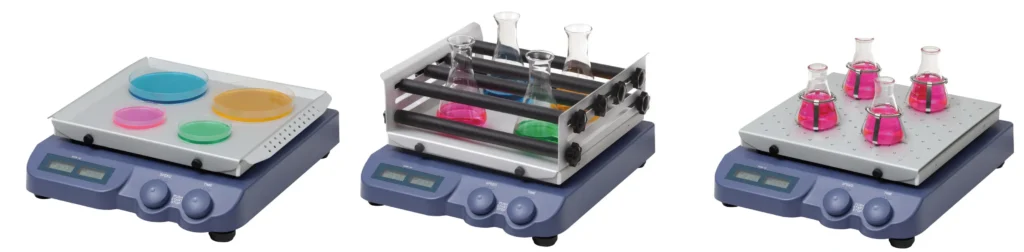
These are the simplest units, consisting of the drive base and platform. They possess no heating or cooling capacity and operate at the ambient room temperature.
- Use Cases: Staining/destaining electrophoresis gels, extraction procedures, and solubility testing where temperature is not a critical variable.
- Environment: They are often placed inside temperature-controlled rooms (“warm rooms” or “cold rooms”) to achieve incubation without buying an expensive incubator shaker. However, one must verify the shaker’s electronics are rated for the humidity of a cold room (often condensing).
4.2. Incubated Shakers
|
|
|
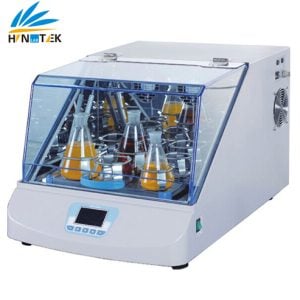

These units integrate the shaking mechanism into a thermally insulated chamber with a heating element and forced-air circulation fan.
- Temperature Control: Typically Ambient +5°C to 80°C. The “Ambient +5” limitation exists because they lack cooling; they cannot cool below the room temperature plus the heat generated by the motor and friction.
- Microbiology: The standard for growing E. coli at 37°C or thermophilic bacteria at higher temperatures.
- Features: Look for safety features like auto-shutoff of the fan when the lid opens (to prevent blowing hot air on the user) and high-temperature alarms.
4.3. Refrigerated Incubated Shakers
|
|
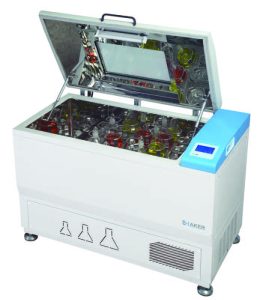

The most versatile and expensive category, these units include a cooling system—either a compressor (standard refrigeration cycle) or Peltier (thermoelectric) modules.
- Temperature Range: Typically 4°C to 80°C.
- Critical Applications:
- Protein Expression: Many recombinant proteins are toxic to bacteria or fold incorrectly at 37°C. Reducing the temperature to 16°C–20°C during induction slows protein synthesis, allowing for proper folding and preventing inclusion bodies. Only a refrigerated shaker can maintain 16°C in a 22°C room.
- Plasmid Purification: Performing cell lysis and resuspension at 4°C prevents DNA degradation by nucleases. * Insect Cell Culture: often requires 27°C, which is too close to ambient room temperature for a non-refrigerated unit to hold stably.
4.4. CO2 Resistant Shakers
A specialized subclass designed to sit inside a standard CO2 incubator.
- The Engineering Problem: Standard shakers fail inside CO2 incubators. The high humidity (95%+) and high CO2 (5%) combine to form carbonic acid, which corrodes electrical contacts, circuit boards, and motor windings. Furthermore, the heat from a standard motor would disrupt the incubator’s precise temperature regulation.
- The Solution: CO2 resistant shakers feature:
- Sealed Electronics: Potting compounds protect PCBs.
- Remote Control: The control panel is connected via a ribbon cable and sits outside the incubator, keeping sensitive electronics away from the harsh environment.
- Low-Heat Motors: Specially designed to emit negligible heat.
- Application: Suspension culture of mammalian cells (CHO, HEK293) for antibody production.
5. Comparative Analysis of Laboratory Motion
While the orbital shaker is versatile, it is not the universal solution. Understanding how its motion compares to other devices helps in selecting the right tool for the specific assay.
5.1. Orbital vs. Linear (Reciprocating) Shakers
- Linear Motion: The platform moves back and forth in a straight line (left-right).
- Hydrodynamics: This creates a “crashing” wave motion against the vessel walls. It provides aggressive impact forces but poor circulation.
- Comparison: Linear shaking is excellent for extraction in separatory funnels, where the goal is to vigorously mix two immiscible liquids. However, for cell culture, it is inferior to orbital shaking because it fails to wet the entire surface of the flask continuously and creates high shear zones at the impact points.
5.2. Orbital vs. Rocking Shakers
- Rocking Motion: The platform pivots on a central axis, tilting up and down like a seesaw.
- Hydrodynamics: This relies on gravity to gently flow liquid from one side of the tray to the other. There is no vortex.
- Comparison: Rockers are the standard for Western Blot incubation and staining fragile tissues. The gentle wave ensures the membrane stays wet with minimal reagent volume. An orbital shaker can be used for this (at low speeds), but a rocker is often preferred for its ability to handle low-volume trays without “dead zones” in the center.
5.3. Orbital vs. 3D (Nutating) Shakers
- 3D Motion: Combines orbital rotation with a rocking tilt, creating a spiraling, three-dimensional wave.
- Hydrodynamics: Very thorough mixing that prevents foam formation in tubes.
- Comparison: 3D shakers are ideal for blood tubes (vacutainers) and small centrifuge tubes where keeping cells in suspension without foaming is critical. However, they are not scalable; a 3D shaker cannot effectively agitate a 2L Erlenmeyer flask, whereas an orbital shaker scales from microplates to 6L flasks.
For a complete overview of Shakers, Mixers & Stirrers, return to our page: What is Shakers, Mixers, Stirrers?
Table 2: Motion Type Suitability Matrix
| Application | Orbital Shaker | Linear Shaker | Rocking Shaker | 3D Shaker |
|---|---|---|---|---|
| Bacterial Culture | Excellent (High OTR) | Poor (Low OTR) | Poor | Poor |
| Mammalian Culture | Good (Low shear) | Poor | Moderate | Poor |
| Solubility Testing | Excellent (Vortex) | Good | Poor | Moderate |
| Western Blotting | Good (Low RPM) | Poor | Excellent | Good |
| Extraction (Funnel) | Moderate | Excellent | Poor | Poor |
| Blood Tubes | Moderate | Moderate | Good | Excellent |
6. Applications and Protocols: The Science in Practice
The orbital shaker is not just a mixer; it is a process controller. Different biological and chemical systems require specific orbital protocols to function correctly.
6.1. Microbial Fermentation
The most common application for incubated orbital shakers is the growth of bacteria (e.g., E. coli) for plasmid DNA production or protein expression.
- The Growth Curve: Bacteria go through Lag, Log, and Stationary phases. To minimize the Lag phase and extend the Log phase, nutrients and oxygen must be continuously supplied. Sedimentation causes local starvation and hypoxia.
- Protocol: The standard protocol for E. coli in Luria Broth (LB) is 200–250 RPM at 37°C with an orbit of 19mm or 25mm.
- Optimization Insight: For high-yield plasmid preps, oxygen is the bottleneck. Using a baffled flask (a flask with indentations on the bottom) on an orbital shaker increases turbulence and OTR. Alternatively, increasing the speed to 300 RPM (if the shaker drive allows) can significantly boost biomass yield.
- Volume: A general rule is that the liquid volume should not exceed 20-25% of the flask capacity (e.g., 50mL media in a 250mL flask) to ensure adequate headspace for aeration.
6.2. Mammalian Cell Culture
Growing animal cells in suspension is critical for biopharma (e.g., monoclonal antibodies).
- Shear Sensitivity: Unlike bacteria, these cells have no cell wall. The turbulent wake created by baffles or high RPM can kill them.
- Protocol: Standard practice utilizes smooth-walled flasks shaken at 100–130 RPM.
- CO2 Requirement: Since these cultures use a bicarbonate buffer system, they must be maintained under 5% CO2 atmosphere to hold the pH at 7.4. This necessitates a CO2 Resistant Shaker placed inside the incubator.
6.3. Solubility and Dissolution Testing
In pharmaceutical QC and formulation, determining the solubility of a drug candidate is a regulatory step.
- Mechanism: The orbital shaker ensures that the solid drug particles are continuously washed with solvent, breaking the stagnant boundary layer that forms around the particle.
- Protocol: Excess solid is added to the solvent. The vials are shaken at a controlled temperature (often 37°C to mimic the human body) for 24 to 48 hours.
- Why Orbital? The continuous swirling motion is preferred over magnetic stirring because it avoids the grinding effect of the stir bar, which could artificially increase solubility by reducing particle size (milling).
6.4. Molecular Biology (Plasmid/DNA Extraction)
Orbital shakers are used in the lysis and resuspension steps of DNA purification (Maxi/Mega preps).
- Resuspension: After pelleting bacteria, the pellet must be completely resuspended in buffer (P1). Orbital shaking at 300–600 RPM (for deep well plates) or vigorous shaking of bottles ensures no clumps remain, which is vital for efficient lysis.
- Lysis: During the addition of lysis buffer (P2), vigorous mixing shears genomic DNA, contaminating the plasmid. Here, gentle orbital shaking (or inversion) is used.
- Elution: Shaking the elution buffer on the column membrane improves DNA recovery yield.
6.5. Staining and Destaining
For Coomassie Blue staining of protein gels or Silver staining:
- Protocol:
- Staining: 100 RPM for 1-2 hours. The agitation helps the dye penetrate the gel matrix.
- Destaining: 100–150 RPM. High agitation is crucial here to maintain a high concentration gradient of dye between the gel and the destaining solution, speeding up the removal of background noise.
- Western Blots: Lower speeds (60 RPM) are used to incubate membranes with antibodies. The orbital motion ensures the antibody solution covers the membrane corners that might dry out on a static bench.
7. Operational Best Practices
Maximizing the utility and lifespan of an orbital shaker involves more than just turning it on. It requires adherence to operational physics.
7.1. Loading and Balancing
The leading cause of shaker failure (often indicated by error codes like E04) is improper loading.
- Symmetry: Flasks must be distributed symmetrically around the center axis of the platform. If you have one full 2L flask, it should be placed in the center. If you have two, they should be opposite each other.
- Dummy Loads: If you have an odd number of heavy flasks (e.g., three 2L flasks), add a fourth flask filled with water to balance the load. This reduces strain on the eccentric bearings and prevents the unit from “walking”.
- Secure Clamping: A loose flask vibrates at a different frequency than the platform, creating harmonic interference that can trigger the shaker’s unbalance sensors and shut down the run.
7.2. Selecting Orbit Diameter (Stroke)
The orbit diameter is a fixed specification on many machines, but adjustable on premium models. Matching orbit to vessel size is critical.
- Small Orbit (3mm): Mandatory for 384-well and 96-well plates. A large orbit (25mm) moves the liquid around the well walls without mixing the center. A 3mm orbit creates a vigorous vortex inside the tiny well.
- Medium Orbit (19mm – 25mm): The industry standard for general purpose use. It balances aeration and shear for 125mL to 2L flasks.
- Large Orbit (50mm): Optimal for Large Flasks (2L+) and Shear-Sensitive Cells. A 50mm orbit moves a massive amount of liquid at low RPMs (e.g., 90 RPM), providing excellent OTR with minimal shear stress.
7.3. RPM Optimization
While every protocol is unique, these general guidelines provide a starting point for method development :
Table 3: RPM Guidelines by Application
| Organism / Application | Recommended Speed Range | Notes |
|---|---|---|
| Bacteria (E. coli) | 200 – 250 RPM | High oxygen demand; robust cells. |
| Yeast (S. cerevisiae) | 120 – 300 RPM | Variable depending on strain. |
| Insect Cells | 100 RPM | Very shear sensitive. |
| Algae | 110 RPM | Often require light (photosynthetic shakers). |
| Staining (Gels) | 50 – 100 RPM | Ensure gel does not break. |
| Blotting (Membranes) | 15 – 70 RPM | Goal is coverage, not aeration. |
8. Maintenance, Calibration, and Troubleshooting
To comply with laboratory safety standards (such as EN 61010-1) and ensure experimental reproducibility, orbital shakers require a regimen of care.
8.1. Preventive Maintenance
- Weekly: Wipe down the internal chamber and platform with a mild detergent or 70% ethanol. Salt buffers (like PBS) are corrosive; spills must be cleaned immediately to prevent rust on the drive mechanism.
- Monthly: Inspect the air intake filters (on incubated models). A clogged filter forces the compressor to overheat, leading to premature failure. Clean the rubber suction feet with alcohol to maintain grip and prevent walking.
- Annually: * Speed Calibration: Use a handheld digital tachometer to verify the display matches the actual RPM. A drift of >5% indicates motor or controller issues.
- Temperature Calibration: Place a calibrated reference thermometer in a flask of water/oil on the platform (not just in the air) to verify the chamber temperature.
8.2. Error Codes and Diagnostics
Modern digital shakers communicate health via error codes. While codes vary by manufacturer (Ohaus, Thermo, Eppendorf), common standards include:
- E03 (Drive/Belt Failure): Indicates the motor is spinning but the platform is not (broken belt), or the platform is physically blocked. Action: Check for obstructions. If clear, the drive belt likely needs replacement.
- E04 (Overload/Unbalance): The motor is drawing too much current. Action: The load is too heavy or unbalanced. Reduce the weight or redistribute the flasks symmetrically.
- E01/E02 (Temperature Errors): RTD sensor failure. The unit cannot read the temperature. Action: Requires sensor replacement by a technician.
8.3. Troubleshooting “Walking” and Noise
- Walking: If the shaker migrates across the bench, the cause is almost always unbalanced loading or dirty feet. Dust reduces the friction of the rubber feet. Cleaning them with alcohol restores the “stickiness”.
- Squeaking/Grinding: A rhythmic squeak often means a dry bearing or a loose screw in the platform tray. A grinding metal-on-metal sound is severe and usually points to a failed bearing in the eccentric drive, necessitating a major overhaul.
9. Selection Guide for Buyers and Importers
For B2B importers and facility managers, procuring the right shaker involves navigating specifications and trade regulations.
9.1. Capacity Planning
Do not buy based on current needs; buy for future capacity.
- Static vs. Dynamic Load: A shaker might be rated for “20kg.” This usually refers to static weight. However, spinning 20kg at 300 RPM generates massive dynamic forces. Only Triple Eccentric Drive models should be considered for loads approaching the maximum rating. Single eccentric models will fail rapidly under max load.
- Throughput: Consider “Stackable” incubator shakers if floor space is premium. These units allow you to triple the capacity in the same footprint.
9.2. Power and Compliance (Global Trade)
- Voltage: Ensure the unit matches the destination voltage.
- USA/Japan: 110–120V, 60Hz.
- Europe/China/Vietnam: 220–240V, 50Hz.
- Brazil: Uses both 127V and 220V depending on the region (Type N plugs).
- Plugs: Exporting to Thailand or Vietnam requires specific plug adapters (Types A, C, F). Ensuring the equipment ships with the correct cord prevents installation delays.
9.3. Certification Standards
For laboratory safety and insurance compliance, equipment should meet:
- UL 61010-1 / CSA C22.2: The standard for safety requirements for electrical equipment for measurement, control, and laboratory use.
- CE Mark: Mandatory for the European market.
- RoHS: Restriction of Hazardous Substances (lead-free electronics), required for EU and many Asian markets.
9.4. HS Codes for Import
Correct classification avoids customs delays.
- 8419.89.90: Generally used for “machinery, plant or laboratory equipment… for the treatment of materials by a process involving a change of temperature” (Incubated Shakers).
- 8479.82.00: “Mixing, kneading, crushing, grinding, screening, sifting, homogenizing, emulsifying or stirring machines” (Open Air/Ambient Shakers).
10. Conclusion
The orbital shaker is a sophisticated instrument where physics, biology, and engineering converge. It is not merely a box that shakes; it is a device that manages the delicate balance between oxygen transfer and shear stress, enabling the growth of life in the laboratory.
For the researcher, success depends on matching the protocol (RPM, Orbit) to the organism. For the buyer, value depends on matching the drive mechanism (Triple vs. Single Eccentric) to the workload. As laboratories move toward automation and higher throughput, the orbital shaker continues to evolve, offering greater precision, connectivity, and reliability. Whether simulating the human body’s conditions for a solubility test or churning out liters of bacterial culture for vaccine production, the orbital shaker remains the silent, spinning engine of scientific progress.
This guide is maintained by HINOTEK’s core technical team, comprised of senior engineers and application scientists with over two decades of hands-on experience in fields such as microscopy, centrifugation, and spectrophotometry. We are committed to ensuring that every piece of information in this guide—from instrument principles and technical specifications to laboratory procurement advice—maintains the highest level of accuracy and timeliness.
This content is regularly reviewed and updated to reflect the latest industry standards and technological advancements. We value feedback from the global scientific community. Should you have any questions or suggestions, or wish to discuss any technical details, please do not hesitate to contact our expert team at [email protected].
Workcite:
- Use, Installation, & Maintenance of Laboratory Shakers | Esco
- Lab Manager Magazine’s Independent Guide to Purchasing a Lab Shaker, Stirrer or Mixer
- Rotary / Orbital Shaker – japson.com
- Which Laboratory Shaker is Right for Your Research – Exploring the Types and Application
- Shaker Agitation Rate and Orbit Affect Growth of Cultured Bacteria – Laboratory Equipment
- Evolution of Water Baths and Chillers – Lab Manager
- Orbital Shakers | Esco Lifesciences
- Heavy Duty Orbital Shakers – LabRepCo
- Orbital Shaker Selection Guide – Fisher Scientific