
Guide Navigation
|
|
|
|
|




1.0 Introduction: Creating Uniformity in the Lab
A laboratory homogenizer (Browse HINOTEK advanced homogenizer) is a piece of equipment used to break down particles and distribute them evenly within a liquid. The particles can be from a wide range of sources, including biological tissues, cells, soil, or plant matter. The objective is to create a uniform and stable mixture, which can be an emulsion, suspension, or solution. This process, known as homogenization, is a fundamental step in sample preparation across many scientific disciplines. It ensures that any small portion taken from the mixture for analysis is an accurate representation of the entire sample.
1.2 The Core Function: From Heterogeneous to Homogeneous
The primary function of a homogenizer is to reduce the size of particles or droplets within a sample. A mixture containing components of different sizes or phases that are not evenly distributed is considered heterogeneous. For example, fresh milk is a heterogeneous mixture where large fat globules float in an aqueous solution, eventually separating to form a layer of cream. A homogenizer transforms this into a homogeneous mixture by applying intense energy to break down these large fat globules into much smaller ones that remain suspended evenly throughout the milk. In a biological laboratory, the same principle is used to disrupt cell walls to release their internal contents, such as DNA, RNA, and proteins, into a buffer solution for extraction and analysis.
1.3 Why Homogenization Matters in Science and Industry
Homogenization is a critical process in research, development, and quality control. In a research setting, it ensures the consistency and reproducibility of experimental results. By creating a uniform sample, it eliminates variability that could otherwise lead to inaccurate measurements or conclusions. In industrial applications, the benefits are tangible and directly impact product quality. Homogenization improves the stability, texture, bioavailability, and shelf-life of a vast range of products. The process is essential in fields as diverse as pharmaceuticals, biotechnology, food and beverage production, cosmetics, and environmental testing.
The reduction of particle size is not just about mixing; it is a physical transformation that fundamentally alters a substance’s properties. By breaking a particle into many smaller pieces, its total surface area increases significantly. This increased surface area is key to many of the benefits of homogenization. In pharmaceuticals, a larger surface area allows an active ingredient to dissolve more quickly in the body, increasing its bioavailability. In chemistry, it can accelerate reaction rates. For emulsions like creams or salad dressings, it provides more surface for emulsifying agents to act upon, creating a more stable final product.
2.0 The Science of Homogenization: How It Works
2.1 The Physical Forces Driving Particle Reduction
Homogenization is not a simple mixing process. It is achieved by subjecting a sample to one or more intense physical forces. The specific combination and intensity of these forces—mechanical shear, cavitation, and impact—depend on the type of homogenizer being used and are selected based on the sample’s properties and the desired outcome.
2.2 Mechanical Shear: The Tearing Force
Shear is a force that occurs when different layers of a fluid move at different velocities. Imagine a deck of cards; applying shear is like pushing the top card in one direction and the bottom card in the opposite, causing the deck to fan out. In a rotor-stator homogenizer, this effect is created in the very narrow gap between a rapidly spinning central shaft (the rotor) and a stationary outer casing (the stator). The fluid layer directly touching the rotor moves at high speed, while the layer touching the stator is motionless. This creates an extreme velocity gradient in the tiny space between them, generating powerful shearing forces that physically tear apart particles and droplets in the fluid.
2.3 Cavitation: The Power of Imploding Bubbles
Cavitation is the rapid formation and violent collapse of microscopic bubbles, or cavities, within a liquid. This phenomenon is triggered by intense and rapid pressure changes. In an ultrasonic homogenizer, high-frequency sound waves create cycles of high and low pressure, causing bubbles to form and implode thousands of times per second. In a high-pressure homogenizer, cavitation occurs as the fluid is forced from a high-pressure zone through a valve into a low-pressure zone. The collapse of these bubbles is not gentle; it releases tremendous energy in a microscopic area, creating powerful shockwaves and high-speed jets of liquid that act like tiny hammers, shattering any nearby particles.
2.4 Impact and Turbulence: High-Speed Collisions
Impact is a straightforward force resulting from high-speed collisions. Particles moving at high velocity can collide with each other or with a fixed surface, causing them to break apart. This is the primary mechanism in a bead mill homogenizer, where small, hard beads are agitated at high speed, repeatedly striking the sample material to grind it down. Turbulence, the chaotic and swirling flow of the fluid, also contributes to the process by creating additional stresses that help break down particles and ensure the entire mixture is processed uniformly.
The dominant physical force used by a homogenizer directly influences its capabilities. Shear-dominant methods like rotor-stator homogenizers are excellent for tearing and shredding, making them effective for processing soft tissues and creating emulsions with particle sizes typically in the 2 to 50 micrometer () range. In contrast, cavitation is a much higher-energy, explosive force. This makes cavitation-dominant methods, such as ultrasonic and high-pressure homogenizers, capable of achieving much smaller particle sizes, often below 1 micrometer and into the nanometer () range. This shattering force is necessary for applications like breaking open the tough cell walls of bacteria or creating nano-emulsions for advanced drug delivery systems. The physics of the method directly informs its ideal application.
3.0 Types of Laboratory Homogenizers
3.1 Overview of Common Technologies
Laboratories employ several distinct homogenization technologies. The most common are rotor-stator homogenizers, ultrasonic homogenizers (often called sonicators), bead mills, and high-pressure homogenizers. Simpler tools like the mortar and pestle are also used for specific applications. The choice of technology is not arbitrary; it is a critical decision based on the sample type, processing volume, desired final particle size, and required throughput.
3.2 In-Depth: Rotor-Stator Homogenizers
|
|

- Working Principle: A rotor-stator homogenizer consists of a motor that drives a shaft (the rotor) at very high speeds, with some models reaching up to 75,000 revolutions per minute (rpm). The rotor is positioned inside a stationary metal casing with slots or holes (the stator). The rapid rotation of the rotor creates a powerful suction effect, drawing the sample material up from the bottom of the vessel and into the narrow gap between the rotor and stator. Here, the sample is subjected to intense mechanical shear. It is then forcefully expelled through the slots in the stator, creating a continuous circulation pattern that rapidly homogenizes the entire sample volume.
- Key Components: The system is composed of two main parts: the motor drive unit, which can be handheld for flexibility or stand-mounted for stability, and the generator probe. The generator probe is the working end of the device and consists of the rotor, the stator, and the shaft connecting them. Probes are often interchangeable, allowing a single motor unit to handle a wide range of sample volumes. Different probe designs are also available, such as saw-tooth heads for fibrous materials or flat-bottom heads for gentler processing.
- Primary Applications: This technology is ideal for a wide range of liquid-based applications. It is commonly used to create emulsions and dispersions, thoroughly mix liquids of varying viscosities, and homogenize soft biological tissues such as liver, brain, or muscle. Its versatility makes it a staple in cosmetic, food, and pharmaceutical labs for product development and quality control.
- Advantages: Rotor-stator homogenizers are fast and highly efficient for processing single samples. Their greatest strength is scalability; by simply changing the generator probe, the same motor can process volumes from a few microliters to many liters. This makes them suitable for both laboratory research and pilot-scale production.
- Limitations: This technology is less suited for high-throughput applications where many samples need to be processed in parallel. The generator probe must be thoroughly cleaned between samples to prevent cross-contamination, which can be time-consuming. While effective for soft tissues, very hard or fibrous samples may need to be cut into smaller pieces before processing. The process also generates a moderate amount of heat due to friction, which may need to be managed for temperature-sensitive samples.
3.3 In-Depth: Ultrasonic Homogenizers (Sonicators)
|
|
- Working Principle: Also known as sonicators, these devices use high-frequency sound waves, typically above 20 kilohertz (), to process a sample. The system works by converting high-frequency electrical energy into mechanical energy in the form of vibrations. This conversion is done by piezoelectric crystals housed within a component called the transducer. The vibrations are then amplified and transmitted into the sample via a titanium probe, also called a horn or sonotrode. The probe’s tip vibrates rapidly, creating intense acoustic cavitation in the liquid—the formation and violent collapse of microscopic bubbles. This implosion generates powerful shockwaves that disrupt and homogenize the sample.
- Key Components: An ultrasonic homogenizer consists of three core parts. The generator is the power supply that produces the high-frequency electrical signal and allows the user to control parameters like power and time. The transducer (or converter) contains the piezoelectric crystals that convert this electrical signal into high-frequency mechanical vibrations. The probe (or horn) is a titanium rod that efficiently transmits this vibrational energy into the sample liquid.
- Primary Applications: Ultrasonic homogenizers excel at applications requiring very small particle sizes or intense disruptive force. They are widely used for cell lysis, especially for disrupting bacteria, yeast, and cultured cells to extract their contents. Other common applications include shearing DNA and RNA into smaller fragments, creating stable nano-emulsions and nano-suspensions, and dispersing nanoparticles in liquids.
- Advantages: The primary advantage of sonication is its ability to produce very small particles, often in the sub-micron or nanometer range, in a relatively short amount of time. For applications where cross-contamination is a major concern, indirect sonication using a cup horn allows samples to be processed in sealed tubes without any direct contact with the probe. They are also highly effective for processing very small sample volumes.
- Limitations: The high energy input of sonication generates a significant amount of heat, which can quickly damage temperature-sensitive samples like proteins or RNA if not properly controlled with cooling baths or pulsed operation. The process is also extremely loud, necessitating the use of hearing protection or a sound-abating enclosure. Over time, the tip of the titanium probe can erode due to cavitation, which may introduce trace amounts of titanium into the sample. This is a potential concern for certain high-purity applications. Finally, this method is not easily scaled up for large industrial volumes.
3.4 Other Common Homogenization Methods
|
|
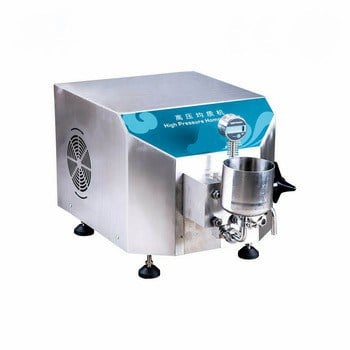
-
- High-Pressure Homogenizers (HPH): In this method, a powerful pump forces a liquid sample at extremely high pressures (up to 21,750 PSI or 1,500 bar) through a very narrow, specially designed valve. As the fluid exits the valve, the rapid drop in pressure and high velocity create a combination of intense shear, turbulence, impact, and cavitation, resulting in extremely effective particle size reduction. HPH is the standard method used in the dairy industry for milk processing and is also used for large-scale production of pharmaceutical emulsions and cell disruption.
|
|

-
- Bead Mill Homogenizers: These devices process samples in sealed tubes containing small grinding beads made of glass, ceramic, or steel. The tubes are placed in the instrument and then shaken or agitated vigorously. This causes the beads to collide with the sample material at high speed, pulverizing it through repeated impact and grinding forces. Bead mills are exceptionally effective for disrupting very tough samples like spores, yeast, fibrous plant tissue, or bone. Because they can process dozens of samples simultaneously in sealed tubes, they are the preferred method for high-throughput applications and help to minimize cross-contamination and aerosol formation.
|
|

- Mortar and Pestle: This is one of the oldest and most basic homogenization methods. The sample is manually ground between the hard surface of the mortar (the bowl) and the pestle (the grinder). It is often used for grinding solid tissues, sometimes after they have been frozen in liquid nitrogen (cryogenic grinding). While simple and inexpensive, this method is labor-intensive and can suffer from poor consistency and reproducibility compared to automated methods.
Table 3.1: Comparison of Laboratory Homogenization Technologies
The following table provides a summary of the key characteristics of the main homogenization technologies to help guide selection.
4.0 Applications Across Scientific and Industrial Fields
The utility of homogenization spans nearly every sector of scientific research and industrial production. The ultimate goal of the process, however, can be framed in one of two ways. In some applications, the goal is destructive: to completely break down a sample’s structure to extract and analyze its internal components. In others, the goal is constructive: to build a stable, uniform mixture that is itself the final product. This distinction often determines which technology is most appropriate for the task.
4.1 Biotechnology and Pharmaceuticals: Cell Disruption and Formulation
- Cell Lysis: In biotechnology and molecular biology, homogenization is a destructive process essential for cell lysis—the breaking open of cell membranes and walls to release intracellular materials. Researchers use homogenizers to extract proteins for western blotting, DNA and RNA for PCR and sequencing, and organelles for further study. Bead mills are highly effective for lysing tough-to-break microbial cells like yeast and bacteria, while ultrasonic homogenizers are frequently used for cultured animal cells.
- Drug Formulation: In the pharmaceutical industry, homogenization is a constructive process often referred to as “micronization”. Its purpose is to reduce the particle size of an Active Pharmaceutical Ingredient (API). By increasing the API’s surface area, its rate of dissolution in the body is enhanced, which can significantly improve the drug’s bioavailability and overall clinical effectiveness. High-pressure homogenizers are used to create highly stable emulsions, suspensions, liposomal drug delivery systems, and ointments with a uniform consistency.
- Vaccine Production: Homogenization is an important step in the manufacturing of certain vaccines. It is used to ensure the uniform dispersion of antigens and adjuvants, creating a stable and consistent formulation that guarantees accurate dosage and efficacy.
4.2 Food and Beverage: Enhancing Texture, Stability, and Shelf Life
In the food industry, homogenization is almost always a constructive process aimed at improving the final product’s physical characteristics.
- Dairy: The most classic application is the homogenization of milk. The process breaks down large fat globules into tiny ones that remain evenly suspended, preventing the formation of a cream line. This not only improves the appearance and consistency of milk but is also critical for manufacturing products like yogurt, ice cream, cream cheese, and sauces with a smooth, uniform texture.
- Beverages and Sauces: Homogenizers are used in the production of fruit juices and nectars to break down pulp and ensure that solid particles remain suspended, preventing sedimentation at the bottom of the container. For products like salad dressings, mayonnaise, ketchup, and other sauces, homogenization creates a stable emulsion, preventing the oil and water components from separating over time. This directly improves mouthfeel, flavor consistency, and product shelf life.
4.3 Cosmetics Industry: Creating Stable Formulations
Similar to the food industry, homogenization in cosmetics is a constructive process. It is used to produce the stable oil-in-water or water-in-oil emulsions that form the basis of countless products, including creams, lotions, ointments, and liquid foundations. By reducing droplet size to the micron or sub-micron level, homogenization ensures a smooth, luxurious texture and prevents the product from separating on the shelf, thereby improving its quality, stability, and consumer appeal.
4.4 Environmental Analysis: Preparing Samples for Testing
In environmental science, homogenization is a destructive process critical for sample preparation. Samples of soil, water, or air particulates are inherently heterogeneous. To obtain accurate and reliable analytical results, a small, representative subsample must be taken. Homogenization ensures this by breaking down soil clumps, dispersing sediment in water, or processing filter membranes to create a uniform mixture. This step is crucial for improving the precision of tests for pollutants, heavy metals, pesticides, and microbial contamination, providing more reliable data for environmental monitoring and protection efforts.
5.0 A Practical Guide to Selecting and Using a Homogenizer
Choosing the right homogenizer is not about finding the “best” device, but rather the one that represents the optimal compromise across multiple factors specific to a lab’s unique needs. A high-throughput genomics lab has different priorities than a food science lab developing a new sauce. The selection process should be a methodical evaluation of the sample, the workflow, and the laboratory environment.
5.1 How to Choose the Right Homogenizer: A Step-by-Step Guide
- Step 1: Analyze Your Sample.
- Type and Hardness: The physical nature of the sample is the primary determinant. Soft tissues like liver or brain are easily processed by rotor-stator homogenizers. Tough, fibrous materials like skin, muscle, or plant stems often require the high-impact force of a bead mill or a rotor-stator with a specialized saw-tooth probe. Cell cultures and bacteria are typically lysed with ultrasonic homogenizers or bead mills.
- Volume: Consider the range of sample volumes you will process. Ultrasonic homogenizers are excellent for small volumes (from microliters up to about 2 liters), while rotor-stator systems offer the widest range, capable of handling everything from sub-milliliter tubes to large beakers by simply changing the probe. High-pressure homogenizers are designed for larger, continuous-flow applications.
- Viscosity: The thickness of your sample matters. Rotor-stator and ultrasonic homogenizers work best with low- to medium-viscosity liquids. Highly viscous samples, with a consistency similar to honey (around 10,000 centipoise), can be difficult for these systems to process effectively. High-pressure homogenizers are better suited for these challenging materials.
- Step 2: Define Your Throughput and Contamination Needs.
- Throughput: How many samples do you need to process per day? For a few samples, a handheld rotor-stator or a single-probe sonicator is efficient. For processing dozens or hundreds of samples, a multi-tube bead mill is the clear choice for its parallel processing capability.
- Cross-Contamination: If preventing carryover between samples is critical, such as for sensitive PCR or nucleic acid analysis, methods that use sealed, disposable tubes (like bead mills) are ideal. Rotor-stator and ultrasonic probes are reusable but require rigorous cleaning between each sample to prevent cross-contamination.
- Step 3: Consider Sample Sensitivity.
- Heat Sensitivity: Many biological molecules, particularly proteins and RNA, are denatured and destroyed by heat. Both ultrasonic and high-pressure homogenization generate substantial heat due to the intense energy they apply. If your samples are heat-sensitive, you must incorporate a cooling strategy, such as processing the sample in an ice bath, using a cooling jacket, or running the homogenizer in short, pulsed bursts. Alternatively, choose a method that generates less heat.
- Step 4: Evaluate Lab Space and Budget.
- Consider the physical footprint. A small lab with limited bench space might favor a compact handheld rotor-stator. Larger benchtop units, especially ultrasonic homogenizers with their required sound-abating enclosures, need a dedicated space. Budgets also vary significantly. Rotor-stator systems often provide a cost-effective solution for general-purpose homogenization, while high-pressure systems represent a much larger capital investment.
5.2 Best Practices for Operation
- Start Slow: When using a variable-speed homogenizer, always begin at a low rpm and gradually increase the speed. Starting at maximum speed can create a pressure wave that pushes the sample away from the generator probe, hindering efficient processing.
- Probe Placement: For rotor-stator homogenizers, optimal mixing is achieved by placing the generator probe off-center in the processing vessel and positioning the tip about one-third of the way up from the bottom. This placement helps create an effective vortex that draws all the material into the probe, preventing unprocessed sample from clinging to the vessel walls.
- Manage Heat: For any temperature-sensitive application, active cooling is essential. Place the sample vessel in a beaker filled with an ice-water slurry. For longer processing times, run the homogenizer in short intervals (e.g., 30 seconds on, 30 seconds off) to allow heat to dissipate.
- Avoid Running Dry: Never operate a rotor-stator or ultrasonic probe when it is not submerged in liquid. The sample liquid serves as a lubricant and coolant for the moving parts, particularly the bearings in a generator probe. Running a probe dry, even for a few seconds, can cause the bearings to overheat and seize, leading to permanent damage.
5.3 Essential Maintenance for Longevity and Performance
- Immediate Cleaning: The most critical maintenance step is to clean the generator probe or ultrasonic horn immediately after every use. Sample material that dries onto the components can be extremely difficult to remove and can become a source of cross-contamination or cause the moving parts to bind.
- Thorough Disassembly: For rotor-stator probes, follow the manufacturer’s instructions to periodically disassemble the generator for a deep cleaning. This allows access to the inner surfaces of the rotor and stator that are not reached by a simple rinse.
- Regular Inspection: Routinely inspect wearable components. For rotor-stator probes, this includes the PTFE bearings or bushings. For ultrasonic probes, this means checking the tip for erosion or pitting. Signs that maintenance is needed include an increase in operational noise, the sample heating up more than usual, or the appearance of black residue in the sample (indicating bearing wear). Replace worn parts promptly to prevent more extensive damage to the unit.
- Consult the Manual: The manufacturer’s operating manual is the most important resource. It contains specific instructions for your model regarding proper assembly, cleaning procedures, recommended lubricants, and maintenance schedules. Adhering to these guidelines is the best way to ensure safe operation and a long service life for the instrument.
6.0 Frequently Asked Questions (FAQ)
6.1 What is the difference between a homogenizer and a blender/mixer?
A laboratory mixer or a kitchen blender is designed for simple blending and mixing of components that combine with relative ease. They operate at lower speeds and use rotating blades to create bulk fluid movement and a vortex. A homogenizer, especially a rotor-stator type, is a high-shear instrument engineered for a much more intense task. It operates at significantly higher speeds and uses a precision-engineered rotor and stator to generate powerful mechanical forces that tear particles apart. This allows a homogenizer to create fine, stable emulsions and dispersions with particle sizes that a standard blender cannot achieve.
6.2 How do I prevent my sample from overheating during homogenization?
Heat generation is an unavoidable consequence of the high energy required for homogenization. To manage it, several strategies can be employed: 1) process the sample in a vessel placed in an ice-water bath to continuously draw heat away; 2) use a pulsed approach, running the homogenizer in short bursts with cooling periods in between; 3) if available, use equipment with integrated cooling features like a cooling jacket or a flow-through cell; and 4) ensure you are using the correct size probe and optimal speed for your sample to minimize the total processing time.
6.3 Can I use a rotor-stator homogenizer for hard or fibrous tissues?
Standard flat-bottom rotor-stator probes are most effective for soft tissues. While they can process tougher samples, it may require first cutting the tissue into smaller, more manageable pieces. A more effective solution is to use a generator probe specifically designed with a saw-tooth or knife-edge configuration, which helps to initially shred the fibrous material. For extremely hard samples like bone, seeds, or hair, a bead mill homogenizer is typically the more appropriate and effective choice.
6.4 What maintenance does an ultrasonic homogenizer require?
The main consumable part of an ultrasonic homogenizer is the titanium probe. The intense cavitation that performs the homogenization also causes microscopic erosion on the probe’s tip over time, a process known as pitting. The probe should be cleaned immediately after each use. The tip should be inspected regularly for wear and can be gently polished with an alumina cloth to restore a smooth surface. Eventually, as the tip erodes, its ability to transmit energy efficiently diminishes, and the entire probe will need to be replaced. Always refer to the manufacturer’s guidelines for specific maintenance procedures.
6.5 What are the key questions to ask a vendor when purchasing a homogenizer?
Beyond the initial purchase price, it is important to understand the total cost of ownership and support. Key questions include:
- What is the full range of generator probes or accessories available, and what is their cost?
- Do you offer a demonstration program so we can test the unit with our specific, challenging samples before purchasing?
- What level of technical and application support is available after the sale? Can we speak with an application specialist?
- What are the terms of the warranty, and what does it cover?
- How readily available are common replacement parts, like bearings and seals for a rotor-stator or a new probe for a sonicator, and what is their cost?
If you are ready to find the right Homogenizer for your laboratory, please browse our complete product range: Homogenizer
This guide is maintained by HINOTEK’s core technical team, comprised of senior engineers and application scientists with over two decades of hands-on experience in fields such as microscopy, centrifugation, and spectrophotometry. We are committed to ensuring that every piece of information in this guide—from instrument principles and technical specifications to laboratory procurement advice—maintains the highest level of accuracy and timeliness.
This content is regularly reviewed and updated to reflect the latest industry standards and technological advancements. We value feedback from the global scientific community. Should you have any questions or suggestions, or wish to discuss any technical details, please do not hesitate to contact our expert team at [email protected].
Works cited
- Homogenizer – Wikipedia, https://en.wikipedia.org/wiki/Homogenizer
- What is a Lab Homogenizer – OMNI International Blog, https://blog.omni-inc.com/blog/what-is-a-lab-homogenizer
- Guide of A Laboratory Homogenizers – Munro Scientific, https://www.munroscientific.co.uk/guide-of-a-laboratory-homogenizers
- Pharmaceutical Homogenizer Applications – Pharmaceutical Online, https://www.pharmaceuticalonline.com/doc/pharmaceutical-homogenizer-applications-0001
- What is a Homogenizer? | Pipette.com, https://pipette.com/blog/what-is-a-homogenizer
- How do homogenizers work in the food sector? – Kalstein EU, https://kalstein.eu/how-do-homogenizers-work-in-the-food-sector/?lang=en
- Application of Laboratory Homogenizers – MRC Lab, https://www.mrclab.com/application-of-laboratory-homogenizers
- Why homogenization plays a key role in the food processing …, https://www.cpesystems.com/blogs/news/why-homogenization-plays-a-key-role-in-the-food-processing-industry
- Rotor-Stator Homogenizers: Widely Used Mechanical Homogenizers |System Analysis Blog, https://resources.system-analysis.cadence.com/blog/msa2023-rotor-stator-homogenizers-widely-used-mechanical-homogenizers
- The Forces Involved in Homogenization Explained | Blog, https://homogenizers.net/blogs/blog/forces-involved-in-homogenization
- Rotor-Stator Homogenizers – Precision Mixing for High-Performance Applications, https://mgt-mixing.com/articles/rotor-stator-homogenizers/