
 |
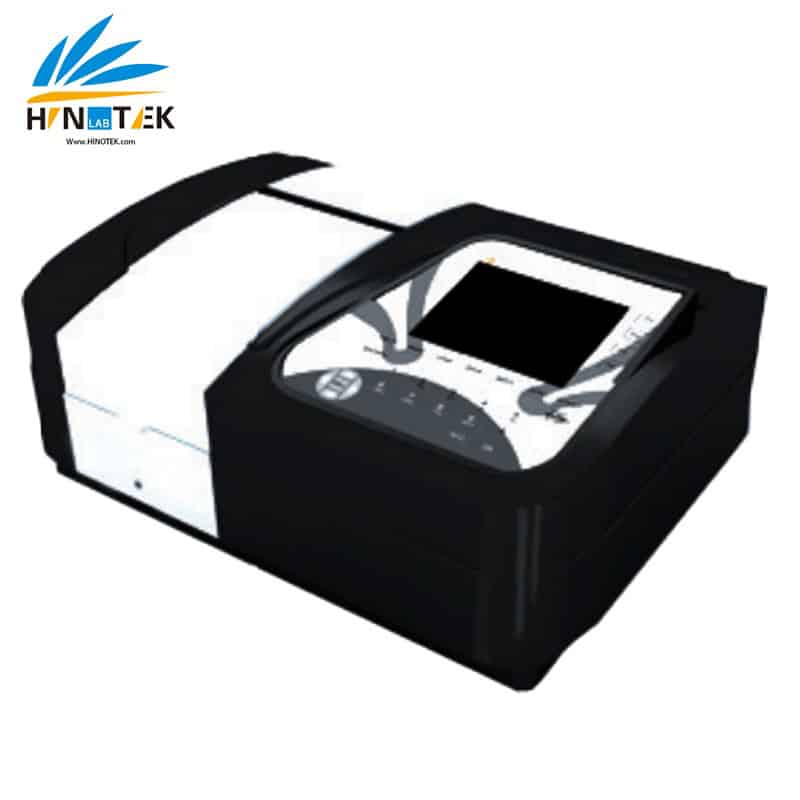
The UV-Visible (UV-Vis) spectrophotometer remains a cornerstone instrument in modern analytical laboratories.Its high sensitivity, broad range of applications, relatively low cost, and operational simplicity make it one of the most widely used pieces of spectroscopic equipment globally. This document provides a comprehensive overview of the current landscape, performance metrics, comparative analysis of domestic and international technologies, and future outlook for UV-Vis spectrophotometers.
1. Current Status of UV-Vis Spectrophotometers
The UV-Vis spectrophotometer market is a mature and competitive landscape, with established manufacturers across Asia, Europe, and North America.
1.1. Major Manufacturers
Chinese Manufacturers: Key manufacturing hubs are located in Beijing and Shanghai.
International Brands in the Chinese Market: Prominent global players include Shimadzu (Japan), Hitachi (Japan), JASCO (Japan), PerkinElmer (USA), Agilent (USA), Hach (USA), and Analytik Jena (Germany).
1.2. Current Technical Status
The core technology of UV-Vis spectrophotometers has reached a plateau, with current advancements focusing on incremental improvements based on modern optics, electronics, computer technology, and network integration to expand application fields.
1.2.1. Instrument Classification
-
- By Optical Path: Pre-spectro (conventional) and Post-spectro (light passes through the sample before the monochromator).
- By Form Factor: Benchtop and portable models.
- By Wavelength Scanning Method: Scanning type (monochromator-based) and array type (diode-array based).
1.2.2. Core Components of a Benchtop Scanning Spectrophotometer
A typical benchtop UV-Vis spectrophotometer consists of five main systems.
A. Light Source
-
- Deuterium Lamp: Provides high-energy radiation primarily in the UV region. Its low energy output in the visible spectrum helps achieve low stray light in the UV range.
- Halogen Lamp (Tungsten-Halogen): Used for the visible and near-infrared (NIR) regions. Most instruments combine deuterium and halogen lamps, using a switching mechanism to match the light source to the required wavelength range, which is an excellent solution for managing both wavelength needs and stray light.
- Xenon Lamp: Covers the entire UV-Vis-NIR spectrum, eliminating the need for lamp switching. However, instruments using Xenon lamps can find it challenging to achieve low stray light at shorter wavelengths.
- LEDs and Lasers: LEDs are used in some portable and application-specific devices due to their small size and low power consumption, though their stability and wavelength range are limited compared to traditional lamps. Lasers offer high-intensity, single-wavelength light but are rarely used in general-purpose instruments.
B. Spectroscopic System (Monochromator)
The monochromator’s design is critical to instrument performance. Gratings are the most common dispersive element in modern instruments.
-
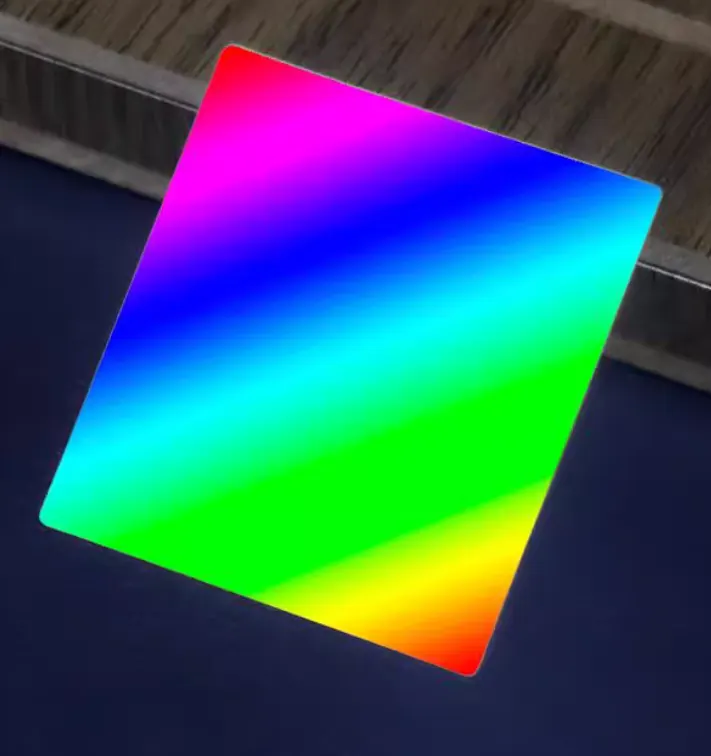
- Gratings vs. Prisms: Gratings offer strong, uniform dispersion across the spectrum, while prisms excel in the UV range but have weaker dispersion in the visible/NIR regions and exhibit non-linear wavelength output.
 |
 |
- Common Monochromator Designs:
-
- Czerny-Turner (C-T) Mount: The most prevalent design, known for excellent aberration correction and good spatial separation between entrance/exit slits, which helps reduce stray light and improve resolution. Its main drawback is a larger physical footprint.
-
- Littrow Mount: A more compact design as it uses a single spherical mirror for both collimating and focusing. However, the proximity of the entrance and exit slits can make it more challenging to minimize stray light.
- Concave Grating Mount: This design simplifies the system by using a concave grating that both disperses and focuses light, eliminating the need for separate mirrors. It offers high light throughput but typically lower resolution, making it suitable for compact and array-based systems.
C. Sample Compartment & Cuvettes
While traditional cuvette holders remain standard, innovations focus on accommodating micro-volume samples and various accessories.
-
- Micro-Volume Cells: Recent developments include specialized sample cells that require sample volumes as small as a few microliters. Some designs allow for direct measurement from a pipette tip, with the ability to recover the sample afterward, which is invaluable for precious samples.
- Modified Standard Cuvettes: Another approach involves a modified cuvette cap with a built-in mirror. When the cap is closed, a thin film of the sample is trapped, and the light beam passes through it multiple times via reflection, allowing measurement with the original sample compartment optics.
D. Detection System
The choice of detector is crucial for sensitivity and wavelength range.
-
-
- UV-Visible Range: Photomultiplier Tubes (PMTs) and Silicon photodiodes are the primary detectors.
- NIR Range (>1100 nm): Lead Sulfide (PbS) and Indium Gallium Arsenide (InGaAs) detectors are standard. InGaAs detectors are photovoltaic and have simpler, more linear amplification circuits. PbS detectors, while more complex, can be made with a larger active area and can detect at longer wavelengths (beyond 2600 nm).
- Array Detectors: Charge-Coupled Devices (CCD) and Photodiode Arrays (PDA) are used in array-type spectrophotometers for simultaneous multi-wavelength detection.
-
E. Signal Processing and Display
This area has seen significant evolution, driven by advancements in electronics, computer hardware, software, and networking technologies for advanced data processing, display, transmission, and storage.
-
2. Evolution of Performance Metrics and Applications
-
-
- Stray Light Reduction: Stray light performance has improved dramatically, from a few thousandths (0.1%) three decades ago to a few ten-thousandths (0.01%) or even parts per million in high-end models today.
- Wavelength Range Expansion: In the 1980s and 90s, a typical range was 200-850 nm. Today, standard instruments cover 190-1100 nm, with high-performance models extending into the NIR up to 2500 nm, 3300 nm, or beyond.
- Intelligent Features: Modern instruments emphasize user convenience, remote control, and advanced data processing and transfer capabilities.
- Application Diversification: Use has expanded from traditional research labs to diverse fields like environmental water quality analysis and architectural glass testing (solar transmittance).
- Miniaturization: A strong trend towards compact, portable instruments for rapid field testing.
- Increased Scan Speed: Wavelength scanning speeds have significantly increased in scanning-type instruments.
-
3. Technical Performance Comparison: Domestic vs. International
| Aspect | High-End Products | Mid-Range & Entry-Level | Software & Accessories |
|---|---|---|---|
| Wavelength Range & Stray Light | International high-end models have long offered broad ranges (e.g., 165-3300 nm).
While Chinese manufacturers now offer similar ranges, a gap remains in stray light performance, where international models achieve levels in the parts-per-million range, compared to parts-per-thousand for domestic equivalents. |
The performance gap is much smaller. Chinese manufacturers have developed models with low stray light and wide ranges that are competitive with international counterparts. | N/A |
| Scan Speed | Some international products claim scan speeds around 10,000 nm/min. Such high speeds are not yet seen in specifications for domestically produced instruments. | Performance is comparable. | N/A |
| Reliability | There is a general perception that domestic instruments have lower reliability and higher failure rates compared to their international counterparts. Improving long-term stability and robustness is a key area for development. | N/A | |
| Software & User Experience | N/A | Imported instruments often feature more polished, intelligent, and user-friendly software. For example, some water quality analyzers can automatically identify barcoded reagents/samples and detect the presence of liquid in the tube, greatly simplifying the user workflow. This is an area where domestic products need to improve. | |
| Accessories | N/A | International brands typically offer a wider and more comprehensive range of accessories, significantly expanding the instrument’s applications. This is an area that domestic manufacturers should prioritize. | |
4. Future Outlook for UV-Vis Spectrophotometer Development
The future of UV-Vis spectrophotometry will be shaped by several key trends:
-
- Diversification: While benchtop systems will remain central, there will be a continued push towards specialized, application-specific instruments.
-
- Miniaturization and Portability: The development of miniaturized and portable systems for on-site and in-line analysis holds vast potential. Technologies like MEMS (Micro-Electro-Mechanical Systems) are enabling novel, compact monochromator designs, such as micro-scale scanning gratings and programmable mirror arrays for rapid, solid-state wavelength selection.
-
- Integration of New Technologies: Expect deeper integration of emerging optical components, advanced electronics, network connectivity, and AI-driven software to enhance performance and usability.
-
- Emphasis on Speed and Convenience: The demand for faster analysis, automation, and intelligent, user-friendly operation will continue to grow.
- New Metrology: Development of new testing methods, such as direct measurement of stray light rather than the current indirect methods, is a potential area for innovation.
Explore High-Performance Spectrophotometers
At HINOTEK, we provide a curated selection of reliable and advanced UV-Vis spectrophotometers to meet the demands of modern laboratories worldwide. Browse our catalog to find the right instrument for your research, quality control, and educational needs.
- For a deep dive into the technology: Read What Is a Spectrophotometer? The Ultimate Guide.