
Fluorescence Spectrophotometer
A fluorescence spectrophotometer is an instrument that measures the fluorescence of a sample. It works by exciting the sample with a beam of light, then detecting the light emitted as the sample returns to its ground state.
To learn more, please visit: What Is a Fluorescence Spectrophotometer?

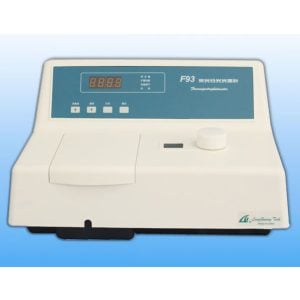
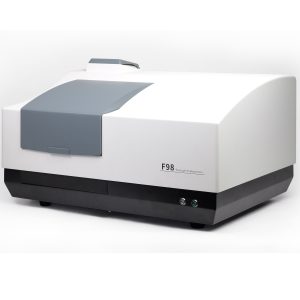
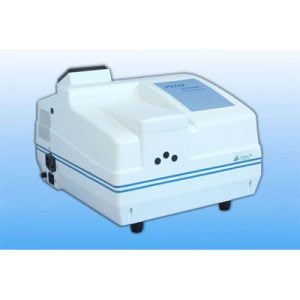
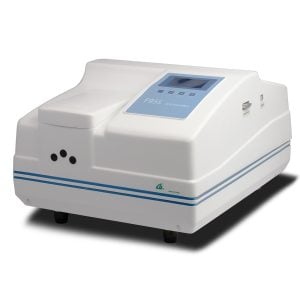


Compare Fluorescence Spectrophotometer & Uv-Visible Spectrophotometer
compare Fluorescence Spectrophotometer & Uv-Visible Spectrophotometer
| Analytical Task | Recommended Primary Instrument | Rationale | Key Considerations / Alternatives |
| Check DNA sample purity | UV-Vis Spectrophotometer | Fast, no reagents needed, directly provides A260/A280 and A260/A230 purity ratios. | Concentration reading may be inflated by contaminants; for purity assessment only. |
| Quantify DNA for critical experiments (e.g., NGS) | Fluorescence Spectrophotometer | Highest level of accuracy and specificity for the target molecule (e.g., dsDNA), ignores contaminant interference. | Requires specific reagent kits, has a per-sample cost, cannot provide purity ratio information. |
| Determine concentration of a synthesized pure drug | UV-Vis Spectrophotometer | Sample is pure, concentration is relatively high; a direct, simple application of the Beer-Lambert Law. | Ensure sample is not turbid and concentration is within the linear range. |
| Screen for trace pesticides in river water | Fluorescence Spectrophotometer | Highest sensitivity for trace analytes, capable of meeting regulatory detection limits. | Potential for matrix quenching effects; may require sample pre-treatment or standard addition for correction. |
| Study the binding of two proteins | Fluorescence Spectrophotometer | Can monitor intermolecular interactions in real-time using techniques like FRET via changes in fluorescence signal. | Requires fluorescent labeling of proteins; experimental design is relatively complex. |
| Routine color QC on an industrial production line | UV-Vis Spectrophotometer | Fast, stable, and reproducible, suitable for routine comparison against known standards. | Only for liquid or transparent solid samples; requires an integrating sphere accessory for opaque samples. |
Learn more information, visit page: Fluorescence Spectrophotometer vs. UV-Visible Spectrophotometer
FAQ:
1. Q: Why choose a HINOTEK Fluorescence Spectrophotometer?
Choosing HINOTEK means investing in proven reliability, performance, and value. With nearly 20 years of manufacturing expertise, we offer an extensive portfolio of nearly 10 models Fluorescence Spectrophotometer, all rigorously quality-controlled and backed by dedicated global support. Our efficient production provides you with premium technology at a competitive price.
2. Q: What is the different between Fluorescence Spectrophotometer and UV-Visible Spectrophotometer?
A:A UV-Vis spectrophotometer measures how much light is absorbed by a sample, determining its concentration by shining a light through it and detecting how much passes to the other side. In contrast, a fluorescence spectrophotometer measures the light emitted from a sample after it has been excited by a beam of light. This process involves exciting the sample at one wavelength and then detecting the emitted light at a second, longer wavelength, which makes fluorescence a much more sensitive and specific technique than UV-Vis absorption.
3. What kind of quality and support can I expect?
You can purchase with complete confidence. Every instrument undergoes strict quality control before shipping. We provide expert remote installation and training support to get your team running quickly. All our products are backed by a full warranty and complimentary lifetime technical guidance to ensure your long-term success.
Need more details on process or logistics? For full information on purchasing, payment, and global shipping, please visit our complete Purchasing & Support Guide or Send email to [email protected].