
Introduction: The Cornerstone of Modern Solvent Evaporation
 |
 |
In the landscape of modern scientific laboratories, few instruments are as ubiquitous and indispensable as the Rotary Evaporator. Commonly known as a “rotovap,” this device is the standard for the gentle, efficient removal of volatile solvents from samples. It is far more than a laboratory convenience; it is a critical tool that facilitates research and production in chemistry, pharmacology, materials science, and even the culinary arts. Its primary function is to perform distillation under reduced pressure, a process that significantly lowers a solvent’s boiling point, allowing for rapid evaporation without subjecting the sample to damaging high temperatures.
The ingenuity of the rotary evaporator lies in its elegant combination of three core scientific principles, which this guide will explore in detail:
- Reduced Pressure: A vacuum system lowers the ambient pressure within the apparatus, drastically reducing the temperature at which solvents boil.
- Rotation: The sample flask is continuously rotated, spreading the liquid into a thin, uniform film on the inner surface. This dramatically increases the surface area available for evaporation, accelerating the process.
- Controlled Heat: A heated fluid bath provides a constant and gentle supply of thermal energy, driving the phase change from liquid to gas without creating localized hot spots that could degrade the sample.
The development of the rotary evaporator was not merely an incremental improvement in laboratory efficiency; it was a transformative innovation that unlocked new possibilities in scientific research. Before its invention, chemists were often limited by the harsh conditions of traditional distillation, where high temperatures could easily destroy complex, thermally labile (heat-sensitive) molecules. This meant that many natural products, active pharmaceutical ingredients, and delicate organic compounds were difficult, if not impossible, to isolate and purify. The rotary evaporator’s ability to perform this separation gently and at low temperatures changed the paradigm. It made the previously impossible possible, directly influencing the course of discovery in fields that rely on the careful handling of fragile molecular structures. This guide provides a comprehensive exploration of how this essential instrument works, from its fundamental scientific principles to its diverse applications and best operational practices.
The Core Principle: The Science of Low-Temperature Distillation
To fully appreciate the function of a rotary evaporator, one must first understand the fundamental physics governing the process of boiling and evaporation. The instrument’s effectiveness stems from its masterful manipulation of the relationship between temperature, pressure, and surface area. These three factors work in synergy to create a system that is both rapid and remarkably gentle.
The Physics of Boiling: Vapor Pressure vs. Ambient Pressure
At a molecular level, a liquid is in a constant state of motion, with some molecules at the surface possessing enough kinetic energy to escape into the gaseous phase—a process known as evaporation. The pressure exerted by these escaped gas molecules above the liquid is called vapor pressure. This vapor pressure increases as the temperature of the liquid rises, because more molecules gain the energy needed to escape.
A liquid reaches its boiling point when its vapor pressure becomes equal to the pressure of the surrounding environment, known as the ambient pressure. At sea level, the ambient pressure is approximately 1 atmosphere (760 Torr). For water to boil under these conditions, it must be heated to 100 °C, the temperature at which its vapor pressure equals 1 atmosphere. The key insight is that boiling is not defined by a fixed temperature, but by the point where the internal push of vapor pressure overcomes the external push of ambient pressure.
Harnessing the Vacuum
The rotary evaporator’s primary innovation is its ability to control and reduce the ambient pressure within the system. This is achieved by connecting the sealed apparatus to a vacuum pump. As the pump removes air from the system, the ambient pressure pushing down on the liquid’s surface decreases significantly.
This reduction in external pressure has a direct and profound effect on the boiling point. Because the ambient pressure is now much lower, the liquid’s vapor pressure does not need to climb as high to achieve equilibrium. Consequently, less thermal energy is required, and the solvent begins to boil at a much lower temperature. For example, dichloromethane, which boils at 39.6 °C at atmospheric pressure, will boil at room temperature (20 °C) under a moderate vacuum of approximately 400 mbar. This principle is the cornerstone of the rotary evaporator’s gentle processing capability, allowing for the removal of solvents without exposing heat-sensitive compounds to destructive temperatures.
The Power of Rotation and Surface Area
Evaporation is exclusively a surface phenomenon; only molecules at the liquid-gas interface can escape into the vapor phase. Therefore, the rate of evaporation is directly proportional to the surface area of the liquid. A puddle of water on the floor will evaporate much faster than the same volume of water in a narrow glass because it has a vastly larger surface area exposed to the air.
The rotary evaporator brilliantly exploits this principle through the rotation of the evaporating flask. As the motor spins the flask, centrifugal force spreads the sample into a thin, continuously replenished film across the entire inner surface. This action multiplies the effective surface area for evaporation by orders of magnitude compared to a static pool of liquid. This massive increase in surface area dramatically accelerates the rate at which solvent molecules can escape, making the process incredibly efficient.
Furthermore, the rotation serves a critical secondary purpose: it ensures uniform heat distribution and prevents violent boiling, a phenomenon known as “bumping.” In a static system, localized overheating at the bottom of the flask can cause a sudden, explosive burst of vapor, which can splash the sample into the condenser, leading to product loss and contamination. The constant agitation from rotation keeps the temperature consistent throughout the sample, promoting smooth, controlled boiling.
The Role of Controlled Heat
While the vacuum enables boiling at a low temperature, the phase change from liquid to gas (vaporization) is an endothermic process that still requires an input of energy, known as the latent heat of vaporization. The heated fluid bath, typically filled with water or oil, provides this necessary energy in a controlled and uniform manner.
The rotating flask is partially immersed in this thermostatically controlled bath, which gently heats the thin film of liquid spread across the flask’s inner wall. This provides the energy for the solvent molecules to transition into the vapor phase. The combination of a large surface area and a constant, gentle heat source ensures that the evaporation proceeds at a steady and rapid pace without the risk of overheating.
Ultimately, the genius of the rotary evaporator is not found in any single principle but in the elegant synergy of all three. The vacuum lowers the energy barrier for boiling, the rotation maximizes the rate of the process by increasing surface area, and the controlled heat provides the necessary energy to drive it. Mastering the instrument involves not simply maximizing each setting, but understanding how to balance these three interdependent variables to suit the specific properties of the solvent and the sensitivity of the sample.
Anatomy of a Rotary Evaporator: A Component-by-Component Breakdown
A rotary evaporator system is composed of several key components that work in concert to achieve efficient solvent removal. Understanding the function of each part is essential for proper operation, maintenance, and troubleshooting. The system can be divided into the main apparatus, its essential support systems, and critical accessories.
The Main Apparatus
This is the central unit where the evaporation and condensation take place.
|
|

- Motor Unit: This is the driving force of the system, providing the rotation for the evaporating flask. Modern units feature variable speed controls, typically ranging from 20 to over 200 RPM, allowing the user to adjust the rotation speed based on the sample’s viscosity and volume.
- Evaporating Flask: This is the glassware that holds the sample solution. It is typically a round-bottom or pear-shaped flask made of borosilicate glass. The flask is attached to the vapor duct and should never be filled more than halfway to prevent bumping and to ensure a large surface area can be created.
- Heated Fluid Bath: This vessel provides controlled, uniform heat to the evaporating flask. For most common solvents, a water bath is used, with temperatures typically set between 25 °C and 90 °C. For higher-boiling solvents, an oil bath may be used, which can safely reach higher temperatures. A digital controller allows for precise temperature regulation.
- Vapor Duct: This is the central glass tube that serves a dual purpose. It acts as the axis for the rotation of the evaporating flask and provides a vacuum-tight conduit for the solvent vapor to travel from the flask up towards the condenser.
- Condenser: The condenser is a series of glass coils designed to cool the hot solvent vapor and convert it back into a liquid. A coolant, typically chilled water or a glycol solution from a chiller, circulates through the outer jacket of the coils. As the vapor makes contact with the cold glass surface, it condenses into droplets.
- Design Note: Condensers come in two primary configurations. Vertical condensers are compact and save valuable bench space, making them ideal for crowded labs. Diagonal condensers are often easier to assemble and can be more versatile for certain setups, though they require more horizontal space.
- Receiving Flask: Located at the bottom of the condenser, this flask collects the re-condensed solvent, often called the distillate. It can be easily removed to recover the purified solvent for reuse or proper disposal.
The Support System
These external units are essential for the main apparatus to function correctly.
|
|

-
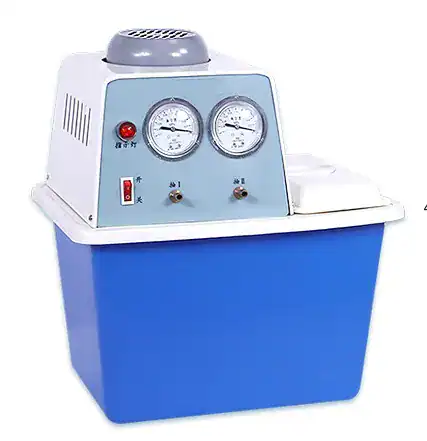
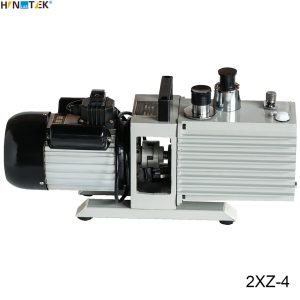
- Vacuum System: This is the heart of the pressure reduction principle. It can range from a simple water aspirator for non-toxic, high-boiling solvents to a sophisticated, chemically resistant diaphragm pump for more demanding applications. For precise and reproducible work, a vacuum controller is often integrated, allowing the user to set and maintain a specific pressure level automatically.
Which vacuum pump should I choose for my Rotary Evaporator?Feature Diaphragm Pump Water Aspirator Rotary Vane PumpPrimary Use General Purpose, Most Solvents Budget/Teaching Labs High-Boiling Point SolventsVacuum Control Excellent Poor Good (but often too strong)Contamination Risk Very Low (Oil-Free) High (Water Suck-Back) High (Oil Mist) Maintenance Low Very Low High (Oil Changes)Environmental Excellent (No Waste) Poor (High Water Use) Moderate (Oily Waste)Cost Medium to High (Initial) Very Low (Initial) High (Initial)
- Vacuum System: This is the heart of the pressure reduction principle. It can range from a simple water aspirator for non-toxic, high-boiling solvents to a sophisticated, chemically resistant diaphragm pump for more demanding applications. For precise and reproducible work, a vacuum controller is often integrated, allowing the user to set and maintain a specific pressure level automatically.
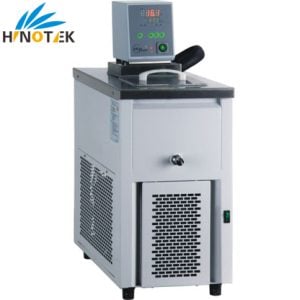
- Chiller: While tap water can be used as a coolant for the condenser, a dedicated recirculating chiller is far more efficient and sustainable. A chiller provides a constant supply of coolant at a stable, low temperature (e.g., 0 °C to 5 °C), which dramatically improves condensation efficiency, especially for highly volatile solvents. This ensures maximum solvent recovery and protects the vacuum pump from being saturated with solvent vapor.
Essential Accessories
These smaller parts are crucial for safety and system integrity.
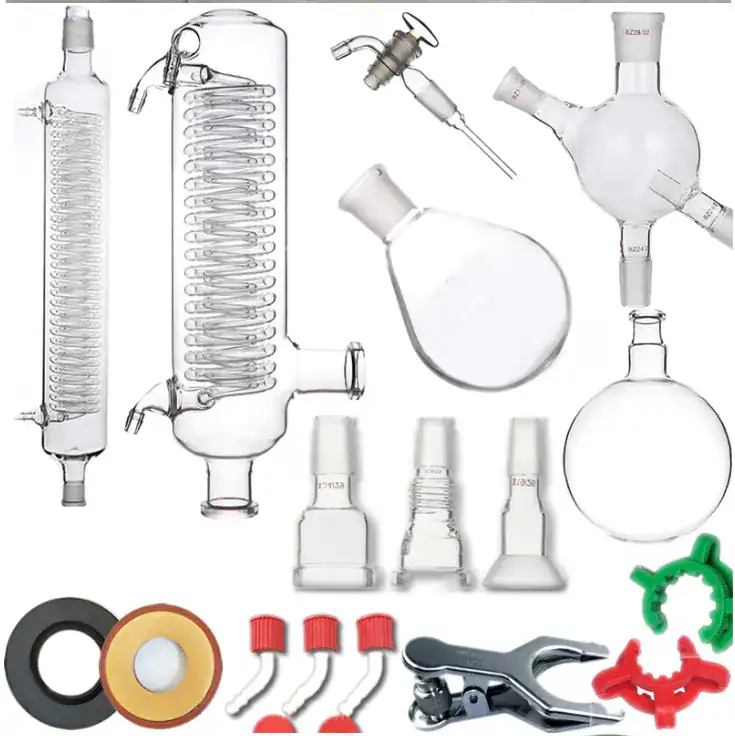 |
- Bump Trap (or Bump Guard): This is a piece of glassware placed between the evaporating flask and the vapor duct. Its purpose is to prevent any violent splashes or “bumps” of the sample solution from being carried over into the condenser. This protects the purity of the collected solvent and prevents loss of the valuable concentrated product.
- Seals and Gaskets: A rotary evaporator relies on a series of seals, often made of materials like PTFE, to maintain a deep vacuum. These seals are critical for the system’s performance. They must be kept clean, properly lubricated with vacuum grease where appropriate, and inspected regularly for wear and tear.
- Clips (e.g., Keck Clips): These plastic or metal clips are used to securely fasten the ground glass joints connecting the different pieces of glassware, such as the flask to the bump trap and the receiving flask to the condenser. They prevent the components from separating under vacuum or during handling.
The evolution of rotary evaporator models from “Standard” to “Advanced” and “Large-Scale” reflects a broader trend in laboratory instrumentation toward greater automation, precision, and scalability. Standard models offer basic, manual controls suitable for routine tasks and teaching labs. Advanced models, however, incorporate digital displays, automated flask lifts, and programmable vacuum controllers. These features are not mere conveniences; they are a direct response to the increasing demands of modern research and regulated industries like pharmaceuticals, where reproducibility, process logging, and minimal user intervention are paramount. The existence of large-scale systems, with flask capacities of 50 L or more, demonstrates that the core principles are robust enough to be scaled from the research bench to pilot plants and commercial production, solidifying the rotary evaporator’s role as a foundational technology across the scientific spectrum.
A Practical Guide to Operating a Rotary Evaporator
Proper operation of a rotary evaporator is a skill that combines an understanding of the scientific principles with a methodical, safety-conscious approach. Following a standard operating procedure (SOP) ensures not only the efficiency of the process but also the safety of the operator and the integrity of the sample. The workflow can be broken down into three distinct phases: preparation, evaporation, and shutdown.
Phase 1: Preparation and Setup
Before beginning any evaporation, a thorough pre-use check is essential.
- System Inspection: Carefully inspect all glassware components—the evaporating flask, condenser, and receiving flask—for any cracks, chips, or star-shaped fractures. A small flaw can become a catastrophic failure point under vacuum, leading to a dangerous implosion. Ensure all seals are clean and, if required, apply a thin layer of vacuum grease to the ground glass joints to ensure a perfect seal.
- Prepare Ancillary Systems: Turn on the recirculating chiller and allow the coolant to reach its set temperature, typically between 0 °C and 5 °C. Check that the coolant is flowing properly through the condenser. Fill the heating bath with the appropriate fluid (distilled water for most applications) and set it to the desired temperature. A common rule of thumb is to set the bath temperature about 20 °C higher than the target boiling point of the solvent at the intended operating pressure.
- Sample Loading: Fill the evaporating flask with the sample solution, ensuring it is no more than half full. Overfilling is a primary cause of bumping and sample loss. Securely attach the flask to the bump trap (if used) and then to the vapor duct, using a Keck clip to fasten the joint.
- Empty the Receiving Flask: This is a critical step often overlooked in shared lab environments. Always check and empty the receiving flask before starting. Assuming the previous user left it empty is a common mistake that can lead to cross-contamination or overflow of the collected solvent.
Phase 2: The Evaporation Process
With the system prepared, the evaporation can begin. The sequence of operations is crucial to prevent bumping.
- Start Rotation: Turn on the motor and set the rotation speed. A moderate speed of 100-130 RPM is suitable for most low-viscosity liquids. This step should always be done before applying the vacuum or lowering the flask into the heat.
- Apply Vacuum: Ensure the stopcock on the condenser, which vents the system to the atmosphere, is closed. Turn on the vacuum pump. The pressure inside the system will begin to drop. If using a manual system, watch the process carefully; if using a vacuum controller, it will automatically regulate the pressure to the setpoint.
- Monitor for Boiling and Bumping: As the pressure decreases, the solvent will begin to boil, often at room temperature. It is vital to distinguish between gentle, controlled boiling and violent bumping. If the solution begins to foam or splash aggressively, threatening to carry over into the condenser, immediately and temporarily open the stopcock to introduce a small amount of air. This will raise the pressure and quell the violent boiling. Repeat this process until the system stabilizes.
- Immerse in Heat Bath: Once the solvent is boiling smoothly under vacuum and you can see condensate forming on the condenser coils, lower the rotating flask into the pre-heated bath. The flask should be immersed enough to cover the liquid level inside but not so deep that the joint is submerged.
- Fine-Tuning the Process: Monitor the rate of condensation in the receiving flask. The goal is a steady, continuous flow of distillate. You can fine-tune the process by making small adjustments to the vacuum level, rotation speed, or bath temperature to achieve the optimal evaporation rate for your specific sample. For advanced, continuous-feed operations, the solvent feed rate into the evaporating flask is carefully matched to the rate of solvent collection in the receiving flask, allowing for non-stop processing of large volumes.
Phase 3: Shutdown and Recovery
Once the solvent has been removed to the desired level, the system must be shut down safely.
- Stop the Process: First, lift the evaporating flask completely out of the heating bath. Then, stop the rotation.
- Vent the System: This is the most critical step of the shutdown procedure. Slowly and carefully open the stopcock to allow air to re-enter the system, equalizing the pressure with the atmosphere. This must be done before turning off the vacuum pump. Failure to do so can cause oil from a mechanical pump to be sucked back into the system, contaminating it.
- Turn Off Equipment: Once the system is fully vented, turn off the vacuum pump. Then, turn off the heating bath and the chiller.
- Retrieve Sample and Solvent: With the pressure equalized, you can safely remove the Keck clip and detach the evaporating flask, which now contains your concentrated product. Detach the receiving flask and transfer the recovered solvent to an appropriate waste container or storage bottle. Clean all glassware thoroughly before storing it for the next use.
This structured approach transforms the operation from a simple task into a controlled scientific process, ensuring efficiency, safety, and high-quality, reproducible results.
Key Applications Across Scientific and Industrial Fields
The rotary evaporator’s unique combination of speed, efficiency, and gentle processing has made it an indispensable tool across a remarkably diverse range of scientific and industrial sectors. Its versatility allows it to be applied anywhere the precise separation of a volatile solvent from a less-volatile solute is required.
Chemical Synthesis and Pharmaceuticals
In organic chemistry and pharmaceutical laboratories, the rotary evaporator is a daily workhorse.
- Solvent Removal: Its most fundamental application is the removal of reaction solvents after a chemical synthesis is complete. This allows for the isolation of the crude product, which can then be further purified.
- Concentration and Purification: In pharmaceutical development, rotovaps are essential for concentrating solutions of Active Pharmaceutical Ingredients (APIs) and for purifying chemical intermediates. The low-temperature operation is critical for preserving the integrity of complex, often fragile drug molecules that would be destroyed by the heat of conventional distillation.
- Natural Product Isolation: Researchers use rotary evaporators to gently remove solvents (like ethanol or hexane) used to extract compounds from medicinal plants. This process is vital for isolating and studying new potential therapeutic agents from natural sources.
Botanical and Cannabis Extraction
The burgeoning cannabis and botanical industries rely heavily on rotary evaporators for purification and solvent management.
- Solvent Recovery: After cannabinoids or other botanical compounds are extracted using a solvent like ethanol, the rotary evaporator is used to efficiently remove and recover that ethanol. This not only purifies the extract but also allows the expensive, regulated solvent to be recycled, significantly reducing operational costs and environmental impact.
- Distillate Production: For creating high-purity cannabis distillates, the rotovap allows for the precise separation of cannabinoids (like THC and CBD) from more volatile terpenes under carefully controlled vacuum and temperature conditions, preserving the desired product profile.
Food, Beverage, and Culinary Arts
The principles of gentle separation have found a creative home in modern gastronomy and beverage production.
- Flavor and Aroma Extraction: The food and perfume industries use rotovaps to extract delicate aromatic compounds from herbs, spices, fruits, and flowers. The low-temperature process captures the fresh, true essence of the ingredient without introducing the “cooked” notes that would result from traditional heating.
- Concentration: Rotary evaporators can create food concentrates, such as fruit juices or vegetable sauces, by removing water. This intensifies the flavor, increases the concentration of nutrients, and can extend shelf life, all while preserving heat-sensitive vitamins and antioxidants.
- Molecular Gastronomy and Mixology: The adoption of the rotary evaporator by innovative chefs and bartenders marks a fascinating technological crossover. In high-end kitchens and bars, this scientific instrument is used to create crystal-clear distillates from fruits, infuse spirits with pure flavors without adding color or sweetness, and capture the essence of ingredients in ways never before possible. The same tool that helps create life-saving medicine is used to push the boundaries of culinary art, a testament to the universal power of its underlying scientific principle.
Environmental Science and Research
In environmental analysis, the rotovap is a key tool for sample preparation.
- Sample Preparation: To detect trace levels of pollutants, pesticides, or other contaminants in water or soil samples, scientists must first concentrate large volumes of those samples. The rotary evaporator allows them to efficiently remove the solvent, concentrating the analytes to a level where they can be detected by sensitive analytical instruments.
- Solvent Recycling: Sustainability is a growing focus in all laboratories. The rotary evaporator plays a major role by enabling the recovery and purification of used solvents, which can then be reused. This practice drastically reduces the volume of hazardous chemical waste generated by a lab.
Education
In academic settings, the rotary evaporator is a fundamental teaching tool. It is used in undergraduate chemistry labs to provide students with hands-on experience in the principles of distillation, evaporation, and vacuum technology, preparing them for future work in research or industry.
Operational Excellence: Best Practices and Safety Protocols
While the rotary evaporator is a routine piece of laboratory equipment, its operation involves the combination of vacuum, heat, and fragile glassware, creating potential hazards that demand respect and adherence to strict safety protocols. Operational excellence is achieved not just by following the steps, but by understanding the risks and integrating best practices into every use.
Fundamental Safety Rules
These are non-negotiable rules for anyone operating a rotary evaporator.
- Personal Protective Equipment (PPE): Always wear appropriate PPE. This includes a lab coat, chemical-resistant gloves, and, most importantly, chemical-splash safety goggles or a full face shield. This equipment provides the first and most critical line of defense against chemical exposure or flying glass in the event of an accident.
- Ventilation: Always operate the rotary evaporator inside a certified chemical fume hood. This is essential for managing exposure to solvent vapors, which may be flammable, toxic, or both. The constant airflow of the hood will capture any fugitive emissions and safely exhaust them from the lab.
- Glassware Integrity: The greatest and most insidious risk associated with rotary evaporation is not a chemical spill but a catastrophic glassware failure. A system under vacuum is subjected to immense force from the surrounding atmosphere—approximately 14.7 pounds per square inch. Over the surface of a 5 L flask, this translates to thousands of pounds of force. A microscopic scratch or crack in the glass acts as a stress concentrator, creating a weak point that can lead to a violent implosion. Therefore, a meticulous visual inspection of all glassware for any flaws before each use is the single most important safety check an operator can perform. The use of plastic-coated glassware is highly recommended as it can help contain glass fragments in the event of a failure.
- Environmental Conditions: The unit must be placed on a stable, level surface, free from vibrations. It should be operated in a non-explosive atmosphere, well away from any potential ignition sources like open flames or sparking equipment, especially when working with flammable solvents.
Best Practices for Optimal Performance
Beyond basic safety, these practices ensure efficient, reproducible, and trouble-free operation.
- The Delta-20 Rule: This is a powerful heuristic for optimizing thermal efficiency. For effective evaporation and condensation, a proper temperature gradient is required. The rule states:
- The heating bath temperature should be set approximately 20 °C higher than the solvent’s boiling point at your operating pressure.
- The condenser coolant temperature should be at least 20 °C lower than the solvent’s boiling point.
For example, to evaporate a solvent boiling at 40 °C, the bath should be set to ~60 °C and the coolant to ≤20 °C. Following this rule ensures a strong driving force for both evaporation and condensation.
- Flask Fill Level: Never fill the evaporating flask more than 50% of its capacity. A lower fill level maximizes the surface area-to-volume ratio when rotated and provides ample headspace to accommodate boiling, significantly reducing the risk of bumping.
- Gradual Vacuum Application: Always apply the vacuum before lowering the flask into the heating bath. Reduce the pressure in the system slowly and gradually. Applying a deep vacuum too quickly to a warm or highly volatile solvent will cause it to boil uncontrollably.
- Adjust Rotation Speed: The optimal rotation speed depends on the sample. For low-viscosity liquids, a higher speed (~150 RPM) creates a better film and faster evaporation. For highly viscous or foaming samples, a lower speed (~60-80 RPM) is necessary to prevent the material from simply climbing the walls of the flask instead of forming a film.
- Regular Leak Testing: The efficiency of a rotary evaporator is entirely dependent on its ability to hold a vacuum. A small leak at a joint or seal will dramatically slow down the process. Periodically perform a system leak test: evacuate the empty, dry system, close it off from the pump, and monitor the pressure. A rapid rise in pressure indicates a leak that must be found and fixed.
By integrating these safety protocols and best practices, operators can ensure the rotary evaporator remains a safe, reliable, and highly effective tool in the laboratory.
Troubleshooting Common Rotary Evaporator Issues
Even with proper use, operators may occasionally encounter issues with a rotary evaporator. Most problems are related to process parameters rather than equipment failure and can be resolved with systematic troubleshooting. Before assuming a component is broken, always check the basics of the setup and process first.
The following table outlines common problems, their potential causes, and recommended solutions to help diagnose and resolve issues quickly and efficiently.
| Problem | Potential Cause(s) | Recommended Solution(s) |
| Inefficient or Slow Evaporation | 1. Poor vacuum due to a leak in the system. 2. Heating bath temperature is too low. 3. Condenser is too warm; coolant is not cold enough or flow is restricted. 4. Rotation speed is too low to form an effective film. |
1. Check all seals, ground glass joints, and tubing for leaks. Re-grease joints if necessary. Perform a system leak test. 2. Increase the bath temperature, adhering to the Delta-20 rule and solvent safety limits. 3. Verify the chiller is set to the correct low temperature and that coolant is circulating freely. 4. Increase the rotation speed to improve surface area. |
| Sample Bumping or Foaming | 1. Vacuum was applied too quickly or is too deep (pressure is too low). 2. Evaporating flask is overfilled (more than 50% full). 3. Heating bath temperature is too high for the vacuum level. 4. Rotation speed is too high, causing excessive agitation. |
1. Vent the system and re-apply the vacuum slowly and gradually. Increase the system pressure slightly to find a smoother boiling point. 2. Stop the process and reduce the sample volume in the flask. 3. Lower the bath temperature. 4. Decrease the rotation speed, especially for viscous or soapy solutions. |
| Poor Vacuum / Cannot Reach Target Pressure | 1. A leak at a joint, seal, or stopcock. 2. Damaged or cracked vacuum tubing. 3. The vacuum pump requires maintenance (e.g., oil change for a rotary vane pump, diaphragm check for a diaphragm pump). 4. The receiving flask drain valve (if present) is not fully closed. |
1. Systematically inspect and re-grease all joints. Ensure the stopcock is fully closed and sealing properly. 2. Inspect the full length of the vacuum hose for cracks or holes and replace if necessary. 3. Service the vacuum pump according to the manufacturer’s instructions. 4. Check and secure all valves on the apparatus. |
| Evaporating Flask Does Not Rotate | 1. The motor is not turned on or the speed is set to zero. 2. The drive belt between the motor and the rotation mechanism is loose, broken, or has slipped off. 3. A mechanical obstruction is preventing rotation. 4. Motor failure. |
1. Check the control panel and ensure the motor is on and the speed is set appropriately. 2. Power off the unit and inspect the drive belt. Adjust, reseat, or replace it as needed. 3. Ensure the flask is not touching the sides of the bath or any other part of the apparatus. 4. If the motor is humming but not turning, it may require professional service or replacement. |
| Solvent Collecting in Cold Trap / Vacuum Pump | 1. The condenser is being overwhelmed by a very high evaporation rate. 2. The coolant is not cold enough or the flow rate is insufficient to condense all the vapor. 3. Working with a very low-boiling-point solvent that is difficult to condense. |
1. Reduce the evaporation rate by lowering the bath temperature or increasing the system pressure. 2. Lower the chiller temperature or increase the coolant flow rate. Ensure there are no kinks in the tubing. 3. Use a more powerful chiller or add a secondary condenser (dry ice/acetone trap) between the rotovap and the pump. |
| Unstable Vacuum Reading | 1. Fluctuation is normal with a manual two-point control system (on/off valve). 2. The vacuum gauge itself is faulty or needs calibration. 3. Condensation is occurring inside the vacuum lines or gauge. |
1. If using a simple controller, some pressure fluctuation is expected. Ensure the hysteresis is set appropriately (not too narrow). 2. Test the gauge against a known source or have it calibrated. 3. Disconnect and dry the vacuum lines and sensor. |
Rotary Evaporation in Context: Comparisons with Other Techniques
The rotary evaporator is a powerful tool, but it is not the only method for separating substances in a laboratory. Understanding its specific advantages and ideal use cases becomes clearer when comparing it to two other common techniques: simple distillation and freeze-drying (lyophilization). The choice between these methods is a classic example of process selection, dictated by the properties of both the substance you wish to keep (the solute) and the liquid you wish to remove (the solvent).
The decision often hinges on answering two critical questions:
- Is the solute thermally stable enough to withstand high temperatures?
- Is the solvent water or a volatile organic liquid?
Rotary Evaporator vs. Simple Distillation
- Principle: Both are forms of distillation, a process that separates liquids based on differences in their boiling points. However, their methods differ fundamentally. Simple distillation involves heating a liquid mixture to its atmospheric boiling point, collecting the vapor, and condensing it back into a liquid. A rotary evaporator is a form of vacuum distillation, using reduced pressure to achieve the same phase change at a much lower temperature.
- Key Advantage of Rotary Evaporator: The primary advantage is its gentle, low-temperature operation. This makes it ideal for working with heat-sensitive compounds that would decompose or degrade at the high temperatures required for simple distillation. Furthermore, the rotation increases the surface area, making the process significantly faster and more efficient. It also prevents the localized overheating and charring that can occur in a static distillation flask.
- When to Use Simple Distillation: Simple distillation is a suitable choice when the compounds being separated are thermally stable and have significantly different boiling points (e.g., separating salt from water). It is also a simpler, less expensive setup, making it practical for applications where speed and the gentle handling of delicate materials are not primary concerns.
Rotary Evaporator vs. Freeze Drying (Lyophilization)
- Principle: These two methods operate on entirely different physical principles. Rotary evaporation is a liquid-to-gas phase transition (evaporation). Freeze-drying, or lyophilization, is a solid-to-gas phase transition (sublimation). In freeze-drying, the sample is first frozen solid. Then, a deep vacuum is applied, causing the frozen solvent (ice) to turn directly into vapor without passing through the liquid phase.
- Solvent Type: This is the most critical distinction. Rotary evaporators are designed for the efficient removal of volatile organic solvents like ethanol, acetone, methanol, and dichloromethane. Freeze dryers, conversely, are designed almost exclusively for the removal of water.
- Why the Difference? The operational temperatures are key. Freeze dryers typically operate with condenser temperatures around -40 °C to -50 °C. This is cold enough to effectively trap sublimated water vapor but is not nearly cold enough to freeze common organic solvents. Ethanol, for example, has a freezing point of -114 °C and would remain liquid, get sucked into the vacuum pump, and potentially damage the freeze dryer system.
- When to Use Freeze Drying: Freeze-drying is the gold standard for removing water from extremely sensitive biological samples, such as proteins, pharmaceuticals, microbes, or tissues. The process occurs at very low temperatures, preserving the sample’s structure and biological activity. It is used when even the moderate, controlled heat of a rotary evaporator could be damaging.
This comparison creates a clear decision-making framework. If your sample is heat-sensitive, simple distillation is ruled out. The choice then depends on the solvent: if it is an organic liquid, the rotary evaporator is the correct tool. If the solvent is water, the freeze dryer is the superior choice. There is no single “best” method of separation; there is only the most appropriate method for a given chemical system.
Conclusion: The Enduring Value of Rotary Evaporation
The rotary evaporator stands as a testament to elegant engineering, combining fundamental physical principles into a device that is simultaneously powerful, efficient, and gentle. Its ability to rapidly remove volatile solvents while preserving the integrity of delicate, heat-sensitive samples has cemented its status as an essential and indispensable tool in nearly every modern scientific laboratory.
Through the synergistic application of reduced pressure, controlled heat, and rotational surface area enhancement, the rotovap solves a fundamental challenge in chemistry: how to separate components without destroying them. This capability has had a profound impact, enabling advancements in fields ranging from the synthesis of life-saving pharmaceuticals and the isolation of novel natural products to the analysis of environmental toxins. Its recent adoption into the worlds of molecular gastronomy and high-end mixology further underscores its remarkable versatility, proving that the principles of precise molecular separation are universal.
From the undergraduate teaching lab to the industrial pilot plant, the rotary evaporator remains the gold standard for solvent evaporation. Its mastery represents a key skill for any scientist or technician, and its continued use in cutting-edge research and creative industries ensures its enduring value for decades to come.
If you are ready to find the right Rotary Evaporator for your laboratory, please browse our complete product range: Rotary Evaporator.
This guide is maintained by HINOTEK’s core technical team, comprised of senior engineers and application scientists with over two decades of hands-on experience in fields such as microscopy, centrifugation, and spectrophotometry. We are committed to ensuring that every piece of information in this guide—from instrument principles and technical specifications to laboratory procurement advice—maintains the highest level of accuracy and timeliness.
This content is regularly reviewed and updated to reflect the latest industry standards and technological advancements. We value feedback from the global scientific community. Should you have any questions or suggestions, or wish to discuss any technical details, please do not hesitate to contact our expert team at [email protected].