
Exploration | 10 Viscosity Measurement Methods: The Most Comprehensive Viscometer Summary
In our daily work, measuring the viscosity of various raw materials and finished products is an unavoidable task. I believe everyone is quite familiar with the concept of viscosity, but do you know the different ways to measure it?
Below is a summary of common viscosity measurement methods and the various types of viscometers used in the industry.
1. The Finger Test
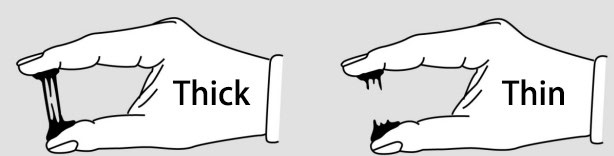
This is the most primitive method, relying on sensory perception. While not scientific for data collection, it is often used by experienced technicians for a quick, “on-the-spot” qualitative feel of a material’s tackiness or consistency.
2. The Spatula (Blade) Test
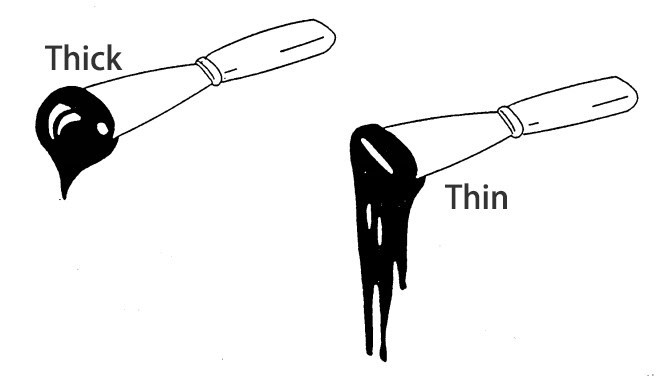
Similar to the finger test, this involves lifting a spatula out of the fluid and observing how the material drips or flows off the blade. It provides a rough visual estimate of flow behavior.
3. Bostwick Consistometer
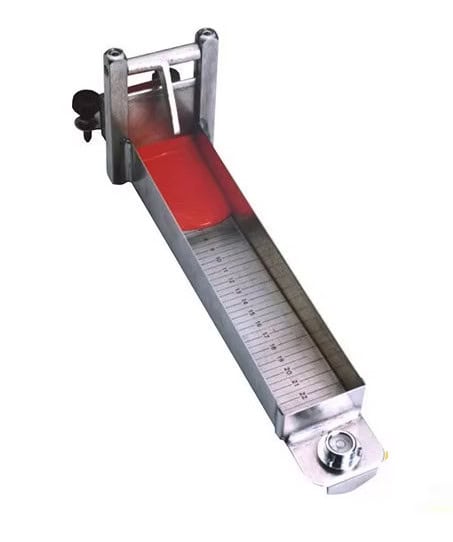
The Bostwick Consistometer is used for high-viscosity materials that do not require an extremely precise measurement system, such as ketchup or purees.
- Mechanism: It determines consistency by measuring the distance a fluid flows under its own weight along a sloped track within a specific time frame.
- Advantages: It is low-cost, easy to operate, and highly durable. Whether in the lab or on the production line, it quickly checks if a sample meets standards for viscosity, consistency, and fluidity. It is widely adopted in the chemical, paint, cosmetic, and food industries.
4. Falling Ball Viscometer
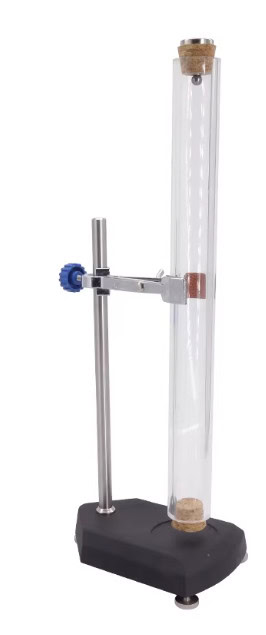
- Basic Principle: Based on the Hoeppler principle, this device performs simple yet accurate dynamic viscosity measurements for transparent Newtonian fluids.
- How it works: It measures the time required for a ball to fall under gravity through a sample-filled tube, which is inclined at a specific working angle. The tube is mounted on a central bearing that allows it to be flipped 180 degrees quickly for repeated measurements.
- Result: The final value is based on the average time of three descents, which is then converted into a viscosity value using a standard formula.
5. Falling Rod Viscometer

The falling rod viscometer is primarily utilized to measure the viscosity of viscous liquids like printing inks and similar coatings.
6. Bubble Viscometer
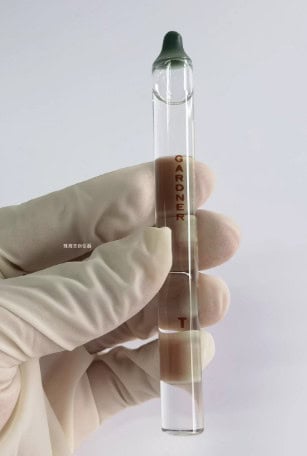
Bubble viscometer tubes are used to quickly determine the kinematic viscosity of known fluids such as resins and varnishes.
- Mechanism: The time required for an air bubble to rise is directly proportional to the fluid’s viscosity. The faster the bubble rises, the lower the viscosity.
- Advantages: Since the liquid standards are sealed, they remain stable permanently. The tubes have no nozzles to clog, making them easy to clean and capable of providing reproducible readings under controlled temperatures.
7. Flow Cups (Efflux Cups)
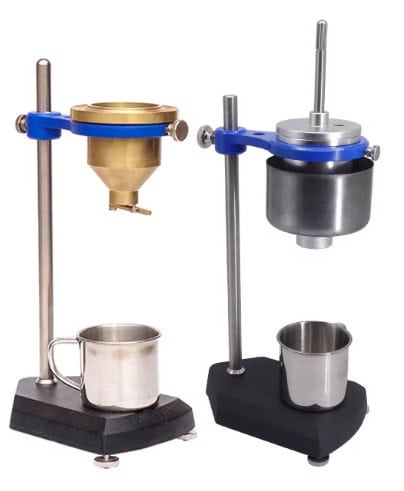
There isn’t much to say here—if you work in coatings or chemicals, you’ve almost certainly used one! Common types include the Zahn Cup, Ford Cup, and DIN Cup. They measure the time it takes for a specific volume of fluid to empty through an orifice at the bottom.
8. Glass Capillary Viscometer
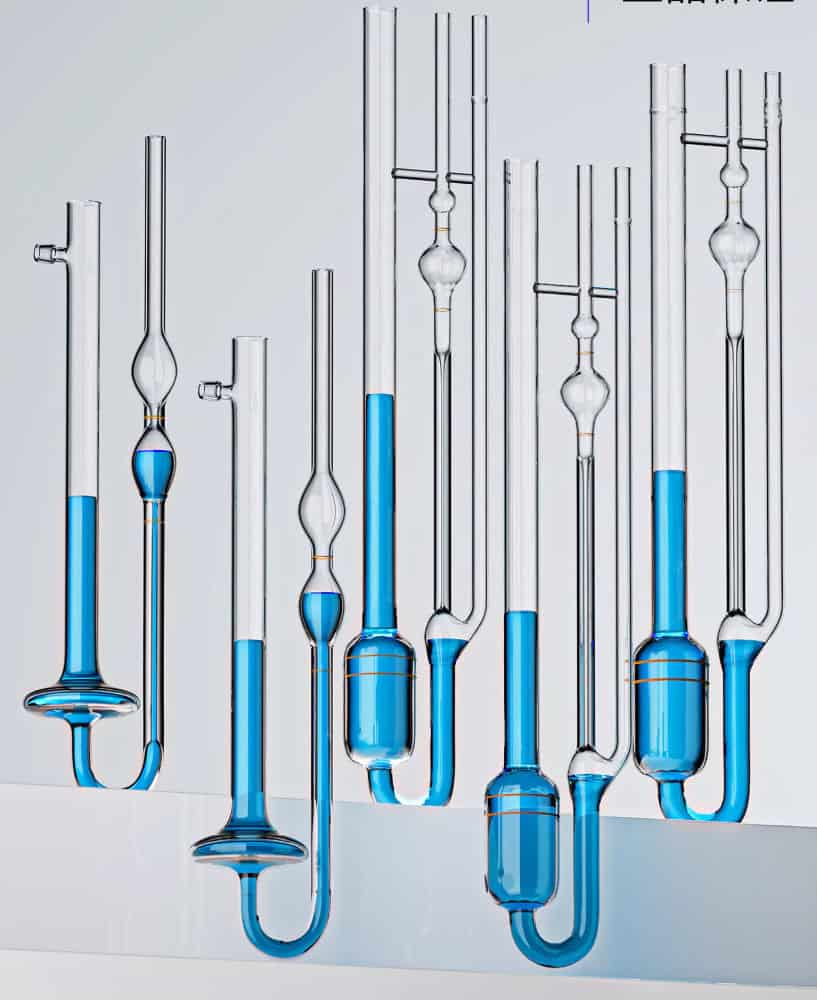
Commonly used for measuring the kinematic viscosity of petroleum products or polymers in solution. It relies on the time it takes for a volume of liquid to flow through a narrow glass tube under gravity.
9. Stormer Viscometer
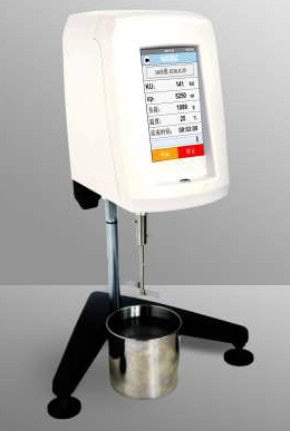
A staple in the paint and coatings industry, the Stormer viscometer measures viscosity in Krebs Units (KU). It uses a paddle-type rotor rotated at a constant speed to determine the resistance of the fluid.
10. Brookfield Viscometer
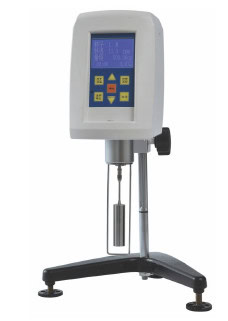
The Brookfield viscometer likely feels the most “familiar” to everyone. Even if you haven’t used one personally, you have undoubtedly seen one in a lab. It is the industry standard for rotational viscosity measurement, offering high precision and versatility for both Newtonian and non-Newtonian fluids.
Comprehensive Comparison of 10 Viscosity Measurement Methods
Here is a comprehensive comparison table of the 10 methods discussed:
| Method | Measurement Range | Key Industry Applications | Nature of Fluid |
|---|---|---|---|
| 1. Finger Test | Qualitative only | Workshops, Art, DIY | Any |
| 2. Spatula Test | Qualitative only | Paint mixing, Cooking | Thicker fluids |
| 3. Bostwick Consistometer | Flow distance (cm) | Food (Sauces, Purees, Ketchup) | High viscosity/Pastes |
| 4. Falling Ball | 0.6 to 100,000 mPa·s | Chemicals, Pharmaceuticals, Oil | Transparent Newtonian |
| 5. Falling Rod | High shear/High Viscosity | Printing Inks, Coatings | Non-Newtonian |
| 6. Bubble Viscometer | 0.005 to 1,000 Stokes | Resins, Varnishes, Lacquers | Transparent liquids |
| 7. Flow Cups | 20 to 1,200 cSt | Paints, Inks, Adhesives | Low to medium viscosity |
| 8. Glass Capillary | 0.2 to 100,000 mm²/s | Petroleum, Fuels, Polymers | Newtonian liquids |
| 9. Stormer (KU) | 40 to 141 KU | Architectural Coatings, Paints | Non-Newtonian |
| 10. Brookfield | 1 to 320,000,000 cP | Cosmetics, Food, Chemicals | All (Highly versatile) |
View HINOTEK Viscometer Category.
To understand the fundamental principles common to all types of viscometer, be sure to read our main article: What Is A Viscometer.