
Polarimeter
Unlock Precision in Your Analysis with Polarimetry
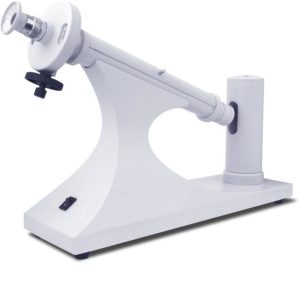
In modern laboratories, measuring the properties of optically active substances is fundamental to quality control, research, and development. A polarimeter is the essential instrument for this task, providing precise measurements of optical rotation—the angle by which a substance rotates plane-polarized light.
This capability is critical across numerous sectors. In the pharmaceutical industry, it is used to determine the purity and concentration of chiral drugs, where different enantiomers can have vastly different biological effects. In the food and beverage sector, polarimeters (often called saccharimeters) are indispensable for accurately measuring sugar concentrations. Likewise, the chemical and fragrance industries rely on polarimetry to ensure the quality and consistency of raw materials and finished products.
Understanding how a polarimeter works, its key applications, and the factors to consider when choosing one is the first step toward enhancing your lab’s analytical capabilities.
For a deep dive into the technology, principles, and applications, we invite you to explore our comprehensive pillar page. Discover everything you need to know by visiting our guide:


Q & A:
1. Q: In which industries are polarimeters mainly used?
A: They are widely used in industries such as food, chemicals, pharmaceuticals, and flavors and fragrances.
2. Q: What specifications should be considered when purchasing a polarimeter?
A: Accuracy and repeatability are the most important specifications. The sample transmittance can reflect the instrument’s sensitivity; generally, a 1% sample transmittance indicates relatively high sensitivity. If purchasing a temperature-controlled polarimeter, the temperature control accuracy is very important. If the temperature control accuracy and stability are not high enough, it is better to use an external water bath for temperature control.
3. Q: What is the difference between using a sodium lamp versus an LED as a light source in a polarimeter?
A: Firstly, all optical rotation measurements must be taken at a fixed, single wavelength. The wavelength of a sodium lamp in the air is 589.3nm. An LED light, when paired with a special filter, can also achieve 589.3nm, producing the same effect as a sodium lamp. Secondly, the lifespan of a sodium lamp is generally between 50 and 200 hours, whereas the lifespan of an LED light is typically at least 5,000 hours. Furthermore, the price of LED lights is much lower than that of sodium lamps, so the replacement of sodium lamps with LEDs is an inevitable trend.
4. Q: What kinds of samples require temperature control during testing?
A: Temperature affects the optical rotation of all substances. Therefore, in theory, all sample testing has some temperature requirements. However, for some substances, such as sugar, a complete set of temperature correction coefficients is available. Alternatively, if the user’s requirements for the final result are not high and the data deviation caused by temperature can be ignored, a polarimeter without temperature control can be selected.
5. Q: What are the benefits of an automatic calibration function in a polarimeter?
A: An automatic calibration function allows the user to monitor the instrument’s operating status at all times and to promptly adjust its testing accuracy, ensuring the instrument remains in an optimal working condition.
6. Q: What are the different measurement modes of a polarimeter?
A: There are mainly four modes: optical rotation, specific rotation, concentration, and sugar content. The HINOTEK WZZ-3 Automatic Polarimeter currently offers the ability to switch between these four modes freely, saving the user the trouble of performing additional calculations.
7. Q: How often should a polarimeter with a built-in calibration function be calibrated?
A: Depending on the frequency of use and accuracy requirements, you can choose to calibrate it weekly or monthly. If the user frequently measures within a specific angular range, they can also calibrate the instrument daily using a quartz standard tube with a value closest to the test angle.
8. Q: How does the external environment affect the measurement results of a polarimeter?
A: Since temperature affects the measurement results of a sample, it is recommended that users keep the room temperature close to 20°C, even when sample temperature control is available. Ideally, the instrument’s long-term working environment should be between 15-25°C to avoid a large temperature difference between the ambient and test temperatures, which can cause inaccurate results.
9. Q: Why choose a HINOTEK Polarimeter?
Choosing HINOTEK means investing in proven reliability, performance, and value. With nearly 20 years of manufacturing expertise, we offer an extensive portfolio of nearly 15 models Polarimter, all rigorously quality-controlled and backed by dedicated global support. Our efficient production provides you with premium technology at a competitive price.
2. Q: What kind of quality and support can I expect?
A: You can purchase with complete confidence. Every instrument undergoes strict quality control before shipping. We provide expert remote installation and training support to get your team running quickly. All our products are backed by a full warranty and complimentary lifetime technical guidance to ensure your long-term success.
Need more details on process or logistics? For full information on purchasing, payment, and global shipping, please visit our complete Purchasing & Support Guide.