
An Exhaustive Guide to the Abbe Refractometer: Principles, Technology, and Applications


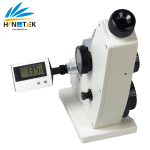
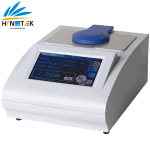
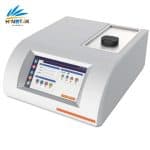
Guide Navigation
- Part 1: Introduction to Refractometry and the Abbe Refractometer
- Part 2: The Scientific Principles: How Light Reveals a Sample’s Identity
- Part 3: Anatomy of the Abbe Refractometer: A Component-by-Component Analysis
- Part 4: Master the Instrument: Calibration, Operation, and Maintenance
- Part 5: Applications Across Industries: The Versatile Analyst
- Part 6: The Abbe Refractometer in Context: A Comparative Analysis
- Part 7: Frequently Asked Questions (FAQ)
Part 1: Introduction to Refractometry and the Abbe Refractometer
Rrefractive index, it is a measure of how light interacts with a substance, revealing intrinsic details about its composition and purity. The instrument most classically associated with the precise measurement of this property is the Abbe Refractometer. For over a century, this elegant device has been a cornerstone of laboratories across countless industries, from food production to pharmaceutical research. This article provides an exhaustive exploration of the Abbe refractometer, delving into the scientific principles that govern its operation, the intricate technology of its design, its diverse applications, and its place in the landscape of modern analytical instrumentation.
1.1 The Fundamental Concept of Refractive Index
The refractive index (RI), often denoted by the symbol ‘n’, is a dimensionless physical property that quantifies the extent to which light bends, or refracts, when it passes from one medium into another. It is formally defined as the ratio of the speed of light in a vacuum (‘c’) to the speed of light in the substance (‘v’). This relationship is expressed by the simple formula: n=vc
Light Refraction Simulation
Simulate the refraction of light from air to liquid, following Snell’s Law n₁*sin₁ = n₂*sin₂
Physical Principles
When light passes from one medium to another, its speed changes, causing refraction. Refraction follows Snell’s Law:
n₁*sin1 = n₂*Sin₂
Where:
- n₁ and n₂ are the refractive indices of the two media
- θ₁ is the angle of incidence (angle between the light ray and the normal)
- θ₂ is the angle of refraction (angle between the refracted ray and the normal)
Incident Ray
Refracted Ray
Reflected Ray
For example, the refractive index of water is approximately 1.333, which means that light travels 1.333 times faster in a vacuum than it does in water. Because the speed of light in any material medium is always less than in a vacuum, the refractive index of any substance is always greater than 1.
This single value is an intrinsic physical constant for a pure substance under specific conditions of temperature and wavelength, much like its melting point or density. This characteristic makes it an exceptionally powerful tool for several analytical purposes:
- Identification: By measuring the refractive index of an unknown pure substance and comparing it to known literature values, one can often identify the material.
- Purity Assessment: Any impurities present in a substance will alter its refractive index. Therefore, measuring the RI and comparing it to the value for the pure compound provides a rapid and sensitive method for assessing purity.
- Concentration Measurement: The refractive index of a solution changes in a predictable way with the concentration of a solute. This allows the instrument to be used to determine the concentration of dissolved solids, such as sugar, salt, or proteins, in a solution.
The true utility of refractometry lies in its ability to serve as a proxy measurement for a wide array of commercially valuable parameters. While the instrument itself measures only a fundamental physical constant (RI), its most common applications are in determining properties like sugar content (Brix), salinity, protein levels, and gemstone identity. There exists a strong, reliable, and well-documented correlation between the refractive index and these other characteristics. Consequently, the power of refractometry is not merely in measuring RI, but in using it as a rapid, non-destructive, and precise “translator” to determine other properties that are more difficult, time-consuming, or expensive to measure directly.
1.2 The Enduring Legacy of Ernst Abbe
The Abbe refractometer is named after its inventor, the brilliant German physicist Ernst Abbe. He designed the first instrument of its kind in 1869 while working in collaboration with Carl Zeiss, a partnership that would revolutionize the field of optics and scientific instrument manufacturing. Abbe’s contributions to optics were profound; he is also celebrated for developing the formula for numerical aperture, which fundamentally improved the resolving power of microscopes, and for designing the Abbe prism, two of which are central to the function of his refractometer.
The genius of Abbe’s design is evidenced by its remarkable longevity. More than 150 years after its invention, the fundamental principles and core design of the Abbe refractometer remain in use and are still copied in modern instruments. This enduring legacy is a testament to the design’s elegance, robustness, and effectiveness, solidifying its status as a classic and foundational instrument in the history of science.
1.3 What is an Abbe Refractometer? An Overview
|
|

An Abbe refractometer is a high-precision, benchtop laboratory instrument designed for the accurate determination of the refractive index of transparent or translucent liquids, plastics, and solid substances. It is classified as a critical angle refractometer, a term that describes its fundamental operating principle. One of its most significant practical advantages is that it requires only a very small sample volume—often just one or two drops—to yield a highly accurate and reproducible measurement. This combination of high precision, versatility in sample type, and minimal sample requirement has secured its place as an indispensable tool in research, development, and quality control laboratories worldwide.
Part 2: The Scientific Principles: How Light Reveals a Sample’s Identity
To fully appreciate the ingenuity of the Abbe refractometer, one must first understand the fundamental principles of physics that it exploits. The instrument is a masterful application of optical laws to create a practical measurement device.
2.1 The Law of Refraction: Snell’s Law
At the heart of refractometry lies the phenomenon of refraction: the bending of light as it passes across the boundary between two different media. This bending occurs because the speed of light changes as it enters a new medium with a different optical density. The precise relationship between the angles and the properties of the media is described by Snell’s Law.
Snell’s Law states that for a light ray passing from a first medium with refractive index ‘n1’ to a second medium with refractive index ‘n2’, the ratio of the sine of the angle of incidence (‘θ1’) to the sine of the angle of refraction (‘θ2’) is constant and equal to the ratio of the refractive indices. The angles are measured relative to the normal, which is a line perpendicular to the surface boundary.4 Mathematically, Snell’s Law is expressed as: n1sin(θ1)=n2sin(θ2)
This equation is the bedrock of refractometry. It establishes a predictable, mathematical link between the angle at which light bends and the intrinsic refractive indices of the materials involved, a link that the Abbe refractometer is expertly designed to measure.
2.2 The Critical Angle and Total Internal Reflection (TIR): The Heart of the Measurement
The core working principle of the Abbe refractometer is based on the concept of the critical angle. This phenomenon occurs under a specific set of conditions defined by Snell’s Law. Let’s consider the setup within the refractometer: light passes from the sample (the medium with a lower refractive index, ‘ns’) into the measuring prism (the medium with a higher refractive index, ‘np’).
The instrument is designed to illuminate the sample-prism interface with light rays from every possible angle, including those that are almost parallel to the interface—an angle of incidence of 90 degrees, also known as a “grazing incidence”. When this grazing incidence occurs, the angle of refraction inside the prism reaches its maximum possible value. This maximum angle of refraction is defined as the critical angle, denoted as ‘θc’.
Any light ray that strikes the interface at an angle of incidence less than 90 degrees will be refracted into the prism at an angle smaller than ‘θc’. Consequently, all the refracted light is contained within a cone defined by the critical angle.4 This creates a visually distinct field of view in the instrument’s eyepiece: a bright area corresponding to the cone of refracted light, and an entirely dark area where no light can be refracted.4 The sharp line that separates these two regions is the shadowline, and its position corresponds directly to the critical angle.
The relationship between the sample’s refractive index and the critical angle can be derived directly from Snell’s Law:
- Start with the general form of Snell’s Law: nssin(θs)=npsin(θp).
- At the critical angle condition, the incident light from the sample is at a grazing angle, so the angle of incidence θs=90∘, and therefore sin(θs)=1.
- At this same condition, the angle of refraction within the prism is, by definition, the critical angle, so θp=θc.
- Substituting these values into Snell’s Law gives: ns×1=npsin(θc).
- This simplifies to the fundamental equation for a critical angle refractometer: ns=npsin(θc).
This equation reveals the elegance of the instrument’s design. The refractive index of the measuring prism, ‘np’, is a known, high-precision constant. Therefore, by mechanically measuring the critical angle ‘θc’ (which is done by aligning the shadowline with the eyepiece crosshairs), the instrument can directly calculate and display the unknown refractive index of the sample, ‘ns’.
2.3 The Challenge of Chromatic Dispersion and Abbe’s Ingenious Solution
A significant challenge in refractometry is that a substance’s refractive index is dependent on the wavelength of the light used for the measurement. This phenomenon is known as chromatic dispersion. Generally, shorter wavelengths of light (like violet and blue) are bent more strongly than longer wavelengths (like red and orange).
|
|
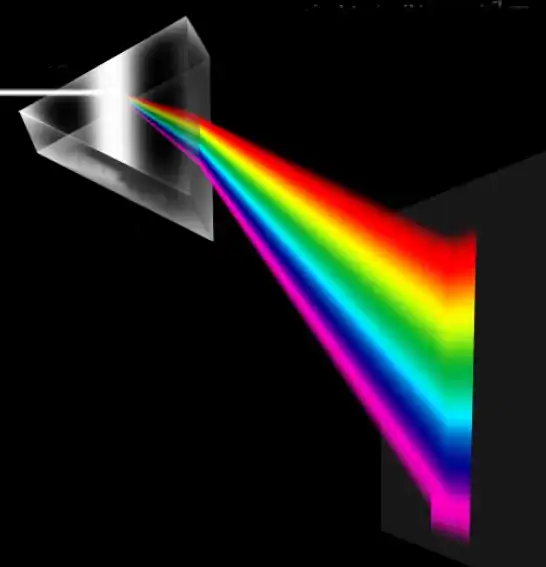
If a simple white light source (which contains a spectrum of all visible wavelengths) were used, each color would be refracted at a slightly different angle. This would cause the sharp, distinct shadowline to smear into a blurry, rainbow-colored fringe, making a precise measurement impossible.To overcome this, Ernst Abbe incorporated a brilliant and pivotal innovation into his design: a dispersion compensator. This device consists of a pair of identical Amici prisms, which are special compound prisms designed to disperse light without deviating the central wavelength. These two Amici prisms are placed in the optical path of the telescope and are geared to rotate in opposite directions. By turning a control knob, the operator can adjust the orientation of these prisms. This adjustment introduces an amount of dispersion that is equal in magnitude but opposite in direction to the dispersion caused by the measuring prism and the sample. This effectively cancels out the chromatic aberration, recombining the colored rays and restoring a single, sharp, achromatic (black-and-white) shadowline.
This compensation is calibrated so that the final reading corresponds to the refractive index at the standard wavelength of the sodium D-line (589 nm), even though a simple white light source is used. The inclusion of the Amici prism compensator was a revolutionary step that democratized high-precision refractometry. Before Abbe’s design, achieving such accuracy would have necessitated the use of a pure monochromatic light source, such as a sodium vapor lamp, which was expensive, cumbersome, and not always readily available in a typical laboratory. By integrating this elegant compensation system, Abbe created an instrument that could use any simple white light source—daylight or a common incandescent lamp—and still produce a standardized, highly accurate result. This innovation transformed refractometry from a specialized physics experiment into a routine, practical, and accessible analytical technique, and is a key reason for the instrument’s enduring success.
Part 3: Anatomy of the Abbe Refractometer: A Component-by-Component Analysis
The Abbe refractometer is a sophisticated assembly of optical and mechanical components, each playing a critical role in the measurement process. Understanding the function of each part provides a deeper appreciation for the instrument’s design and operation.
|
|
|


3.1 The Prism Assembly: The Heart of the Interface
The core of the instrument is the prism assembly, where the light, sample, and measuring prism interact. It consists of two main prisms.
|
|

- Illuminating Prism: This is the upper, hinged prism that can be opened to apply the sample. Its most crucial design feature is a matted or rough-ground surface on the side that receives the incoming light. This frosted surface is not a flaw; it is an essential component. When light from the source strikes this surface, it is scattered in all directions. This scattering ensures that light rays will pass through the sample and strike the measuring prism’s surface at every possible angle of incidence, from 0° up to the essential 90° grazing incidence required to generate the critical angle.
- Refracting Prism (or Measuring Prism): This is the lower, fixed prism on which the sample is placed. It is the most critical optical component of the instrument. It is constructed from a special type of glass with a very high and precisely known refractive index (e.g., flint glass with an RI of 1.75). This is a fundamental design requirement, as the critical angle phenomenon can only be used for measurement if the refractive index of the prism is higher than that of the sample being tested. The top surface of this prism is polished to an extremely high degree of smoothness to ensure a perfect optical interface with the sample liquid.
3.2 The Optical Path and Viewing System
The optical system translates the physical phenomenon at the prism surface into a readable measurement for the operator.
 |
 |
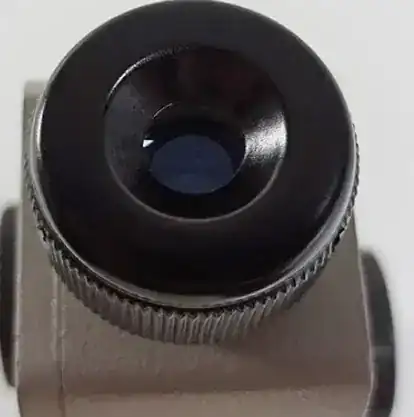
- Telescope and Eyepiece: A fixed telescope magnifies the view of the prism’s output, allowing the operator to clearly observe the field of view. The eyepiece is the lens the user looks through. It contains a reticle, which consists of fine crosshairs that serve as a precise reference point. The measurement is made by perfectly aligning the shadowline with the intersection of these crosshairs. The eyepiece can be focused by turning it, allowing each user to adjust it for their own vision.
- The Scale: The angle of the prism assembly required to center the shadowline is mechanically linked to a pre-calibrated scale. In early designs, a second telescope was required to read this scale. However, most modern Abbe refractometers feature a more convenient design where the scale is projected into the same eyepiece as the measurement view. By pressing a switch, the user can toggle between viewing the shadowline and viewing the scale. The scale is typically graduated with two sets of values: the fundamental
Refractive Index (nD) and a derived, application-specific scale such as Percent Brix (for sucrose concentration).
3.3 The Temperature Control System: Ensuring Measurement Stability
|
|
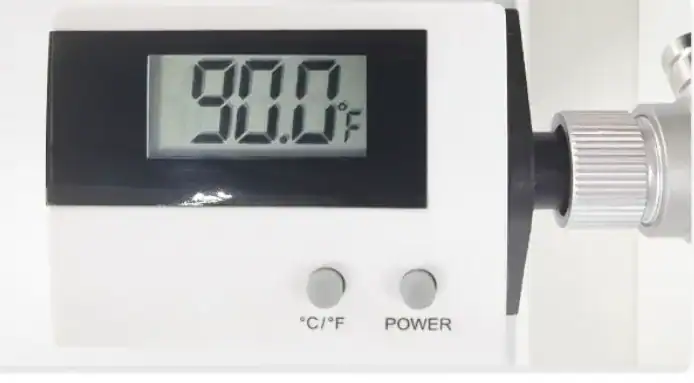
The refractive index of most liquids is highly sensitive to changes in temperature. As a liquid’s temperature increases, its density typically decreases. This allows light to travel faster through the medium, which in turn causes the refractive index to fall.5 For many common organic liquids, this change is substantial, with the refractive index decreasing by approximately -0.0004 to -0.0005 for every 1°C increase in temperature.
This temperature dependence makes precise temperature control not just an optional feature, but an absolute necessity for accurate and reproducible measurements. The stated accuracy of a typical Abbe refractometer is often to the fourth decimal place (e.g., ±0.0002). A temperature fluctuation of just a single degree Celsius can introduce an error of ±0.0005, which is more than double the instrument’s inherent precision. Without stabilizing the temperature, the fourth decimal place of the reading becomes essentially meaningless.
|
|

To address this critical issue, laboratory Abbe refractometers are constructed with a water jacket that encloses the prism assembly. This jacket is equipped with inlet and outlet nozzles. An external circulating water bath, or thermostat, is connected to these nozzles to continuously pump a fluid (usually water) at a precise, constant temperature (e.g., 20.0 °C) through the housing. This ensures that both the prisms and the sample reach and maintain a stable, known temperature during the measurement. A thermometer is mounted on the prism housing to allow the operator to verify that the target temperature has been reached and is stable. Because of this strong temperature dependence, all high-accuracy refractive index measurements must be reported with the temperature at which they were taken, for example, as ‘nD20’ for a measurement at 20 °C.
Table 1: Typical Specifications of a Laboratory Abbe Refractometer
To provide a quantitative understanding of the instrument’s capabilities, the table below summarizes typical performance specifications compiled from various models.
| Parameter | Typical Value |
| Refractive Index (nD) Range | 1.3000 to 1.7200 |
| Brix (%) Range | 0 to 95% |
| Resolution (Scale Division) | 0.0005 nD / 0.25% Brix |
| Accuracy | ±0.0002 nD / ±0.1% Brix |
| Temperature Control Range | 0 °C to 70 °C |
Part 4: Master the Instrument: Calibration, Operation, and Maintenance
Correctly using and maintaining an Abbe refractometer is crucial for obtaining accurate results and ensuring the instrument’s long operational life. This section provides practical, step-by-step guidance for users.
4.1 Calibration: The Foundation of Accuracy
Calibration validates the entire optical-mechanical alignment of the instrument, ensuring that the scale reading accurately reflects the physical measurement. It should be performed regularly, especially if the instrument has been moved or if high accuracy is required.
- Calibration with Distilled Water: For the lower end of the refractive index range, distilled water is the universal standard.
- Ensure the prisms are perfectly clean and dry.
- Place a few drops of distilled water on the measuring prism.
- Close the prisms and allow 5-10 minutes for the temperature to stabilize to the set point of the circulating water bath (typically 20 °C).
- Perform a measurement as described in the SOP below.
- The reading should be 1.3330 nD (or 0.0% Brix) at 20 °C. If the reading deviates, a small, dedicated calibration screw is turned with a screwdriver to adjust the scale until it reads the correct value.
- Calibration with a Glass Test Piece: For validating the upper range of the scale or for applications involving solids, a standard glass test piece is used. This is a small block of optical glass with a precisely known refractive index engraved on it.
|
|

- Apply a single drop of a contact liquid (e.g., 1-Bromonaphthalene or diiodomethane) onto the measuring prism. The contact liquid must have a refractive index higher than the test piece. (Note: If you purchase a Abbe refractometer from HINOTEK and ship it by air or express delivery, we will remove the 1-Bromonaphthalene because it is a liquid and cannot be transported by air)
- Gently place the polished face of the glass test piece onto the prism, ensuring a thin, bubble-free layer of contact liquid between them.
- Perform a measurement. The reading should match the value engraved on the test piece. If not, the calibration screw is adjusted as above.
4.2 Standard Operating Procedure (SOP) for Liquid Samples
The following procedure, synthesized from multiple operational guides, outlines the standard method for measuring a liquid sample.
- Clean Prisms: Begin by ensuring both the upper and lower prism surfaces are impeccably clean and dry. Use a soft lens tissue moistened with an appropriate solvent (e.g., ethanol or acetone) and finish with a dry tissue.
- Apply Sample: Using a clean disposable pipette, open the hinged prism assembly and place 2-3 drops of the liquid sample onto the center of the lower (measuring) prism. It is critical to avoid touching the pipette tip to the prism surface, as the glass is soft and easily scratched.
- Close Prisms: Gently lower the upper prism and lock it into place. The liquid should spread into a thin, uniform film that completely covers the prism surface, without any trapped air bubbles. If bubbles are present, open and close the prisms again or clean and reapply the sample.
- Illuminate: Turn on the instrument’s light source and position it to provide bright, even illumination of the prism window.
- Focus Eyepiece: Look into the eyepiece and rotate it until the crosshairs appear sharp and clear against the background.
- Find Boundary: Turn the large adjustment handwheel on the side of the instrument. This rotates the prism assembly and will bring the light/dark shadowline into the field of view.
- Compensate for Color: The boundary will likely appear as a blurry, colored fringe. Turn the dispersion compensator dial until this color disappears and the boundary becomes a sharp, well-defined black-and-white line.
- Align and Read: Carefully turn the large adjustment handwheel again to move the sharp shadowline so that it is perfectly centered on the intersection of the crosshairs. Depress the scale-reading switch (on models that have one) to illuminate the internal scale. Read the value from the appropriate scale (upper for refractive index, lower for Brix) to the correct number of decimal places, interpolating the final digit if necessary.
- Record Temperature: Note and record the temperature displayed on the built-in thermometer, as this is a critical part of the result.
- Clean Up: As soon as the measurement is complete, open the prisms. Use a tissue to blot away the bulk of the sample, then clean the prism surfaces thoroughly as described in step 1. This prevents sample drying on the prism and cross-contamination.
4.3 Measuring Solid and Opaque Samples
The Abbe refractometer’s versatility extends to solid and opaque materials, which require slightly different techniques.
- Transparent Solids: A transparent solid sample (e.g., glass or plastic) must have at least one face that is polished perfectly flat. A drop of a suitable contact liquid, which must have a refractive index higher than the solid being measured, is placed on the measuring prism. The polished face of the solid is then gently pressed into the liquid, which fills any microscopic gaps and ensures good optical contact. The measurement then proceeds using the transmitted light method as described for liquids.
- Opaque or Translucent Samples: Samples that do not transmit light, such as dark liquids, polymers, or turbid solutions, cannot be measured with the standard method. For these, the reflected light method is used. The illuminating prism is swung open and out of the way. The light source is repositioned to shine light through the front of the stationary measuring prism. The light travels through the prism, reflects off the interface between the prism and the opaque sample, and re-enters the telescope. The critical angle boundary is still formed and can be measured in the same way.
4.4 Maintenance and Best Practices for Longevity
Proper care is essential to maintain the accuracy and extend the life of an Abbe refractometer.
- Cleaning is Paramount: The single most important maintenance step is to clean the prisms thoroughly before and immediately after every use. Residue from previous samples can cause significant errors in subsequent measurements and can corrode the delicate prism surface over time.
- Proper Cleaning Technique: Use only soft, non-abrasive materials like laboratory lens tissue. Moisten the tissue with a suitable solvent (distilled water for aqueous solutions, ethanol or acetone for organic samples). A gentle dabbing or blotting motion is preferable to vigorous rubbing, as this minimizes the risk of scratching the soft optical glass.
- Handle with Care: The prism glass is the most valuable and fragile part of the instrument. Never allow hard objects—such as glass pipette tips, metal spatulas, or stir rods—to touch its surface.
- Storage: When not in use, the instrument should be covered to protect it from dust and stored in a dry, well-ventilated location to prevent moisture from damaging the optical components. It is good practice to place a clean, folded piece of lens tissue between the prisms during storage to prevent them from accidentally touching and to cushion them.
- Avoid Physical Shock: The refractometer is a precision optical instrument. Strong vibrations or impacts can misalign the internal optics and mechanics, leading to a loss of accuracy. Do not attempt to disassemble or service the internal components yourself; this should be left to qualified technicians.
Tips: Calibration and Maintenance of Abbe Refractometer.
Tips: Fully Automatic Abbe Refractometer vs. Abbe Refractometer
Part 5: Applications Across Industries: The Versatile Analyst
The Abbe refractometer’s ability to provide fast, accurate, and non-destructive analysis with a minimal amount of sample has made it an indispensable tool across a wide range of scientific and industrial fields.
5.1 Food and Beverage Industry: The Guardian of Quality and Taste
In the food and beverage industry, the refractometer is a cornerstone of quality control. Its primary application is the measurement of Brix (symbol °Bx), a scale that corresponds to the percentage of soluble solids content in a solution. Since the most common soluble solid in food products is sugar, the Brix scale is used as a direct and rapid measure of sugar concentration.
Key applications include:
- Quality Control: Ensuring product consistency in juices, jams, jellies, syrups, honey, carbonated beverages, and dairy products by verifying that the sugar content matches the recipe specification.
- Ripeness Assessment: Winemakers and fruit growers use refractometers to measure the sugar content of grapes and other fruits directly in the field. This helps determine the optimal time for harvesting to achieve the desired balance of sweetness and flavor. In winemaking, the Oechsle or KMW-Babo scales are often used, which are directly related to the Brix value.
- Brewing: In beer production, refractometers are used to measure the concentration of sugars in the wort (the liquid extracted from the mashing process). This measurement, often expressed on the Plato scale, is critical for monitoring the fermentation process and predicting the final alcohol content of the beer.
5.2 Pharmaceutical and Chemical Sector: Ensuring Purity and Potency
In the highly regulated pharmaceutical and chemical industries, where purity and concentration are paramount, the Abbe refractometer serves as a vital analytical tool.
- Quality Assurance: It is used for purity tests and quality checks on incoming raw materials, in-process intermediates, and final drug products. By comparing the measured refractive index to a standard, technicians can quickly verify the identity and purity of a substance.
- Concentration Determination: The instrument is used to accurately determine the concentration of various chemical solutions, reagents, and solvents used in manufacturing and laboratory settings.
- Clinical and Hospital Use: In hospital pharmacies, refractometers are used in the compounding of drugs to ensure correct formulation. They have also become a key tool in programs to prevent drug diversion; by quickly checking the concentration of injectable narcotics like fentanyl, staff can verify that the drug has not been diluted or tampered with.
- Research and Development: In R&D labs, the refractometer is used to characterize newly synthesized compounds and to monitor the progress of chemical reactions.
5.3 Gemology: Unmasking the Identity of Gemstones
In the field of gemology, the refractometer is one of the most fundamental and powerful tools for gemstone identification. Unlike in other industries where it measures concentration, here it is used to determine a key identifying physical property.
- Gemstone Identification: Every type of gemstone has a characteristic refractive index or a narrow range of RI values. A gemologist can measure the RI of an unknown stone and compare it to reference charts to determine its identity. This is a primary method for distinguishing, for example, a natural ruby from a red spinel or a glass imitation.
- Detection of Birefringence: Many gemstones (like ruby, sapphire, and tourmaline) are optically anisotropic, meaning they have more than one refractive index depending on the polarization of light passing through them. This property is called birefringence. By using a polarizing filter on the eyepiece, a gemological refractometer can measure both the lowest and highest refractive indices. The numerical difference between these two values is the stone’s birefringence, which is another critical diagnostic feature that helps in identification.
- Authenticity and Treatment Detection: The refractometer helps distinguish natural gemstones from their synthetic counterparts and can sometimes help detect certain treatments, such as the oiling of emeralds, which alters the apparent refractive index.
Table 2: Summary of Abbe Refractometer Applications
This table provides a consolidated overview of the instrument’s diverse applications across various industries.
| Industry | Key Applications | Measured Parameter | Example Products / Samples |
| Food & Beverage | Quality Control, Ripeness Testing, Process Monitoring | Brix (%), Oechsle (°Oe), Plato (°P) | Fruit Juices, Wine, Beer, Honey, Jam, Soft Drinks |
| Pharmaceutical & Chemical | Purity Analysis, Concentration Check, Drug Compounding | Refractive Index (nD), % Concentration | Solvents, Chemical Reagents, Active Pharmaceutical Ingredients (APIs), Injectable Drugs |
| Gemology | Gemstone Identification, Authenticity Verification | Refractive Index (nD), Birefringence | Ruby, Sapphire, Emerald, Diamond, Quartz, Glass Imitations |
| Other Industrial | Quality Control, Concentration of Blends | Refractive Index (nD), % Concentration | Fats, Oils, Paints, Varnishes, Coolants, Solvents, Adhesives |
Part 6: The Abbe Refractometer in Context: A Comparative Analysis
While the classic Abbe refractometer remains a laboratory staple, the field of refractometry has evolved. Understanding how the Abbe compares to other available instruments—such as portable handheld models and modern digital benchtop units—is essential for selecting the right tool for a specific task.
6.1 Abbe Refractometer vs. Handheld Refractometers (Analog & Digital)
The primary distinction between an Abbe refractometer and a handheld refractometer is a trade-off between laboratory-grade precision and field-ready portability.
|
|


- Abbe Refractometer: This is a stationary, benchtop instrument designed for a controlled laboratory environment. Its strengths are its high precision (typically to four decimal places, ±0.0002 nD), its stability, and its ability to perform measurements under tightly controlled temperatures via a water bath. It is also more versatile, capable of measuring both liquid and solid samples. However, it is more expensive, larger, and not portable. The Abbe is often considered the “gold standard” against which the accuracy of portable refractometers is checked.
- Handheld Refractometers: These instruments are designed for speed, convenience, and portability. They are small, lightweight, and ideal for quick checks in the field, on a factory floor, or by a production line.
- Analog Handhelds are the simplest and least expensive. They operate on the same critical angle principle but require the user to hold the instrument up to a light source and read a scale through an eyepiece. Their precision is lower, and they are more susceptible to user interpretation errors.
- Digital Handhelds represent a significant improvement. They use an LED light source and a photodiode sensor to read the shadowline electronically, displaying the result on a digital screen. This eliminates user subjectivity and improves precision. Many also feature Automatic Temperature Compensation (ATC), which uses a built-in thermometer and algorithms to correct the reading for ambient temperature, a crucial feature for field use where a water bath is not practical.
The relationship between these instruments is often complementary. A winemaker might use a digital handheld refractometer in the vineyard for quick, convenient checks on grape ripeness but would rely on the superior accuracy and temperature control of an Abbe refractometer in the laboratory for final quality control of the wine.
6.2 Abbe vs. Modern Digital Benchtop Refractometers
The evolution from the classic manual Abbe to the modern digital benchtop refractometer represents a fundamental paradigm shift from a mechanical-optical instrument to a fully automated electro-optical system.
- Classic Abbe (Manual): The Abbe refractometer is a masterpiece of mechanical optics. The user is an integral and active part of the measurement system. The operator’s skill in cleaning the prisms, applying the sample, adjusting the compensator, aligning the shadowline with the crosshairs, and reading the vernier scale directly impacts the accuracy and reproducibility of the result. This reliance on operator skill can lead to variability between different users.
- Digital Benchtop Refractometers: These instruments automate the entire measurement process. They use a long-life LED as a light source and a high-resolution electronic detector, such as a CCD sensor, to locate the critical angle shadowline with no user input. The result is calculated by a microprocessor and displayed digitally. This approach offers several distinct advantages:
- Higher Precision and Reproducibility: By removing user subjectivity, digital instruments achieve higher precision (often to five decimal places, ±0.00002 nD) and excellent reproducibility between measurements and users.
- Speed and Efficiency: Measurements are typically completed in seconds, significantly increasing throughput in a busy lab.
- Data Integrity and Compliance: Digital models offer advanced features like internal data storage, audit trails, user access controls, and the ability to connect to laboratory information systems (LIMS). This is critical for regulated industries like pharmaceuticals, which must comply with standards such as 21 CFR Part 11.
This evolution is not merely about convenience; it is about meeting the modern laboratory’s demand for higher efficiency, improved accuracy, and stringent data security. While the classic Abbe refractometer remains an excellent tool for teaching, research, and many quality control applications, the digital benchtop refractometer is the instrument of choice for high-throughput, automated, and regulated environments.
Table 3: Comparative Overview of Refractometer Types
| Feature | Abbe Refractometer (Manual) | Analog Handheld | Digital Handheld | Digital Benchtop |
| Principle | Manual optical alignment of critical angle | Manual optical alignment of critical angle | Electronic detection of critical angle | Electronic detection of critical angle |
| Accuracy | High (±0.0002 nD) | Low (±0.001 nD / ±0.2% Brix) | Medium (±0.0005 nD / ±0.1% Brix) | Very High (±0.00002 nD) |
| Sample Types | Liquids & Solids | Liquids | Liquids | Liquids & Solids |
| Portability | No (Benchtop) | Yes (Highly Portable) | Yes (Highly Portable) | No (Benchtop) |
| Temp. Control | External Water Bath (High Precision) | None (Correction tables needed) | Automatic Temp. Compensation (ATC) | Internal Peltier (High Precision) |
| User Skill | High (Requires training and skill) | Low | Low | Very Low (Push-button operation) |
| Data Output | Manual Reading | Manual Reading | Digital Display | Digital Display, Data Logging, LIMS |
| Cost | Moderate to High | Low | Moderate | High |
| Ideal Use Case | Teaching labs, R&D, high-precision QC where throughput is not primary | Quick field checks (agriculture, brewing) | QC on production lines, field service | High-throughput QC, regulated labs (pharma), R&D |
Part 7: Frequently Asked Questions (FAQ)
- How accurate is an Abbe refractometer?
A standard laboratory Abbe refractometer typically offers an accuracy of ±0.0002 to ±0.0005 in refractive index (nD) and ±0.1% to ±0.25% in the Brix scale. This accuracy is highly dependent on precise temperature control and proper operator technique. - What factors most significantly affect the measurement?
The three most critical factors are:
- Temperature: This is the single largest source of potential error. The refractive index of liquids changes significantly with temperature, so stabilizing the sample at a known temperature using the water jacket is essential for accurate results.
- Wavelength of Light (Dispersion): A substance’s refractive index varies with the wavelength of light. The instrument’s built-in Amici prism compensator is used to correct for this, standardizing the measurement to the sodium D-line (589 nm) even when using a white light source.
- Cleanliness and Calibration: Any residue on the prisms from previous samples or improper calibration against a known standard (like distilled water) will directly lead to inaccurate readings.
- What is the difference between Refractive Index (nD) and Brix (%)?
Refractive Index (nD) is a fundamental, dimensionless physical property of a substance that measures how much it bends light. Brix (%) is an application-specific scale that is derived from the refractive index. It is defined as the percentage concentration of sucrose by weight in an aqueous solution. For example, a solution that is 10 °Brix contains 10 grams of sucrose per 100 grams of solution. The refractometer measures the nD and uses a built-in conversion table to display the corresponding Brix value. - How does an Abbe refractometer compare to a hydrometer?
A refractometer is generally superior to a hydrometer for measuring solution concentration. The refractometer requires only a very small sample (a few drops), whereas a hydrometer needs a large volume of liquid to float in. The refractometer is typically more accurate and less affected by temperature (when properly controlled). Reading a hydrometer can also be subjective due to the liquid’s meniscus, while the refractometer’s shadowline is more distinct. - Can you measure the refractive index of gases with it?
While it is theoretically possible, the Abbe refractometer is not designed or sensitive enough for the precise measurement of gases. The refractive index of gases is very close to that of a vacuum (i.e., just slightly above 1.0), and the changes with pressure are very small (approximately 3×10⁻⁴ per atmosphere).14 Specialized interferometers or other dedicated instruments are required for accurate gas refractometry.
If you are ready to find the right Abbe Refractometer for your laboratory, please browse our complete product range: Abbe Refractometer
Works cited
- Abbe refractometer | Photonics Dictionary, https://www.photonics.com/EDU/Abbe_refractometer/d2103
- Abbe Zeiss refractometer, https://macro.lsu.edu/howto/Abbe_refractometer.pdf
- Refractive Index Theory – Chemistry Online @ UTSC, https://www.utsc.utoronto.ca/webapps/chemistryonline/production/refractive.php
- www.mt.com,https://www.mt.com/us/en/home/applications/Application_Browse_Laboratory_Analytics/Refractive_index/definition_and_measurement.html#:~:text=Refractive%20index%20measurement%20checks%20the,to%20%2D%20%2F%20%2B%200.00002).
- Abbe Refractometer – SDUnet, https://sdunet.dk/-/media/sdunet/filer/enheder/institutter/fkf/praktisk-info-faciliteter/manualer/abberefractometermanual.pdf
- Abbe Refractometer – Physics Museum – The University of …, https://physicsmuseum.uq.edu.au/abbe-refractometer
This guide is maintained by HINOTEK’s core technical team, comprised of senior engineers and application scientists with over two decades of hands-on experience in fields such as microscopy, centrifugation, and spectrophotometry. We are committed to ensuring that every piece of information in this guide—from instrument principles and technical specifications to laboratory procurement advice—maintains the highest level of accuracy and timeliness.
This content is regularly reviewed and updated to reflect the latest industry standards and technological advancements. We value feedback from the global scientific community. Should you have any questions or suggestions, or wish to discuss any technical details, please do not hesitate to contact our expert team at [email protected].