
 |
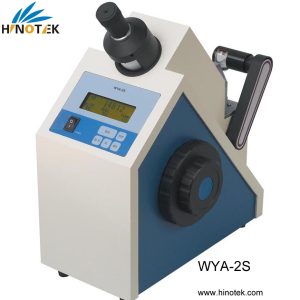
Calibration and Maintenance Guidelines for Abbe Refractometers
Abbe refractometers measure refractive index (nD), average dispersion (nF-nC), and sugar concentration (Brix 0-95%) in transparent liquids and solids. Proper calibration and optical care ensure high measurement accuracy and long instrument lifespan.
Refractive Index Measurement | Snell’s Law & Critical Angle | Water & Glass Calibration | Optical Prism Maintenance
Key Technical Principles & Features
- Refractive Index Determination: Based on Snell’s Law (n1 sin θ1 = n2 sin θ2) and critical angle measurement (90° refraction boundary).
- Broad Measurement Range: Measures refractive index (nD 1.333 – 1.531) and sucrose concentration (0 – 95% Brix) at temperatures from 0°C to 50°C.
- High Versatility: Essential instrument for petroleum, pharmaceutical, food processing, sugar refining, paint manufacturing, and geological research laboratories.
- Dual Calibration Methods: Supports both distilled water calibration (nD = 1.3330) and certified standard glass block calibration.
- Achromatic Color Compensation: Built-in dispersion compensation handwheel eliminates spectrum color fringes for razor-sharp boundary alignment.
Standard Calibration Procedures
Method 1: Distilled Water Calibration
- Step 1 (Prism Cleaning): Release prism lock wrench. Clean upper and lower prism surfaces using lens paper moistened with anhydrous alcohol or volatile solvent.
- Step 2 (Sample Loading): Apply 2 to 3 drops of pure distilled water onto the lower main prism. Close and lock the prism assembly firmly.
- Step 3 (Scale Setting): Rotate the prism drive handwheel until the refractive index scale reads exactly 1.3330 (at 20°C).
- Step 4 (Boundary Alignment): Observe through eyepiece. Adjust scale adjustment screw until black/white boundary line intersects crosshair center. Rotate dispersion wheel to eliminate color fringes.
Method 2: Standard Glass Block Calibration
- Step 1 (Prism Opening): Release lock wrench and open light-entry prism. Clean main refracting prism surface.
- Step 2 (Block Mounting): Apply 1 drop of 1-bromonaphthalene contact liquid to polished surface of standard glass block. Mount block on prism with polished side facing upward.
- Step 3 (Index Alignment): Turn handwheel until index scale matches known certified nD value printed on standard glass block.
- Step 4 (Screw Adjustment): If boundary line deviates, use watchmaker screwdriver through dispersion adjustment hole to align crosshair exactly on boundary line.
 |
Routine Maintenance & Care Rules
| Maintenance Category | Standard Requirement & Operational Rule |
|---|---|
| Prism Cleaning Protocol | Clean working prism surfaces before/after testing and between sample changes using lens paper & alcohol mixture. |
| Corrosive Liquid Handling | Wash and neutralize optical and metal parts immediately after analyzing corrosive samples to prevent chemical etching. |
| Sample Purity Control | Ensure test samples contain zero hard particulate impurities to avoid scratching or denting delicate prism faces. |
| Optical Element Care | Never touch optical glass with bare hands. Remove dust with blower/soft brush; remove oil films with 1:3 alcohol-ether mixture. |
| Storage Environment | Store in dry, well-ventilated rooms with plastic dust cover to prevent humidity-induced optical mold growth. |
| Illumination Maintenance | To replace illumination bulb, slide condenser tube axially, insert new bulb, and adjust position to center light on prism. |
| Vibration & Impact Protection | Protect instrument from mechanical shock or severe vibration to preserve precision optical alignment. |
| Service & Calibration Integrity | Do not disassemble optical components without authorization. Send to certified technician if out of tolerance. |
For more information about Abbe Refractometer, please read our article: How Does an Abbe Refractometer Work?