
Guide Navigation
- Section 1: The Core Principle: How Does a Magnetic Stirrer Work?
- Section 2: A Deep Dive into the Magnetic Stir Bar: Your Guide to Selecting the Right “Flea”
- Section 3: Types of Magnetic Stirrers: Finding the Perfect Match for Your Application
- Section 4: The Hot Plate Surface: A Critical Choice of Material
- Section 5: Magnetic Stirrers in Action: Key Laboratory Applications
- Section 6: Magnetic Stirrer vs. Overhead Stirrer: Which Do You Need?
- Section 7: Troubleshooting Common Magnetic Stirrer Problems
- Section 8: A Buyer’s Guide to Selecting Your Next Magnetic Stirrer
Introduction: The Unseen Force in the Modern Laboratory

In the world of scientific research and industrial quality control, the thorough mixing of liquids is a fundamental, non-negotiable step. From preparing a simple buffer solution to conducting a complex chemical synthesis, the homogeneity of a mixture can dictate the success or failure of an entire experiment. While manual stirring has its place, it lacks the consistency, speed, and automation required by modern laboratories. This is where the magnetic stirrer, also known as a magnetic mixer (Browse HINOTEK Advanced Magnetic Mixer) establishes itself as an indispensable tool.
First patented in 1944 by Arthur Rosinger, the magnetic stirrer is a deceptively simple device that leverages a fundamental force of nature—magnetism—to achieve efficient, automated, and hands-free agitation of liquids. Its core advantage lies in its ability to stir solutions at high speeds and for extended periods, a feat impossible to replicate manually, freeing up valuable time for researchers and technicians.
However, the true elegance of the magnetic stirrer lies in its principle of contact-free mixing. Unlike overhead stirrers that require a mechanical shaft to enter the vessel, a magnetic stirrer operates through the container wall. This design is crucial for applications where maintaining a sterile or controlled atmosphere is paramount. Because the system can be completely sealed, it is uniquely suited for sensitive tasks like cell culture preparation and air-sensitive chemical reactions, preventing contamination and ensuring the integrity of the experiment.
This comprehensive guide will delve into the science behind how a magnetic stirrer works. We will dissect its core components, explore the critical role of the magnetic stir bar, categorize the various types of stirrers available, and examine their diverse applications across different industries. Whether you are a researcher, a laboratory manager, or a procurement specialist, this resource will provide the technical knowledge needed to select, operate, and optimize the use of this foundational piece of laboratory equipment.
Section 1: The Core Principle: How Does a Magnetic Stirrer Work?
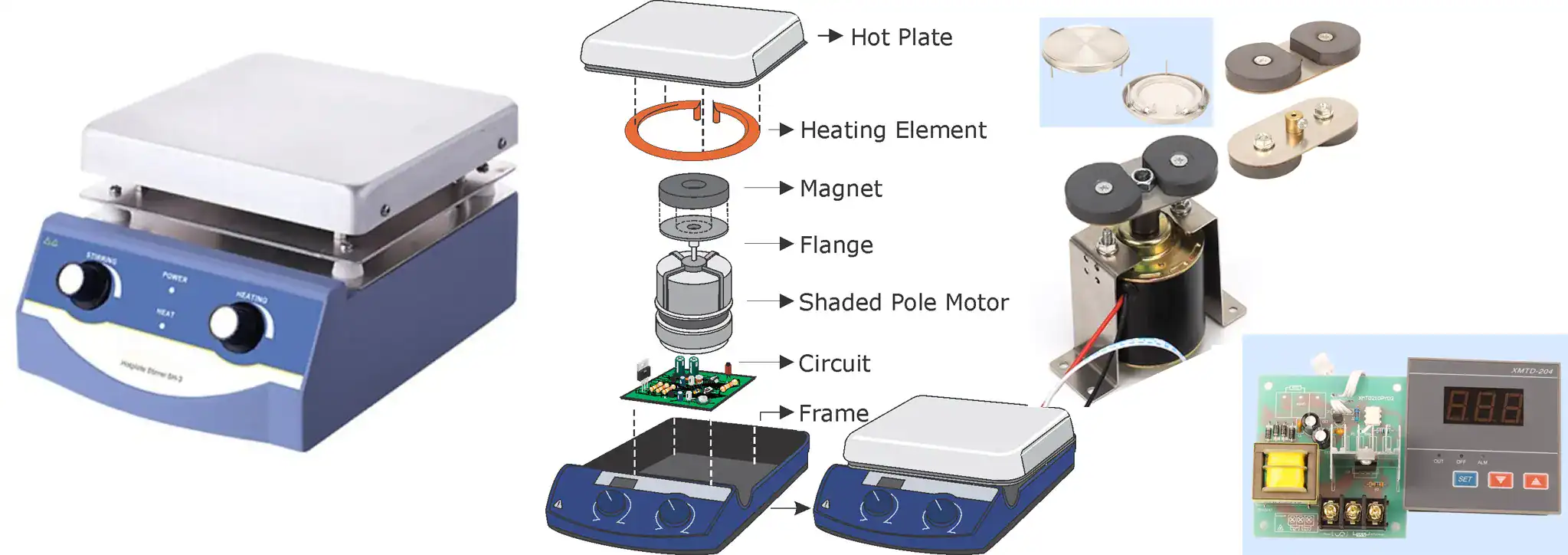
The operation of a magnetic stirrer is a masterful application of electromagnetism and fluid dynamics. It achieves vigorous mixing without any mechanical parts entering the sample, a feature that distinguishes it from nearly all other stirring methods. The process relies on the magnetic coupling between a drive system within the stirrer’s housing and a small magnet immersed in the liquid.
The Science of Contact-Free Agitation
At its heart, a magnetic stirrer’s function is based on the laws of magnetism: opposite poles attract, and like poles repel.5 The device contains a drive magnet that is made to rotate. When a vessel containing a liquid and a second, smaller magnet—the stir bar—is placed on the device, the stir bar magnetically couples with the drive magnet. As the drive magnet rotates, it forces the stir bar to spin in sync with it.
This rapid spinning of the stir bar creates a vortex in the liquid, a swirling motion that pulls the solution down from the surface and forces it outwards, ensuring that all components are thoroughly and uniformly mixed. The speed of this rotation can be precisely controlled, allowing the user to create anything from a gentle swirl to a powerful, deep vortex, depending on the application’s requirements.
Anatomy of a Magnetic Stirrer: A Component Breakdown
While simple in principle, a magnetic stirrer is composed of several key components that work in concert to provide reliable performance. Understanding each part is essential for both operation and purchasing decisions.
|
|
The Drive System
The rotating magnetic field, the engine of the entire process, is generated by one of two primary mechanisms. The choice between these designs represents a fundamental trade-off between mechanical simplicity and electronic sophistication.
- Rotating Permanent Magnet: This is the most traditional design, where an electric motor physically spins one or more permanent magnets located beneath the top plate. This system is mechanically straightforward and cost-effective. However, as it contains moving parts, it is subject to mechanical wear over time and can be a source of operational noise and vibration.
- Stationary Electromagnets (Coils): More advanced stirrers utilize a set of stationary electromagnetic coils instead of a motor and permanent magnet. By passing an electric current through these coils in a controlled sequence, a rotating magnetic field is generated without any moving parts. This design is inherently more durable, wear-free, and operates silently. It also allows for more sophisticated control, such as instantly reversing the stirring direction. For demanding, long-duration, or high-precision applications, such as in automated pharmaceutical QC, an electromagnetic drive offers superior reliability and justifies a higher initial investment.
The Stir Plate (Top Plate)
This is the surface upon which the beaker, flask, or other vessel is placed. The material of this plate is a critical performance factor, especially in models that also include a heating function. The choice of material—typically ceramic, aluminum, or stainless steel—impacts chemical resistance, temperature uniformity, and durability, and will be explored in detail in Section 4.
The Control System
The user interacts with the stirrer via its control interface, which can be either analog or digital.
- Speed Control: A knob or digital keypad allows the user to set and adjust the rotational speed of the magnetic field, measured in revolutions per minute (RPM).
- Temperature Control: On combination hot plate stirrers, a separate control is used to set the desired temperature of the top plate.
The Heart of the Action: The Magnetic Stir Bar
|
|

Often called a “flea” or “spin bar,” this is a small, encapsulated permanent magnet that is placed directly into the liquid. It is the component that directly imparts motion to the fluid. The stir bar’s size, shape, and material composition are of paramount importance for successful stirring, as an incorrect choice is the most common cause of operational failure.
Tips: Beyond “Lab Magic”: The Scientific Reality of Magnetic Stirrer Reproducibility.
Section 2: A Deep Dive into the Magnetic Stir Bar: Your Guide to Selecting the Right “Flea”
The magnetic stir bar is arguably the most critical accessory for a magnetic stirrer. While it may seem like a simple object, its design and selection are governed by a nuanced interplay of physics and material science. Choosing the correct stir bar is the single most important factor in preventing the most common failure in magnetic stirring: spinout.
Why Stir Bar Selection is Critical for Success
Spinout, or decoupling, occurs when the stir bar loses its magnetic lock with the internal drive magnet. Instead of spinning smoothly in the center of the vessel, it may wobble erratically, jump to the side, or stop spinning altogether. This failure renders the mixing process ineffective. Proper selection of the stir bar’s size, shape, and magnetic material directly counteracts the forces that cause spinout, ensuring a stable and efficient vortex is maintained throughout the process.
A Practical Sizing Formula: Matching Bar, Vessel, and Drive Magnet
Optimizing the magnetic coupling requires balancing three key parameters:
- Vessel Diameter: As a general rule, the length of the stir bar should be approximately two-thirds the inner diameter of the vessel’s bottom. This ensures the bar is large enough to create an effective vortex without striking the sides of the container.
- Drive Magnet Length: For the strongest and most stable magnetic coupling, the length of the stir bar should be roughly equal to the length of the drive magnet inside the stirrer unit. A bar that is significantly shorter or longer than the drive magnet creates a weak magnetic circuit, which drastically reduces the maximum speed at which the bar can spin before decoupling.
- Volume and Viscosity: Larger fluid volumes and higher viscosities present greater resistance to the stir bar’s movement. Overcoming this resistance requires more torque, which is achieved by using larger and more powerful stir bars.
Decoding Stir Bar Shapes and Their Applications
The geometry of a stir bar is not arbitrary; each shape is engineered to perform optimally under specific conditions, primarily related to the shape of the vessel and the nature of the mixing task.
| Stir Bar Shape | Ideal Vessel Type | Primary Application | Key Performance Characteristic |
| Oval / Elliptical | Round-Bottom Flasks | Chemical synthesis, reactions in flasks | Conforms to the curved bottom, preventing jamming and ensuring smooth, stable rotation. |
| Cylindrical with Pivot Ring | Flat or Uneven Bottom Beakers | General purpose mixing, buffer preparation | The central ring minimizes contact area, reducing friction and chattering on imperfect surfaces. |
| Cross / Octagonal | Flat-Bottom Beakers, Large Vessels | High-speed or vigorous mixing | Multifaceted surfaces create extra turbulence for more efficient mixing and provide exceptional stability, resisting spinout. |
| Triangular / Wedge | Flat-Bottom Beakers | Dissolving solids, mixing sediments/slurries | The sharp edge acts as a scraper, lifting settled material from the bottom of the vessel. |
| Micro / Flea | Vials, Test Tubes, Cuvettes | Small-volume sample preparation | Designed specifically for mixing in very small containers where standard bars will not fit. |
Material Science: Magnet Core and Coating
The performance of a stir bar is also determined by its internal magnet and external coating.
Magnet Core
- Alnico (Aluminum-Nickel-Cobalt): This is the industry-standard magnetic material. It offers a good balance of magnetic strength and high-temperature resistance, making it suitable for the vast majority of laboratory applications.
- Samarium-Cobalt (Rare Earth): These magnets are significantly more powerful than Alnico magnets. This superior magnetic strength provides a much stronger coupling with the drive magnet, generating higher torque. A rare earth magnet is the ideal choice when stirring large volumes or moderately viscous solutions that would cause a standard Alnico bar to spin out.
Coating
The coating serves to protect the magnet from the chemical environment and prevent contamination of the sample.
- PTFE (Polytetrafluoroethylene): Commonly known by the brand name Teflon, PTFE is the most prevalent coating. It is valued for its exceptional chemical inertness across a wide range of reagents and its ability to withstand temperatures up to approximately 225 °C.
- Glass (Pyrex®): For applications exceeding the thermal stability of PTFE or involving chemicals that can attack it (such as alkali metals dissolved in primary amines), glass-encapsulated stir bars are the solution. They can be used at very high temperatures and offer “zero absorption” of the sample, which can be critical in trace analysis.
Section 3: Types of Magnetic Stirrers: Finding the Perfect Match for Your Application
The market for magnetic stirrers has evolved far beyond a single, one-size-fits-all device. This evolution reflects the broader trend in laboratory science towards greater automation, reproducibility, and specialization. Today, a diverse range of models exists, each tailored to specific needs regarding heating, control, throughput, and operating environment. Understanding this product landscape is key to selecting an instrument that is not just functional, but optimal for your lab’s workflow.
- Standard Magnetic Stirrers (Non-Heating): This is the most basic configuration, designed for simple agitation of solutions at ambient temperature. They are economical, reliable, and perfectly suited for tasks like dissolving salts, mixing buffers, and performing titrations where heating is not required.
- Hot Plate Magnetic Stirrers: The most common and versatile type found in modern labs, this device integrates a heating element into the top plate, allowing for simultaneous heating and stirring. This dual functionality is essential for a vast array of chemical and biological applications, from accelerating reaction rates in chemical synthesis to maintaining specific temperatures for enzymatic assays.
- Digital vs. Analog Control: The method of controlling speed and temperature is a primary differentiator.
- Analog Stirrers use simple knobs for adjustment. While cost-effective and durable, they lack a precise digital readout, making exact replication of conditions dependent on user estimation. They are well-suited for educational settings or routine tasks where absolute precision is not the primary concern.
- Digital Stirrers feature an LCD or LED screen that displays the exact RPM and temperature. This allows for precise, repeatable, and documentable experimental conditions. For any work performed under quality guidelines (e.g., GMP), or for research where reproducibility is critical, a digital model is the required standard.
- Multi-Position Stirrers: To meet the demands of high-throughput workflows, multi-position stirrers feature a single housing with multiple, independently or synchronously controlled stirring points (ranging from 4 to as many as 60). These units are invaluable in pharmaceutical research, quality control, and parallel synthesis, as they dramatically increase productivity while saving significant bench space.
- Mini and Micro Stirrers: These are compact, often low-profile stirrers designed for small-scale applications or for use in space-constrained environments like fume hoods, glove boxes, or incubators.5 Their portability also makes them suitable for field work.
- Heavy-Duty / High-Capacity Stirrers: Standard stirrers are typically limited to volumes of a few liters. For larger-scale preparations (up to 150 L) or for stirring more viscous media, heavy-duty stirrers are required. These models are engineered with larger, more powerful motors and stronger drive magnets to generate the necessary torque to prevent decoupling under heavy loads.
- Specialty Stirrers: A variety of stirrers have been developed for highly specific environments and applications.
- Battery-Powered: These portable units are designed for field analysis or use in locations without convenient access to electrical outlets.
- Air-Operated Turbine: For use in hazardous environments where flammable vapors may be present, these stirrers use compressed air to drive the turbine, eliminating the risk of electrical sparks.
- Cell Culture Stirrers: These are designed for the unique needs of cell biology. They provide very slow, gentle, and uniform agitation to keep cells in suspension without causing damage. Crucially, they are built with low heat-dissipating motors, allowing them to be used safely inside CO2 incubators without disrupting the controlled temperature environment.
Section 4: The Hot Plate Surface: A Critical Choice of Material
For the ubiquitous hot plate stirrer, the material of the top plate is one of the most important specifications to consider. It directly influences the instrument’s performance in terms of temperature range, chemical resistance, and physical durability. The choice between ceramic, aluminum, and stainless steel is not a matter of which is universally “best,” but rather a critical trade-off based on the primary applications of the laboratory.
The selection process should begin with a simple question: “What am I heating, and what chemicals am I using?” An organic chemistry lab working with highly corrosive reagents has vastly different needs than a materials science lab requiring absolute temperature uniformity for a sand bath.
|
|

| Feature | Ceramic / Glass-Ceramic | Aluminum | Stainless Steel |
| Max Temperature | Very High (up to 540 °C) | Moderate (up to ~400 °C) | High (varies, often used as a robust base) |
| Temp. Uniformity | Fair (edges can be cooler) | Excellent (heats evenly across the entire surface) | Good to Excellent (often coated for uniformity) |
| Chemical Resistance | Excellent (highly resistant to corrosion and acids) | Fair (vulnerable to corrosive chemicals) | Very Good (resistant to many chemicals but not all) |
| Thermal Shock Resistance | Poor (can crack with rapid temperature changes or contact with metal) | Excellent (highly resistant to thermal shock) | Excellent (highly resistant to thermal shock) |
| Physical Durability | Fair (prone to chipping and scratching) | Very Good (more robust and resistant to impacts) | Excellent (extremely resistant to physical damage) |
| Best For… | Aggressive/corrosive chemicals, titrations (white background) | Applications requiring precise temperature uniformity, heating metal vessels or sand baths | High-impact environments, applications requiring maximum magnetic coupling strength |
- Ceramic: This is the material of choice when chemical resistance is the top priority. Its hard, non-porous surface is easy to clean and will not be damaged by most corrosive spills. The bright white color is an added benefit for applications like titrations, where visual color change detection is critical. However, its main drawback is its susceptibility to thermal shock; placing a cold metal beaker on a very hot ceramic plate can cause it to crack.
- Aluminum: When temperature uniformity is paramount, aluminum is the superior choice. Its excellent thermal conductivity ensures that the entire plate maintains a consistent temperature, which is crucial when heating multiple vessels or large containers. It is also much more durable and resistant to physical knocks than ceramic. Its primary limitation is its vulnerability to corrosive chemicals.
- Stainless Steel: Valued for its extreme durability and good chemical resistance, stainless steel offers a unique advantage related to the stirring function itself. Unlike aluminum, stainless steel does not generate eddy currents from the rotating magnetic field. This results in a stronger, more efficient magnetic coupling between the drive magnet and the stir bar, making it an excellent choice for applications requiring powerful stirring of larger or more viscous volumes.
Section 5: Magnetic Stirrers in Action: Key Laboratory Applications
The utility of the magnetic stirrer is defined by its two core characteristics: its suitability for small, lab-scale volumes and its contact-free, sealed-system capability. This combination makes it a foundational tool across nearly every discipline of modern science and industry.
- Chemistry and Pharmaceuticals: In synthesis labs, magnetic stirrers are used to ensure reactants are continuously mixed, promoting higher reaction rates and yields. They are essential for analytical procedures like titration, where complete mixing is required to accurately determine the endpoint. In pharmaceutical quality control, they are used for
dissolution testing of solid dosage forms and for the preparation of buffer solutions and mobile phases for chromatography. - Biology and Microbiology: The ability to stir within a sealed, sterile container is paramount in biological applications. Magnetic stirrers are used extensively for preparing sterile growth media for bacteria and yeast cultures. Specialized cell culture stirrers provide the gentle, low-speed agitation necessary to keep mammalian cells in suspension without causing shear-induced damage.
- Food and Beverage Industry: In quality control laboratories, magnetic stirrers are vital for sample preparation. They are used to homogenize liquid samples, create emulsions, and dissolve solid additives or ingredients to ensure product consistency before analysis. This ensures that the small aliquot taken for testing is representative of the entire batch.
- Environmental Science: For the analysis of environmental contaminants, magnetic stirrers are used to prepare samples, such as creating uniform soil suspensions in an extraction solvent or mixing water samples with reagents prior to colorimetric or spectroscopic analysis.
- Advanced Applications in Sealed Systems: Perhaps the most powerful application of the magnetic stirrer is in air-sensitive chemistry. Because the stirring mechanism is external, a reaction flask can be completely sealed from the atmosphere. This makes the magnetic stirrer the default choice for reactions conducted under an inert atmosphere using a Schlenk line or inside a glove box.4 An overhead stirrer would require a complex, often imperfect, rotating seal, introducing a potential point of atmospheric leakage. The magnetic stirrer elegantly bypasses this problem, providing reliable mixing while maintaining the absolute integrity of the controlled environment.
Section 6: Magnetic Stirrer vs. Overhead Stirrer: Which Do You Need?
A common point of confusion for laboratory managers and procurement specialists is deciding between a magnetic stirrer and an overhead stirrer. The choice is not about which is “better,” but which is the correct tool for the job. The fundamental difference lies in how they transmit force to the liquid: a magnetic stirrer uses an indirect magnetic field, while an overhead stirrer uses a direct-drive mechanical shaft. This distinction dictates their entire performance profile and application range.
The decision process can be simplified by considering two primary factors: viscosity and volume.
- Viscosity: This is the most critical determinant. A magnetic stirrer’s ability to mix is limited by the strength of its magnetic coupling. For low-viscosity liquids similar to water (up to approximately 100 mPa·s), this coupling is more than sufficient. However, as viscosity increases, the fluid’s resistance can easily overpower the magnetic force, causing the stir bar to decouple and stop spinning. For high-viscosity materials such as gels, creams, polymers, or thick slurries (up to 100,000 mPa·s), the high torque provided by the direct mechanical drive of an overhead stirrer is essential.
- Volume: Magnetic stirrers are designed for lab-bench scale, typically handling volumes from a few milliliters up to about 5-20 liters, depending on the model’s power. For larger, pilot-scale or small production volumes (up to 100 L or more), the powerful motors and larger impellers of overhead stirrers are required to effectively agitate the entire batch.
 |
 |
| Feature | Magnetic Stirrer | Overhead Stirrer |
| Ideal Volume | Small to Medium (up to ~20 L) | Medium to Large (>5 L to 100+ L) |
| Viscosity Range | Low (e.g., water, buffers) | Low to Very High (e.g., gels, polymers) |
| Mixing Principle | Indirect (Magnetic Field) | Direct (Mechanical Shaft) |
| Shear Force | Low | Variable (Low to High, depending on impeller) |
| Sealed Systems | Excellent (No penetration of vessel) | Difficult (Requires rotating seals) |
| Contamination Risk | Very Low (Only stir bar contacts liquid) | Higher (Shaft and impeller must be cleaned) |
| Vessel Type | Best with flat-bottomed glassware | Versatile; can be used with various vessel shapes |
| Cost | Lower | Higher |
Decision Flow:
- Is your liquid highly viscous or your volume greater than 20 liters?
- Yes: An overhead stirrer is required.
- No: Proceed to question 2.
- Do you need to work in a completely sealed, sterile, or air-sensitive system?
- Yes: A magnetic stirrer is the ideal choice.
- No: A magnetic stirrer is likely the simpler, more convenient, and more cost-effective option for your application.
Section 7: Troubleshooting Common Magnetic Stirrer Problems
Despite its reliability, any user of a magnetic stirrer has likely encountered the frustrating experience of a stir bar that refuses to cooperate—jumping erratically, wobbling off-center, or stopping altogether. This phenomenon, known as “spinout” or “decoupling,” is the most common operational issue and stems from the magnetic coupling force being overcome by resistive forces. Troubleshooting this issue is a systematic process of elimination.
A Step-by-Step Diagnostic Guide to Fixing Spinout
If your stir bar is not spinning correctly, follow these diagnostic steps in order:
- Check Your Speed: The most frequent cause of spinout is accelerating the motor too quickly. The stir bar needs time to lock onto the rotating magnetic field.
- Action: Stop the stirrer, allow the bar to center itself, and then increase the speed slowly and gradually. Many modern digital stirrers have a “soft start” or “speed ramping” feature that automates this process to prevent decoupling.
- Check Your Positioning: The magnetic field is strongest at the center of the stir plate. If the vessel is off-center, the coupling will be weak and unstable.
- Action: Ensure your beaker or flask is placed directly in the center of the top plate, directly over the drive magnet.
- Check Your Bar-Vessel Match: An inappropriate stir bar shape for your vessel can cause instability. A classic mistake is using a long, straight bar in a round-bottom flask, where the ends of the bar will catch on the curved walls.
- Action: Consult the guide in Section 2. Ensure you are using an oval bar for round-bottom flasks, a bar with a pivot ring for uneven surfaces, and a bar of the correct length (approx. 2/3 of the vessel diameter).
- Check Your Viscosity and Volume: If the solution is too viscous or the volume is too large, the fluid’s resistance may simply be too great for the magnetic force.
- Action: Try using a more powerful rare earth (samarium-cobalt) stir bar, which provides a stronger magnetic coupling. Alternatively, you may need a more powerful heavy-duty stirrer. If the problem persists, the application likely requires an overhead stirrer.
- Check Your Vessel: The distance between the drive magnet and the stir bar is critical. A vessel with a very thick or convex bottom increases this distance and significantly weakens the magnetic force.
- Action: Whenever possible, use thin, flat-bottomed laboratory glassware for optimal performance. If you must use a vessel with an arched bottom, a specialized “bone-shaped” stir bar can improve stability.
By systematically working through this checklist, users can diagnose and resolve the vast majority of stirring issues, restoring proper function and ensuring the success of their experiment.
Section 8: A Buyer’s Guide to Selecting Your Next Magnetic Stirrer
Choosing the right magnetic stirrer is a strategic investment in your laboratory’s efficiency, reproducibility, and safety. By synthesizing the technical details discussed throughout this guide, a lab manager or procurement specialist can confidently navigate the selection process. Use the following checklist to identify the key features that align with your specific needs.
Checklist of Key Considerations
- Application & Viscosity: What is the primary task?
- For low-viscosity liquids (e.g., buffers, aqueous solutions, titrations), a standard magnetic stirrer is ideal.
- For high-viscosity liquids (e.g., gels, polymers, creams), an overhead stirrer is necessary.
- Volume: What is the typical and maximum volume you will be stirring?
- Small volumes (<5 L) are handled well by most standard and mini stirrers.
- Medium to large volumes (5 L to 20 L) may require a model with a larger plate and more powerful motor.
- Very large volumes (>20 L) require a heavy-duty magnetic stirrer or an overhead stirrer.
- Heating Requirement: Will your processes require heating?
- Yes: A combination hot plate stirrer is the most efficient choice. Pay close attention to the top plate material (Section 4) based on your chemical and thermal needs.
- No: A non-heating standard stirrer is a more economical and often more compact option.
- Precision & Control: How critical is reproducibility?
- For educational or basic preparatory work, an analog model with knob controls is sufficient and budget-friendly.
- For research, quality control, or any application requiring precise, repeatable, and documentable parameters, a digital model with an exact RPM/temperature display is essential.
- Throughput: How many samples do you process simultaneously?
- For individual tasks, a single-position stirrer is standard.
- For high-throughput workflows (e.g., screening, QC), a multi-position stirrer will dramatically improve efficiency and save valuable bench space.
- Environment & Safety: Where will the stirrer be used?
- Inside a CO2 incubator or for sensitive biologicals: A dedicated cell culture stirrer with low heat output is required.
- In hazardous atmospheres with flammable solvents: An air-operated turbine stirrer is the only safe option to eliminate spark risk.
- For general use, look for safety features like hot-top indicators, spill-resistant housing, and automatic shut-off mechanisms.
For more tips on selecting and using magnetic stirrers, please visit our page: Tips for Selecting and Using Magnetic Stirrers.
Here is the English manual for the HINOTEK MS400C Hotplate Magnetic Stirrer for your reference.
Here is an operational video for Thermo Fisher magnetic stirrers for your reference.
Why Quality Matters
Investing in a high-quality magnetic stirrer from a reputable supplier ensures better scientific outcomes. A well-engineered device with powerful, stable magnets, reliable electronics, and a durable top plate will provide consistent performance for years, reducing experimental variability, minimizing downtime, and offering a greater return on investment.
The magnetic stirrer is a cornerstone of the modern laboratory. Its elegant simplicity and versatile functionality make it an essential tool for countless scientific endeavors. By understanding its working principles and the key features that differentiate the models available, you can equip your lab for success.
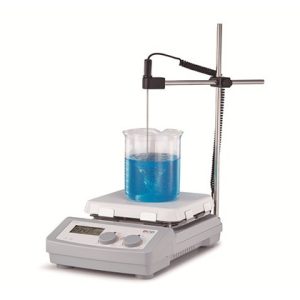
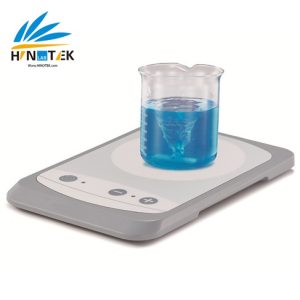
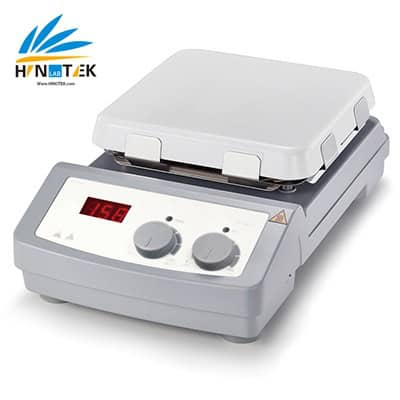
Below is a selection of HINOTEK’s featured magnetic stirrers. To see our full range, please visit HINOTEK main Magnetic Stirrer Category Page.





Works cited
- Magnetic stirrer – Wikipedia, https://en.wikipedia.org/wiki/Magnetic_stirrer
- How Does a Magnetic Stirrer Work? – Pipette.com Blog, https://blog.pipette.com/how-does-a-magnetic-stirrer-work
- Air-free technique – Wikipedia, https://en.wikipedia.org/wiki/Air-free_technique
- How to Choose a Magnetic Stir Bar (Stirring Flea) | Blog | Stirrers.net, https://stirrers.net/blogs/blog/how-to-choose-a-magnetic-stir-bar-stirring-flea
- Troubleshooting Issues with Magnetic Stirrers | Blog – Laboratory Supply Network, https://labsup.net/blogs/blog/troubleshooting-issues-with-magnetic-stirrers
- Stirology 101: Stir Bar Bounce – 2mag-USA, https://2magusa.com/pages/stirology-101-stir-bar-bounce
- Stir Bar Selection Guide – Fisher Scientific, https://www.fishersci.se/se/en/scientific-products/featured-categories/magnetic-stirrers/stir-bar-selection-guide.html
- Lab Safety Guideline: Hot Plate Safety – ehs.harvard.edu, https://www.ehs.harvard.edu/sites/default/files/lab_safety_guideline_hot_plate_safety.pdf
- the-schlenk-line-survival-guide.pdf, https://schlenklinesurvivalguide.com/wp-content/uploads/2020/11/the-schlenk-line-survival-guide.pdf
- glovebox usage – Sandiego, https://home.sandiego.edu/~cjdaley/Daley_Glovebox_Method.html
This guide is maintained by HINOTEK’s core technical team, comprised of senior engineers and application scientists with over two decades of hands-on experience in fields such as microscopy, centrifugation, and spectrophotometry. We are committed to ensuring that every piece of information in this guide—from instrument principles and technical specifications to laboratory procurement advice—maintains the highest level of accuracy and timeliness.This content is regularly reviewed and updated to reflect the latest industry standards and technological advancements. We value feedback from the global scientific community. Should you have any questions or suggestions, or wish to discuss any technical details, please do not hesitate to contact our expert team at [email protected].