|
I. Principles for Selecting a Magnetic Stirrer
Carefully analyze your application needs. For example:
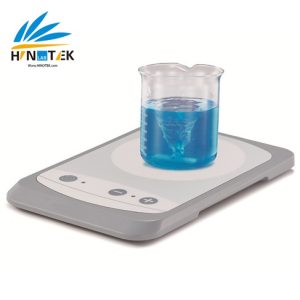
- For simple, room-temperature stirring, a basic magnetic stirrer (stir-only function) is sufficient.
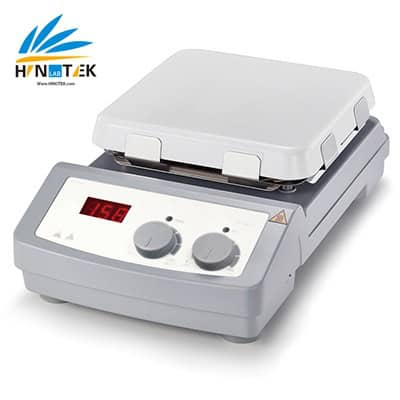
- If you need both stirring and heating, but high-precision temperature control isn’t critical, a standard heating magnetic stirrer (or “hotplate stirrer”) is the right choice.
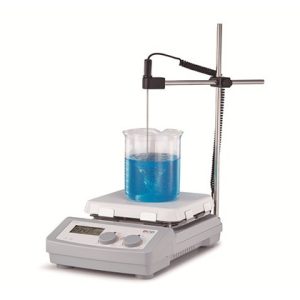
- For real-time temperature monitoring during operation, select a digital heating magnetic stirrer.
- If you need to set a specific run time and have the unit stop automatically, choose a magnetic stirrer with a timer function.
- When precise temperature control is essential, a water bath magnetic stirrer is necessary. This model integrates a water bath into the base. Water bath heating provides uniform heat transfer, precise control, and safe heating. It is especially suitable for applications with strict temperature requirements or for vessels with uneven bottoms (like round-bottom flasks) that don’t make good contact with a standard hotplate.
- For precise, real-time RPM display, choose a digital speed heating magnetic stirrer. Be aware that this feature significantly increases the instrument’s cost. We recommend it only for demanding, research-grade applications.
- If you are stirring large volumes of liquid, select a high-capacity magnetic stirrer. Standard models generally handle volumes under 2000 mL.
- If you need both magnetic stirring and overhead (mechanical) stirring, a composite electric and magnetic stirrer is available.
- For complex stirring protocols (e.g., intermittent stirring, alternating rotation direction, or complex temperature/speed programs), you will need a custom-programmed, intelligent magnetic stirrer. These complex features dramatically increase the price and are typically reserved for highly specific research needs.
II. How to Use a Magnetic Stirrer
Most magnetic stirrers on the market have similar functions. This section provides a brief overview of general operating procedures.
- Plug in the power supply. Place the vessel (e.g., beaker, flask) containing your solution in the center of the base plate. Gently drop the stir bar into the vessel.
- Turn on the power switch. The indicator light should illuminate. Slowly turn the speed control knob clockwise. Start from a low speed and gradually increase to the desired RPM. The stir bar will rotate, mixing the solution.
- For constant-temperature heating, insert the temperature probe into the solution. Plug the probe’s connector into the corresponding socket on the stirrer’s base. (Note: Water bath models often have an integrated probe, so this step may not be necessary). Adjust the temperature knob to the desired setting.
- If heating is not required, simply turn the temperature control knob to its lowest setting (below room temperature).
- To use the timer, turn the timer knob clockwise to the desired time. The power light will stay on, and the instrument will operate. When the timer returns to the “0” position, the stirring will stop automatically. (This step only applies to models with a timer function).
- When finished, turn off the power switch. Disassemble your apparatus and unplug the magnetic stirrer’s power cord.
III. Precautions for Magnetic Stirrer Use
Here is a brief description of general precautions.
- Select the appropriate magnetic stirrer for your specific application.
- Before first use, check the instrument manual to ensure all accessories are present (e.g., stir bar, power cord).
- For safety, the instrument should always be properly grounded.
- Do not overfill the container. Leave enough headspace to prevent the solution from splashing out during stirring, which could corrode the hotplate or damage the body.
- When adjusting speed, always increase gradually from low to high. Do not start directly at a high speed. This can cause the stir bar to become “de-coupled” and jump erratically.
- Operating at a moderate speed can extend the service life of the stirrer.
- If the stir bar is jumping or not stirring, check that the beaker is stable, centered on the plate, and that the speed setting is appropriate.
- Do not turn the timer switch too quickly or forcefully, as this can damage the mechanism (for models with timers).
- Position the temperature probe in the solution at a proper height. Ensure the stir bar cannot strike the probe, which could break it. (This limitation does not apply to water bath models with integrated probes).
- For standard heating stirrers: do not use the heating function without stirring. Do not use continuous heating above 70°C for more than 2 hours. (Water bath models do not have this restriction).
- Keep the instrument clean and dry. Do not allow solutions to spill into the internal mechanism. After use, clean the temperature probe and stir bar. Wipe the hotplate surface with a clean cloth.
IV. How to Select a Magnetic Stir Bar
Magnetic stir bars (or stirring rods) are a dedicated accessory for the magnetic stirrer. When selecting one, consider the following factors:
- Shape: Type A (olive-shaped) is designed specifically for stirring in round-bottom flasks. Types B (cylindrical) and C (polygonal) are similar in use and are best for flat-bottomed vessels like beakers.
- Size: Stir bars come in many sizes. You must select one based on the volume of your liquid and the bottom diameter of your container. A bar that is too large or too small will not be effective.
- Volume and Viscosity: Match the stir bar to the solution’s volume and viscosity. Small bars can mix a few milliliters, while large bars are needed for larger volumes. High-viscosity solutions require larger, more powerful stir bars. If the viscosity is too high for magnetic stirring, you may need to use a mechanical (overhead) stirrer.
- Container Shape: As mentioned, olive-shaped or football-shaped bars work well in round-bottom flasks, while straight (cylindrical) bars are standard for flat-bottomed containers.
- Temperature Effects: Standard (PTFE-coated) stir bars used at high temperatures can gradually demagnetize. If you work at high temperatures, you must periodically check that your stir bar still has sufficient magnetic strength.
- Spin-Out: Sometimes, a stir bar may “walk” or “spin out” (move off-center instead of spinning in place). This is often related to the smoothness of the glassware, an uneven base, or a speed that is too high.
To understand the fundamental principles common to all types of Magnetic Stirrer, be sure to read our main article: How Does A Magnetic Stirrer Work.
This guide is maintained by HINOTEK’s core technical team, comprised of senior engineers and application scientists with over two decades of hands-on experience in fields such as microscopy, centrifugation, and spectrophotometry. We are committed to ensuring that every piece of information in this guide—from instrument principles and technical specifications to laboratory procurement advice—maintains the highest level of accuracy and timeliness.
This content is regularly reviewed and updated to reflect the latest industry standards and technological advancements. We value feedback from the global scientific community. Should you have any questions or suggestions, or wish to discuss any technical details, please do not hesitate to contact our expert team at [email protected].