
Guide Navigation
- Section 1: The Fundamental Principles of Viscometry
- Section 2: A Historical Perspective on Viscosity Measurement
- Section 3: A Comprehensive Overview of Viscometer Technologies
- Section 4: Anatomy of a Modern Digital Viscometer
- Section 5: Viscometers in Action: Applications Across Key Industries
- Section 6: Strategic Selection: A Guide to Choosing the Right Viscometer
- Section 7: Technology Comparison and Final Recommendations

Section 1: The Fundamental Principles of Viscometry
An understanding of viscometry begins with its core scientific principles. These concepts govern how fluids behave under stress and are essential for interpreting measurement data and selecting the appropriate instrumentation. This section establishes the foundational knowledge of viscosity, fluid dynamics, and the critical parameters that influence them.
1.1 Defining Viscosity: A Measure of Internal Friction
Viscosity is a fundamental physical property of fluids that quantifies their internal friction or resistance to flow. In practical terms, it describes a fluid’s “thickness.” Fluids with high internal friction, such as honey or molasses, are considered highly viscous and flow slowly. Conversely, fluids with low internal friction, like water or ethanol, are less viscous and flow readily.
Mathematically, viscosity is the ratio of shear stress to shear rate. Shear stress is the force per unit area required to make one layer of fluid slide past another, while the shear rate () measures the difference in speed between these moving layers. This relationship is expressed as: η=γ˙τ
This fundamental property is measured and expressed in two primary forms: dynamic viscosity and kinematic viscosity.
- Dynamic Viscosity (η or μ): Also known as absolute viscosity, this property measures a fluid’s intrinsic resistance to flow when an external and controlled force is applied, such as the force exerted by a rotating spindle or a pump. It is a direct measure of the fluid’s internal friction, independent of its density. The standard SI unit for dynamic viscosity is the Pascal-second (Pa⋅s). However, the centipoise (cP) is more commonly used in practice, where 1 cP is equivalent to 1 millipascal-second (mPa⋅s). Water at 20°C serves as a universal reference point, with a dynamic viscosity of approximately 1 cP.
- Kinematic Viscosity (ν): Kinematic viscosity measures a fluid’s resistance to flow under the influence of gravity. It isn’t an intrinsic property but rather the ratio of a fluid’s dynamic viscosity () to its density (), as defined by the equation . The standard unit is the Stoke (St), though measurements are more commonly expressed in centistokes (cSt), where 1 cSt = 1 mm²/s.
The distinction between these two types of viscosity is not merely academic; it has profound practical implications. Most industrial processes, such as pumping, spraying, mixing, and filling, involve the application of an external, controlled force to move a fluid. In these scenarios, dynamic viscosity is the more functionally relevant parameter because it directly describes how the fluid will respond to the forces exerted by the machinery. Kinematic viscosity, while highly precise and easily measured with simple instruments like capillary tubes, describes flow under gravity. While it can be converted to dynamic viscosity if the fluid’s density is known, it does not directly simulate the conditions of most manufacturing and processing applications. This creates a “practicality gap” where a simple quality control measurement of kinematic viscosity may not fully predict a fluid’s behavior in a complex, force-driven industrial process, making dynamic viscosity the preferred metric for process engineering and formulation.
1.2 Newtonian vs. Non-Newtonian Fluids: Understanding Flow Behavior
The behavior of a fluid’s viscosity under varying conditions of stress is its most defining characteristic. This behavior classifies fluids into two main categories: Newtonian and non-Newtonian. This distinction is the single most critical factor in selecting a viscometer and designing a meaningful measurement protocol.
- Newtonian Fluids: These fluids adhere to Newton’s law of viscosity, which states that their viscosity remains constant regardless of the shear rate applied. For a Newtonian fluid, the relationship between shear stress and shear rate is linear and passes through the origin. In simple terms, if the force applied to a Newtonian fluid is doubled, it will flow twice as fast. Common examples include water, simple solvents, gasoline, and thin motor oils. For these materials, a single viscosity measurement at a given temperature is sufficient to fully characterize their flow behavior.
- Non-Newtonian Fluids: The vast majority of complex fluids encountered in industrial, biological, and commercial settings are non-Newtonian. Their viscosity is not constant; it changes as a function of the applied shear rate. A single-point viscosity measurement for a non-Newtonian fluid is therefore insufficient and can be misleading, as the value is only valid for the specific conditions under which it was measured. These fluids require characterization across a range of shear rates to create a “flow curve” or “viscosity profile.”
Non-Newtonian fluids exhibit several distinct behaviors:
- Shear-Thinning (Pseudoplastic): The fluid’s viscosity decreases as the shear rate increases. This is the most common type of non-Newtonian behavior. A classic example is paint: it is thick in the can (low shear) to prevent settling, but thins out under the high shear of a brush or roller for easy application. Other examples include ketchup, blood, shampoo, and polymer solutions.
- Shear-Thickening (Dilatant): The fluid’s viscosity increases as the shear rate increases. This behavior is less common but is seen in materials like concentrated suspensions of cornstarch in water (oobleck) or some industrial slurries.
- Thixotropic: This is a time-dependent, shear-thinning behavior. The viscosity of a thixotropic fluid decreases over time when subjected to constant shear. After the shear is removed, the fluid requires a finite time to recover its original viscosity. This property is desirable in products like yogurt, which becomes thinner when stirred but thickens again upon standing, or in paints that need to flow smoothly during application but then quickly regain viscosity on the wall to prevent dripping.
- Rheopectic: This is a rare, time-dependent, shear-thickening behavior where viscosity increases over time under constant shear. Certain lubricants and printer inks can exhibit this property.
The fundamental difference between these fluid types dictates the entire approach to viscosity measurement. For a Newtonian fluid, the objective is to determine the single viscosity value. For a non-Newtonian fluid, the objective shifts to characterizing a viscosity profile across a range of shear rates that simulate real-world conditions. For example, to understand a cosmetic lotion, one might measure its viscosity at a very low shear rate to simulate its stability in the bottle, at a medium shear rate to simulate being squeezed from the tube, and at a high shear rate to simulate being spread on the skin. This requires an instrument capable of applying controlled and variable shear rates, which is why simple instruments like capillary tubes are inadequate for these complex materials, and more sophisticated rotational viscometers or rheometers are necessary.
1.3 Key Parameters: The Critical Influence of Temperature, Shear, and Time
Beyond the intrinsic properties of a fluid, several external parameters have a profound impact on viscosity measurements. Controlling these variables is essential for achieving accurate, repeatable, and meaningful results.
- Temperature: Viscosity is exceptionally sensitive to temperature. For nearly all liquids, viscosity decreases as temperature increases. The magnitude of this effect can be dramatic; a temperature change of just 1°C can alter a fluid’s viscosity by as much as 10%. This high degree of sensitivity makes precise temperature control an absolute prerequisite for reliable viscometry. Professional laboratory viscometers achieve this using integrated systems like circulating water baths or solid-state Peltier thermoelectric controllers to maintain the sample at a stable, specified temperature throughout the measurement.
- Shear Rate: As detailed previously, shear rate is the defining parameter for non-Newtonian fluids. The ability to precisely control the shear rate (for instance, by adjusting the rotational speed of a spindle) is the primary function that distinguishes advanced viscometers and allows them to characterize complex fluid behavior.
- Time: For time-dependent fluids (thixotropic and rheopectic), the duration of shear is a critical variable. A measurement protocol for these materials must specify not only the shear rate but also the length of time it is applied before a reading is taken, as well as any recovery time allowed between measurements.
To provide a practical frame of reference for viscosity values, the following table lists the typical dynamic viscosities of several common substances at room temperature.
| Fluid | Typical Dynamic Viscosity (mPa·s or cP) | Fluid Type | |
| Water | 1 | Newtonian | |
| Milk | 3 | Newtonian | |
| Blood | ~10 | Non-Newtonian (Shear-thinning) | |
| SAE 30 Motor Oil | 150-200 | Newtonian | |
| Honey | 2,000 – 10,000 | Newtonian | |
| Chocolate Syrup | 10,000 – 25,000 | Non-Newtonian (Shear-thinning) | |
| Ketchup | 50,000 – 70,000 | Non-Newtonian (Thixotropic) | |
| Peanut Butter | 150,000 – 250,000 | Non-Newtonian (Shear-thinning) | |
Section 2: A Historical Perspective on Viscosity Measurement
The evolution of viscometry is a story of scientific discovery intertwined with industrial necessity. From foundational physical laws to the development of sophisticated digital instruments, the journey reflects a progressively deeper understanding of fluid mechanics and a growing demand for precise material characterization.
2.1 Foundational Physics: The Contributions of Newton, Poiseuille, and Stokes
The theoretical underpinnings of modern viscometry were established by three pivotal figures in the history of physics and fluid dynamics.
- Sir Isaac Newton (1687): In his seminal work, Principia, Newton first described viscosity as a “lack of slipperiness” between adjacent layers of a fluid. He proposed a linear relationship between the force applied (shear stress) and the resulting velocity gradient (shear rate). This formulation, now known as Newton’s law of viscosity, perfectly describes the behavior of simple, or “Newtonian,” fluids and established the fundamental mathematical framework for the field.
- Jean Poiseuille & Gotthilf Hagen (1830s-1840s): Working independently, French physician Jean Poiseuille and German engineer Gotthilf Hagen investigated the flow of fluids through narrow tubes. Poiseuille’s research was motivated by his interest in blood circulation through capillaries. Their empirical work led to the formulation of the Hagen-Poiseuille law. The Hagen-Poiseuille law, also known as Poiseuille’s law, is a fundamental principle in fluid dynamics that describes the relationship between the pressure, viscosity, and dimensions of a tube to the flow rate of a fluid moving through it.In essence, the law states that the volumetric flow rate of a fluid through a long, cylindrical pipe of constant cross-section is directly proportional to the pressure difference across the pipe and the fourth power of the pipe’s radius, and inversely proportional to the length of the pipe and the viscosity of the fluid.This physical law applies under a specific set of conditions, most notably that the fluid is incompressible and Newtonian (meaning its viscosity is constant), and that the flow is laminar (smooth and non-turbulent).
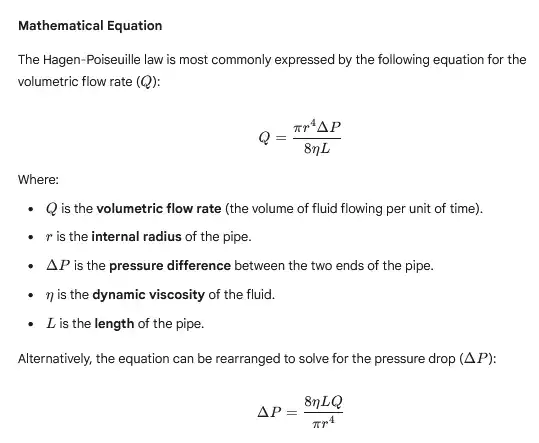
- Sir George Gabriel Stokes (1851): Derived by British physicist Sir George Gabriel Stokes, Stokes’ Law describes the drag force exerted on a spherical object moving at a constant velocity through a viscous fluid. The law states that this force is directly proportional to the fluid’s viscosity (), the radius of the sphere (), and its velocity (). The formula is:
Drag Force = 6 π × (fluid viscosity) × (sphere radius) × (settling speed)
This principle is the foundation upon which falling sphere viscometers are built.
2.2 The First Viscometers: From Industrial Need to Scientific Instrument
The transition from theoretical principles to practical measurement devices was driven by the demands of the first industrial revolution.
- Early Industrial Devices: The first instrument to be called a “viscometer” was created in 1831 by Charles Dollfuss, a textile industrialist. He designed a simple efflux cup—a container with a hole in the bottom—to get a comparative “liquidity index” for textile dyes by measuring their flow time. This marked the beginning of viscosity measurement as a tool for industrial quality control.
- The Engler Viscometer (1884): As railways expanded, the need for reliable lubricants became critical. Carl Engler developed a standardized viscometer in 1884 to test mineral oils for the German State Railways. This instrument provided a more scientific and repeatable method than simple efflux cups and became one of the first widely adopted viscometers for industrial applications.
- The Birth of Rheology (1920s): Through the late 19th and early 20th centuries, scientists like Schwedoff and Bingham observed that for many complex materials, such as gelatin solutions and paints, viscosity was not a constant but depended on the shear conditions. This realization that Newton’s law was not universal led to the formal establishment of “rheology”—the study of the flow and deformation of matter—as a distinct scientific discipline in 1929. This new field provided the framework for understanding and measuring non-Newtonian fluids.
2.3 The Modern Era: The Rise of Digital and Automated Viscometry
The 20th century saw transformative advancements in viscometer design, driven by the proliferation of new synthetic materials and the need for greater precision and ease of use.
- The Brookfield Revolution (1934): Recognizing the limitations of existing instruments for characterizing new synthetic resins, MIT graduate Don Brookfield Sr. invented the first dial-reading, synchro-electric rotational viscometer. This instrument was revolutionary for several reasons: it measured dynamic viscosity directly, it was relatively simple to operate, and most importantly, its variable speed capability allowed for the characterization of non-Newtonian fluids by measuring viscosity at different shear rates. The Brookfield viscometer quickly became the global standard for a vast range of industries, from foods and paints to pharmaceuticals.
- Digital Advancements: The latter half of the 20th century and the beginning of the 21st have been marked by the integration of digital technology. Modern viscometers now feature microprocessors for precise control of motor speed and automated calculations, digital displays for clear readouts, and integrated temperature probes. The most significant advance has been the development of sophisticated software that enables full automation of test procedures, real-time data logging and graphing, and features that ensure data integrity for regulatory compliance, such as those required by the FDA’s 21 CFR Part 11 standards. These advancements have transformed the viscometer from a manual mechanical device into a powerful, automated analytical instrument, dramatically improving accuracy, repeatability, and laboratory efficiency.
The history of the viscometer is a clear reflection of broader industrial and technological progress. Simple efflux cups were sufficient for the early needs of the textile industry. The mechanical age demanded standardized instruments like the Engler viscometer for lubricants. The chemical revolution of the 20th century, which introduced a world of complex non-Newtonian polymers and formulations, created the necessity for the versatile rotational viscometer. Finally, the current era of stringent quality control, global regulation, and data-driven manufacturing has propelled the development of fully automated, compliant, digital instruments. This historical context demonstrates that the viscometer is not merely a laboratory tool but an essential enabling technology that has evolved in lockstep with the increasing complexity of modern materials and processes.
Section 3: A Comprehensive Overview of Viscometer Technologies
A wide array of viscometer technologies exists today, each based on a different physical principle and optimized for specific applications, fluid types, and measurement environments. Understanding the operational principles, advantages, and limitations of each major type is crucial for selecting the appropriate instrument for a given task.
3.1 Rotational Viscometers: The Industry Standard for Versatility
Rotational viscometers are the most widely used instruments for measuring dynamic viscosity, prized for their versatility in handling a vast range of fluid types and viscosities.
- Working Principle: The core principle involves immersing a geometrically defined element, known as a spindle, into the test fluid and rotating it at a constant, known speed. The fluid’s internal friction exerts a viscous drag on the spindle, creating a resistance to rotation. The instrument’s motor must apply a certain amount of force, or torque, to overcome this resistance and maintain the constant speed. This required torque is measured by a sensor and is directly proportional to the fluid’s dynamic viscosity. A key advantage is the ability to change the rotational speed, which alters the shear rate, allowing for the characterization of shear-dependent, non-Newtonian fluids by generating a complete flow curve.
- Key Geometries:
Spindle (Brookfield-type): This is the most common configuration, utilizing a set of interchangeable spindles with different shapes (e.g., disc, cylindrical) and sizes. The spindle is immersed in the sample, often contained in a standard laboratory beaker. This setup is highly flexible and can measure an extremely wide viscosity range, from very thin liquids to thick pastes, simply by changing the spindle and rotational speed.
Cone-and-Plate: This geometry consists of a flat, temperature-controlled plate on which the sample is placed, and a shallow-angled cone that is lowered into contact with the sample. This configuration creates a constant, well-defined shear rate across the entire sample gap. It is ideal for obtaining absolute viscosity measurements and detailed rheological studies, requires very small sample volumes (often less than 1 mL), and offers excellent temperature control. Its primary limitation is that it is unsuitable for samples containing large particles that could interfere with the narrow gap.
Coaxial Cylinder (Couette): This system uses two concentric cylinders (a cup and a bob) with the sample fluid contained in the annular gap between them. One cylinder rotates while the other remains stationary. This geometry provides a well-defined shear field and is excellent for low to medium viscosity fluids and for studying phenomena like yield stress.
- Pros: Exceptionally versatile for both Newtonian and non-Newtonian fluids; capable of measuring a very wide viscosity range (from 1 cP to over 100 million cP); allows for detailed analysis of shear-dependent and time-dependent (thixotropic) behaviors; wide variety of models available to suit different needs, from basic QC to advanced R&D.
- Cons: Generally more expensive than simpler methods like capillary or falling ball viscometers; measurement accuracy can be influenced by operator technique if not properly standardized; precise temperature control is essential for reliable results; the shear field for standard spindle-in-beaker setups is not uniform, making them better for relative or comparative measurements rather than absolute rheological characterization.
3.2 Capillary Viscometers: The Gold Standard for Kinematic Viscosity
Capillary viscometers are simple, precise instruments that rely on the fundamental principles of fluid flow through a narrow tube.
- Working Principle: These instruments operate based on the Hagen-Poiseuille equation. A fixed volume of fluid is timed as it flows under gravity through a glass capillary of a known, precise diameter and length. The time taken for the fluid to pass between two etched marks on the capillary is measured. This efflux time is directly proportional to the fluid’s kinematic viscosity .The dynamic viscosity can be calculated if the fluid′s density is known.
- Key Variants:
- Ostwald Viscometer: Also known as a U-tube viscometer, this is the classic design. It consists of a U-shaped glass tube with two reservoir bulbs and a capillary section. A limitation of this design is that the driving pressure head is dependent on the volume of liquid filled into the instrument, which can introduce variability.
- Ubbelohde Viscometer: This is a refinement of the Ostwald design, often called a suspended-level viscometer. It features a crucial third arm that is open to the atmosphere. This design ensures that as the liquid flows down the capillary, the pressure at the bottom of the capillary is always atmospheric pressure. This creates a “suspended level” and makes the driving pressure head independent of the total volume of fluid in the viscometer, leading to significantly higher accuracy and repeatability.
- Pros: Capable of very high precision and accuracy, making it a primary method for calibrating other viscometers; the instrumentation itself (the glass tube) is relatively inexpensive; the principle of operation is simple and well-understood.
- Cons: Strictly suitable only for Newtonian fluids, as the shear rate is not constant and varies with the changing fluid head; not suitable for opaque or highly viscous fluids; requires meticulous cleaning to prevent clogging; measurements can be time-consuming and require a temperature-controlled water bath for accuracy.
3.3 Falling Sphere Viscometers: Simplicity in Principle and Practice
This type of viscometer utilizes one of the most intuitive principles of fluid dynamics to determine viscosity.
- Working Principle: Based on Stokes’ Law, a falling sphere viscometer measures the time it takes for a sphere of a known size and density to fall a specific distance through a tube filled with the sample fluid.1 As the sphere falls under gravity, it accelerates until the downward gravitational force is perfectly balanced by the upward buoyant force and the viscous drag force of the fluid. At this point, it reaches a constant terminal velocity. This terminal velocity is inversely proportional to the fluid’s viscosity. By measuring the time to travel between two marks, the terminal velocity is determined, and the dynamic viscosity can be calculated. A common variant is the Hoeppler viscometer, which uses a tube inclined at a slight angle to ensure the ball rolls and falls in a controlled path.
- Pros: The principle is simple and easy to understand; the equipment is generally robust and less expensive than rotational viscometers; can be used to measure the viscosity of both liquids and gases.
- Cons: Primarily suitable for transparent or translucent Newtonian fluids, as the operator must be able to see the sphere; accuracy can be affected by inconsistencies in the sphere’s fall path and “wall effects” (interaction with the tube walls); not suitable for opaque fluids or for characterizing non-Newtonian behavior.
3.4 Vibrational Viscometers: The Solution for In-Line Process Control
Vibrational viscometers represent a distinct class of instruments designed primarily for continuous, real-time monitoring within industrial processes.
- Working Principle: A resonant sensor, such as a vibrating rod or plate, is immersed in the process fluid. The fluid’s viscosity creates a damping effect on the sensor’s oscillations. The instrument measures the power required to maintain the sensor’s vibration at a constant amplitude and resonant frequency. This power input is directly correlated to the fluid’s viscosity (specifically, the product of dynamic viscosity and density). As the fluid’s viscosity increases, more power is needed to keep the sensor vibrating at the set amplitude.
- Pros: Ideal for continuous, in-line measurement directly in pipes or tanks; extremely robust with no moving parts, resulting in very low maintenance requirements; provides fast, real-time data; measurements are generally unaffected by variations in flow rate or external vibrations.
- Cons: Not suitable for detailed rheological characterization of non-Newtonian fluids because the shear field is complex and not well-defined; accuracy can be limited for very high-viscosity materials; the measurement is a function of both viscosity and density, which must be accounted for.
The value of vibrational viscometers extends beyond simple measurement; they facilitate a fundamental shift in manufacturing philosophy. Traditional quality control relies on a retrospective, batch-based approach: a sample is taken from the production line, transported to a laboratory, and tested. This process introduces a significant time delay. If the test reveals an out-of-specification product, a large amount of material may have already been produced, leading to costly waste or rework. In contrast, an in-line vibrational viscometer provides a continuous stream of real-time data directly from the process. This data can be integrated with a plant’s control system to enable automated adjustments—for example, modifying temperature or ingredient flow rates—to maintain viscosity within the target range dynamically. This transforms quality control from a detective, after-the-fact activity into a proactive, preventative strategy, thereby enhancing industrial efficiency, minimizing waste, and ensuring superior product consistency.
3.5 Other Specialized Viscometers and Rheological Instruments
- Efflux Cups (e.g., Zahn, Ford): These are simple, low-cost cups with a calibrated orifice in the bottom. The cup is filled with the fluid, and the time it takes for the fluid to drain out is measured. This “efflux time” provides a quick, relative measure of kinematic viscosity. They are widely used in the paints and coatings industry for rapid consistency checks on the factory floor but are not considered high-precision instruments.
- Rheometers: While viscometers measure a fluid’s resistance to flow, rheometers are more advanced instruments capable of measuring the full suite of rheological properties, including viscoelastic characteristics like elasticity, yield stress, creep, and stress relaxation. All rheometers can function as high-precision viscometers, but not all viscometers are rheometers. They are indispensable tools for advanced research and development, where a complete understanding of a material’s complex flow and deformation behavior is required.
Section 4: Anatomy of a Modern Digital Viscometer
Modern digital viscometers are sophisticated analytical instruments that integrate precision mechanics, advanced electronics, and intelligent software to deliver accurate and repeatable viscosity measurements. Understanding the function of each key component is essential for operators and procurement specialists to appreciate the technology’s capabilities and requirements.
4.1 Core Mechanical and Electronic Components
The primary components of a typical digital rotational viscometer work in concert to apply a controlled shear to a sample and measure its response.
- Drive System (Motor): At the core of the instrument is a precision synchronous motor. This motor is responsible for rotating the spindle at a highly stable and accurately controlled speed. The ability to select from a wide range of discrete speeds is crucial for generating the variable shear rates needed to characterize non-Newtonian fluids.
- Spindle/Rotor: This is the geometric element that is immersed in the sample fluid and directly interacts with it. Spindles are manufactured in a variety of shapes (e.g., disc, cylindrical, T-bar, cone) and sizes. The choice of spindle is a critical parameter of the test method, as different geometries are optimized for different viscosity ranges and sample types. For example, larger spindles are used for low-viscosity fluids to generate a measurable torque, while smaller spindles are used for high-viscosity fluids to keep the torque within the instrument’s range.
- Torque Sensor: This is the viscometer’s primary sensing element. In traditional analog models, this was a calibrated beryllium-copper spring; the degree of deflection or “wind-up” of the spring was indicated on a dial. In modern digital instruments, this has been replaced by a high-resolution electronic torque transducer. This sensor precisely measures the rotational resistance (torque) experienced by the spindle and converts this mechanical force into a digital signal. The accuracy and sensitivity of this sensor directly determine the accuracy of the final viscosity reading.
- Sample Chamber/Cup: This is the vessel that contains the fluid during measurement. While a standard laboratory beaker can be used for many applications, more advanced measurements often employ specialized sample chambers. These include coaxial cylinder systems or cone-and-plate geometries, which provide better temperature uniformity and create a more well-defined shear field for absolute viscosity calculations.
- Control Unit & Display: The instrument’s “brain” consists of a microprocessor-based control unit. This unit manages the motor speed, receives and processes the signals from the torque and temperature sensors, and calculates the final viscosity value based on the selected spindle and speed. A digital LCD or touchscreen display provides a user-friendly interface for setting up tests and viewing real-time data, including viscosity (in cP or mPa·s), percentage torque, spindle speed (RPM), spindle identity, and sample temperature.
4.2 The Role of Temperature Control Systems
As previously established, viscosity is highly dependent on temperature. Therefore, maintaining a constant and uniform sample temperature is arguably the most critical factor for achieving accurate and repeatable measurements.
- Criticality: A failure to control temperature will introduce significant error, rendering comparisons between samples or against a specification meaningless. For many materials, a temperature fluctuation of even a few degrees can cause a viscosity change that is larger than the acceptable tolerance for the product.
- Methods:
- Circulating Water Baths: A common and effective method involves using an external circulating bath that pumps a temperature-controlled liquid (typically water or a water/glycol mixture) through a jacket surrounding the sample chamber. This provides a stable thermal environment for the sample.
- Peltier Temperature Control: A more advanced, integrated solution uses solid-state Peltier elements. These thermoelectric devices can rapidly and precisely heat or cool the sample plate or chamber directly, without the need for an external fluid circulator. This method offers faster temperature ramping and stabilization and is common in high-end rheometers and viscometers.
4.3 Software, Automation, and Data Integrity Features
The functionality of modern viscometers is greatly enhanced by sophisticated software and automation capabilities, particularly in regulated and high-throughput environments.
- Control & Analysis Software: Many digital viscometers can be connected to a PC. Dedicated software allows users to design and execute complex, multi-step test protocols, such as temperature sweeps or shear rate ramps. The software automates data acquisition and provides powerful tools for analysis, such as plotting viscosity curves, analyzing time-dependent behavior, and fitting data to rheological models.
- Data Logging & Export: The ability to automatically log all test parameters and results is a key feature. This data can be stored, recalled for later analysis, or exported into common formats (e.g., CSV, PDF) for use in laboratory information management systems (LIMS) or for generating quality control reports.
- Compliance Features (21 CFR Part 11): For use in pharmaceutical, biotech, and medical device industries, viscometer software must often comply with regulatory guidelines such as the FDA’s 21 CFR Part 11. This requires specific features designed to ensure data integrity and security, including multi-level user access control with password protection, secure and time-stamped audit trails that record all actions, and encrypted data storage to prevent tampering.
Section 5: Viscometers in Action: Applications Across Key Industries
Viscosity measurement is not an abstract laboratory exercise; it is a critical tool for quality control, process optimization, and research and development across a multitude of industries. The ability to quantify a fluid’s flow behavior provides invaluable insights into product performance, consistency, and stability.
5.1 Pharmaceutical & Clinical: From Formulation to Quality Control and Diagnostics
In the highly regulated pharmaceutical sector, viscosity is a critical quality attribute that impacts product efficacy, safety, and manufacturability.
- Formulation Development: The viscosity of liquid and semi-solid dosage forms is carefully engineered to achieve desired characteristics. For example, the viscosity of an ophthalmic solution must be optimized to ensure sufficient residence time on the eye without causing blurring. The viscosity of a topical cream affects its spreadability and feel, while the viscosity of an injectable suspension is critical for ensuring it can be administered through a needle and for preventing the active pharmaceutical ingredient (API) from settling.
- Manufacturing & QC: Throughout the manufacturing process, viscosity is monitored to ensure consistency. In processes like mixing, blending, and filling, viscosity affects efficiency and uniformity. In Quality Control (QC) labs, a rotational viscometer is a standard piece of equipment used to verify that each batch of a product meets its predetermined viscosity specification before it can be released to the market. This ensures that the product the patient receives is consistent with the product that was proven safe and effective in clinical trials.
- Clinical Diagnostics: Blood is a non-Newtonian, shear-thinning fluid, and its viscosity is a clinically significant biomarker. Elevated blood viscosity (hyperviscosity) can impede circulation, reduce oxygen delivery to tissues, and is recognized as an independent risk factor for cardiovascular events like thrombosis and hypertension. Clinical viscometers are used to measure blood viscosity to help assess cardiovascular risk and monitor patients with conditions such as polycythemia or sickle cell disease.
5.2 Food & Beverage: Engineering Texture, Stability, and Mouthfeel
In the food and beverage industry, viscosity is directly linked to product quality and consumer perception. It is a primary determinant of texture, mouthfeel, and stability.
- Quality Control: Consumers expect consistency. A yogurt, sauce, or dressing that is too thin or too thick will be rejected. Viscometers are used extensively in QC to ensure that products like jams, syrups, dairy products, and soups consistently meet the target viscosity, which correlates directly with the desired texture and thickness.
- Process Optimization: Viscosity plays a crucial role in the design and operation of food processing equipment. For instance, the viscosity of dairy products determines the power required for pumping and mixing and influences heat transfer rates during pasteurization. Analyzing these flow properties is essential for designing efficient and effective piping and processing systems.
- Ingredient Functionality: The performance of thickening agents like starches, gums, and proteins is evaluated using viscometers. Specialized instruments can simulate cooking processes by measuring viscosity changes as a function of temperature, allowing formulators to select the right ingredients to achieve the desired gelling, pasting, or thickening properties in the final product.
5.3 Paints, Coatings, & Inks: Optimizing Application and Performance
For paints, coatings, and inks, rheological properties, particularly viscosity, are paramount to their function. These products are almost always complex non-Newtonian fluids whose behavior is carefully engineered for specific application methods.
- Application Behavior: The ideal coating exhibits shear-thinning and thixotropic behavior. At the low shear of being at rest in the can, viscosity should be high to keep pigments suspended and prevent settling. During the high-shear process of brushing, rolling, or spraying, the viscosity must drop significantly to allow for easy application and smooth flow-out. Once applied to the surface, the shear is removed, and the viscosity must recover quickly to prevent the coating from dripping or sagging.
- QC Testing: The coatings industry uses a range of viscometers for quality control. Simple efflux cups like the Ford or Zahn cup are often used for quick, comparative checks of consistency on the production line. For more detailed analysis in the laboratory, rotational viscometers, such as Krebs units or cone-and-plate viscometers, are used to measure viscosity at specific shear rates that simulate different stages of application, often following standardized test methods from organizations like ASTM.
5.4 Cosmetics & Personal Care: Ensuring Product Consistency and Consumer Experience
Similar to the food industry, viscosity in cosmetics is a key driver of product quality and consumer acceptance. It defines the texture, feel, and performance of a wide range of personal care products.
- Product Feel and Performance: Viscosity is engineered to create the desired sensory experience for the consumer. A face cream may be formulated to feel thick and “rich,” while a body lotion might be designed to feel “light” and spread easily. These perceived attributes are a direct result of the product’s rheological profile.
- Dispensing and Application: The product’s viscosity profile must be carefully controlled to ensure functionality. For example, a hair gel must have a high enough yield stress to stay in place in its container but flow easily when squeezed from a tube. Similarly, a shampoo must be thick enough not to run through the user’s fingers but thin enough to lather and rinse out easily.
- Stability: Viscosity is critical for the long-term stability of emulsions (like lotions and creams) and suspensions. A sufficiently high viscosity at rest helps prevent the dispersed oil or water phases from separating and keeps solid particles, like pigments in liquid makeup, evenly suspended throughout the product’s shelf life.
5.5 Petrochemicals & Lubricants: Characterizing Performance Under Demanding Conditions
For lubricants and fuels, viscosity is the single most important physical property, directly dictating performance and suitability for an application.
- Lubricant Grading: Lubricants like motor oils are classified and graded based on their viscosity. The SAE (Society of Automotive Engineers) grading system, for example, is based on viscosity measurements at specific high and low temperatures. The Viscosity Index (VI) is a calculated value that describes how much an oil’s viscosity changes with temperature; a high VI indicates a more stable viscosity across a range of operating temperatures.
- Performance Analysis: A lubricant’s primary function is to create a protective film between moving mechanical parts to reduce friction and wear. The viscosity must be high enough to maintain this film under high pressure and temperature but low enough to flow freely to all necessary parts, especially during cold starts. Oil analysis laboratories routinely measure the viscosity of in-service lubricants to detect degradation. A significant drop in viscosity can indicate “shear-down” of viscosity-improving additives, while a significant increase can signal oxidation of the base oil, both of which compromise the lubricant’s protective capabilities.
- Crude Oil and Fuels: Viscosity is a key parameter in the transportation and refining of crude oil. It affects the energy required to pump oil through pipelines and is a factor in the design of refining processes. The viscosity of fuels is also critical for proper atomization in engines and burners.
Section 6: Strategic Selection: A Guide to Choosing the Right Viscometer
Selecting the appropriate viscometer is a strategic decision that requires a thorough evaluation of the application, sample properties, operational requirements, and budget. A systematic approach ensures that the chosen instrument will provide reliable, relevant data and deliver a strong return on investment. This guide outlines a four-step process for making an informed selection.
6.1 Step 1: Characterizing Your Sample Fluid and Viscosity Range
The nature of the sample is the most fundamental consideration and will immediately narrow the field of potential instruments.
- Newtonian or Non-Newtonian? This is the primary decision point. If the fluid is known to be Newtonian (e.g., water, solvents, thin oils), simpler instruments like capillary or falling ball viscometers can provide highly accurate data. If the fluid is non-Newtonian or its behavior is unknown—as is the case for most formulations, suspensions, and emulsions—a rotational viscometer or rheometer is essential to characterize its shear-dependent properties.
- Estimate Viscosity Range: Determine the expected viscosity of the sample. Is it low (like water, <100 cP), medium (like honey, 100 – 10,000 cP), or high (like a paste, >10,000 cP)? This estimate is crucial for selecting a rotational viscometer with the correct torque range (e.g., LV for low viscosity, RV for regular/medium, HB for high viscosity) and the appropriate set of spindles or measurement geometry.
- Other Sample Properties: Several other physical characteristics can dictate instrument choice. Opaque samples are incompatible with falling ball viscometers, which require visual timing. Samples containing large or abrasive particles can damage the narrow gaps of cone-and-plate or coaxial cylinder systems and can clog capillary tubes, making a standard spindle-in-beaker setup more suitable. Additionally, the chemical nature of the sample must be considered to ensure all wetted parts of the viscometer (spindle, chamber) are made of a compatible material, such as 316L stainless steel or Hastelloy for corrosive substances.
6.2 Step 2: Defining Measurement Conditions and Accuracy Requirements
The context of the measurement—why the data is needed and under what conditions—is the next critical factor.
- Temperature Control: Will measurements be performed at ambient temperature, a single specified temperature, or across a range of temperatures? The answer determines the need for and type of temperature control system. For applications requiring high accuracy or for materials whose viscosity is highly sensitive to temperature, an integrated Peltier system or a high-precision circulating bath is necessary.
- Shear Rate Range: For non-Newtonian fluids, it is important to identify the shear rates that are relevant to the product’s processing or application. For example, simulating the flow of paint during spraying requires a high-shear viscometer, while assessing the stability of a cosmetic cream on the shelf requires measurements at very low shear rates. The selected instrument must be capable of operating in the required shear rate range.
- Accuracy and Repeatability: The required level of precision varies by application. Basic quality control checks on a production line may tolerate wider variability, whereas pharmaceutical release testing or advanced materials research demands the highest possible accuracy and repeatability. It is essential to review the manufacturer’s specifications for accuracy and repeatability to ensure they meet the application’s quality thresholds.
6.3 Step 3: Assessing Throughput, Sample Volume, and Automation Needs
Operational and logistical constraints often play a significant role in the final selection.
- Sample Volume: The amount of sample available for each test can be a limiting factor. This is especially true in pharmaceutical R&D or when working with expensive or rare materials. Standard capillary and rotational viscometer methods may require 10-20 mL or more of sample, while specialized geometries like cone-and-plate or micro-volume viscometers can operate with volumes of 1 mL or less.
- Testing Frequency (Throughput): A high-throughput QC lab testing dozens or hundreds of samples per day has different needs than a research lab performing a few detailed characterizations. For high-throughput environments, factors like fast measurement time, ease of cleaning, and automation capabilities are paramount to prevent bottlenecks.
- Automation and User Interface: Consider the skill level of the intended operators. An instrument with an intuitive touchscreen interface, pre-programmed test methods, and automated operation can reduce training time and minimize the potential for human error, leading to more consistent results. For high-throughput labs, fully automated systems with sample racks can significantly increase productivity.
6.4 Step 4: Navigating Industry Standards and Regulatory Compliance
For many industries, viscometer selection is governed by established standards and regulations.
- Industry Standards: Many sectors rely on standardized test methods from organizations like ASTM International or ISO to ensure data comparability across different laboratories and companies. Examples include ASTM D2196 for rotational viscometers, ISO 12058 for determining the kinematic viscosity of food products, and various standards for paints and lubricants. The chosen viscometer must be capable of performing the specific test method required by the industry or customer.
- Regulatory Compliance: In regulated environments like pharmaceuticals and medical devices, data integrity is non-negotiable. If electronic records are used for regulatory submissions, the viscometer’s software must comply with guidelines such as the U.S. FDA’s 21 CFR Part 11, which mandates features like secure user access, audit trails, and electronic signatures.
- Calibration: The ability to perform regular calibration checks is essential for any quality management system. Ensure that the manufacturer provides NIST-traceable viscosity standard fluids suitable for the instrument’s range and that there is a clear procedure for performing and documenting these checks.
The following checklist provides a structured framework to guide the selection process, ensuring all critical factors are considered.
| Criteria | Your Requirement / Question | Notes / Potential Viscometer Types |
| 1. Fluid Properties | Fluid Name/Type: | |
| Newtonian or Non-Newtonian? | If Non-Newtonian -> Rotational/Rheometer | |
| Estimated Viscosity Range (cP): | Low (<100), Medium (100-10k), High (>10k) | |
| Opaque? Particles Present? | If yes, rules out Falling Ball / Capillary | |
| 2. Measurement Needs | Required Accuracy (%): | Check manufacturer specs |
| Temperature Control Needed? (°C) | Specify range; dictates need for bath/Peltier | |
| Specific Shear Rates Needed? (s⁻¹) | If yes -> Rotational/Rheometer | |
| 3. Operational Factors | Available Sample Volume (mL): | Small volume -> Cone-Plate, Micro-viscometer |
| Required Throughput (samples/day): | High -> Automation, easy cleaning | |
| In-line or Lab Benchtop? | In-line -> Vibrational | |
| 4. Compliance | Required Industry Standard (ASTM/ISO): | e.g., ASTM D2196, USP |
| 21 CFR Part 11 Compliance Needed? | If yes, check software features |
Section 7: Technology Comparison and Final Recommendations
The selection of a viscometer involves balancing the technical requirements of the application with operational and budgetary constraints. A direct comparison of the major technologies highlights the fundamental trade-offs involved and provides a clear basis for making a final, informed decision.
7.1 Comparative Analysis of Major Viscometer Types
The following table summarizes the key characteristics, advantages, and limitations of the four primary viscometer technologies. This at-a-glance comparison serves as a powerful tool for shortlisting instruments based on the specific needs of an application.
| Feature | Rotational Viscometer | Capillary Viscometer | Falling Sphere Viscometer | Vibrational Viscometer | |
| Principle | Torque on rotating spindle | Flow time through capillary (Poiseuille’s Law) | Fall time of a sphere (Stokes’ Law) | Damping of a vibrating probe | |
| Viscosity Type | Dynamic | Kinematic | Dynamic | Dynamic (x Density) | |
| Ideal Fluids | Newtonian & Non-Newtonian | Newtonian, low-viscosity | Newtonian, transparent | Newtonian (for accuracy) | |
| Viscosity Range | Very Wide (1 – 100M+ cP) | Narrow (typically < 20,000 cSt) | Moderate | Moderate (<10,000 cP) | |
| Key Advantages | Highly versatile, shear rate control, detailed characterization | High precision, simple, low cost | Simple principle, inexpensive | Real-time in-line measurement, low maintenance, robust | |
| Key Limitations | Higher cost, operator dependent, requires temperature control | Only for Newtonian fluids, time-consuming, requires cleaning | Only for transparent fluids, limited accuracy | Not for non-Newtonian characterization, undefined shear field | |
| Primary Use Case | R&D, QC for complex fluids (paints, food, pharma) | QC for simple fluids (oils, solvents) | QC for transparent liquids (beverages, clear oils) | Industrial process control |
7.2 Matching the Right Technology to Your Application: Concluding Insights
The comprehensive analysis of viscometer principles, technologies, and applications leads to a set of clear, actionable recommendations for different user profiles. The optimal choice is not the most complex or expensive instrument, but the one whose capabilities best align with the measurement objective.
- For Research & Development and the Characterization of Complex Fluids: When the goal is to understand the fundamental rheological behavior of a non-Newtonian material—such as a new polymer solution, cosmetic emulsion, or paint formulation—a rotational viscometer or, for more advanced properties, a rheometer is the only suitable choice. Its ability to control shear rate and temperature allows for the complete mapping of a fluid’s flow curve, providing the deep insights necessary for product development and problem-solving.
- For High-Precision Quality Control of Newtonian Fluids: In applications where the highest accuracy is required for simple, Newtonian liquids like fuels, solvents, or base oils, a temperature-controlled capillary viscometer remains the gold standard. The Ubbelohde design, in particular, offers exceptional repeatability and is often used as a reference method for calibrating other instruments.
- For Simple, Budget-Conscious QC of Transparent Liquids: For routine quality control of transparent, Newtonian fluids where cost is a primary concern and the highest precision is not required, a falling sphere viscometer offers a viable and economical solution. It is straightforward to operate and provides reliable data for applications like monitoring the consistency of clear beverages or simple oils.
- For Industrial Process Automation and Real-Time Control: When the objective is to move beyond retrospective lab-based testing and implement continuous, real-time quality control directly within a manufacturing process, the vibrational viscometer is the superior technology. Its robust, low-maintenance design and ability to provide immediate feedback make it the ideal choice for integration into automated systems, enabling more efficient production, reduced waste, and enhanced product consistency.
Ultimately, the selection of a viscometer is a strategic investment in quality and process understanding. A decision grounded in a thorough analysis of the sample’s properties, the specific measurement conditions, and the ultimate goal of the data will ensure the chosen instrument becomes an invaluable asset to any laboratory or manufacturing facility.
Tips: Exploration | 10 Viscosity Measurement Methods: The Most Comprehensive Viscometer Summary.
Tips: The Relationship between the Rotor and Rotational Speed of a Rotational Viscometer.
If you are ready to find the right Viscometer for your laboratory, please browse our complete product range: Viscometer
This guide is maintained by HINOTEK’s core technical team, comprised of senior engineers and application scientists with over two decades of hands-on experience in fields such as microscopy, centrifugation, and spectrophotometry. We are committed to ensuring that every piece of information in this guide—from instrument principles and technical specifications to laboratory procurement advice—maintains the highest level of accuracy and timeliness.
This content is regularly reviewed and updated to reflect the latest industry standards and technological advancements. We value feedback from the global scientific community. Should you have any questions or suggestions, or wish to discuss any technical details, please do not hesitate to contact our expert team at [email protected].
Workcite:
1. Viscometer – Definition & Examples – CrossCo – Cross Company
2. Viscometers: A Buyer’s Guide to Select the Perfect One | MaterialsZone
3. An Overview of Measurement Techniques for Determination of Yield Stress – Nordic Rheology Society
4. Shear stress – Wikipedia
5. Basics of viscometry | Anton Paar Wiki
6. Viscosity and Shear – What are they? – Michael Smith Engineers Ltd
7. Newtonian and Non- Newtonian Fluids – Mechanical Engineering
8. Viscosity of Newtonian and Non-Newtonian Fluids – RheoSense, Inc., https://www.rheosense.com/applications/viscosity/newtonian-non-newtonian
9. Non-Newtonian fluid – Wikipedia