
 |
Comprehensive Technical Analysis of Water Hardness Meters: Scientific Principles, Analytical Instrumentation, and Global Industrial Standards
The quantification of water hardness is a critical analytical requirement for maintaining the operational integrity of industrial infrastructure, ensuring the stability of pharmaceutical formulations, and optimizing the quality of textile manufacturing. Water hardness is formally defined by the concentration of multivalent metallic cations dissolved in an aqueous solution, with calcium () and magnesium () serving as the primary constituents. These ions enter water systems through geological processes, as rainwater containing carbon dioxide percolates through limestone and dolomite formations. While these minerals are essential for human physiology and provide taste characteristics to drinking water, their accumulation in thermal systems leads to the formation of insoluble precipitates known as scale.
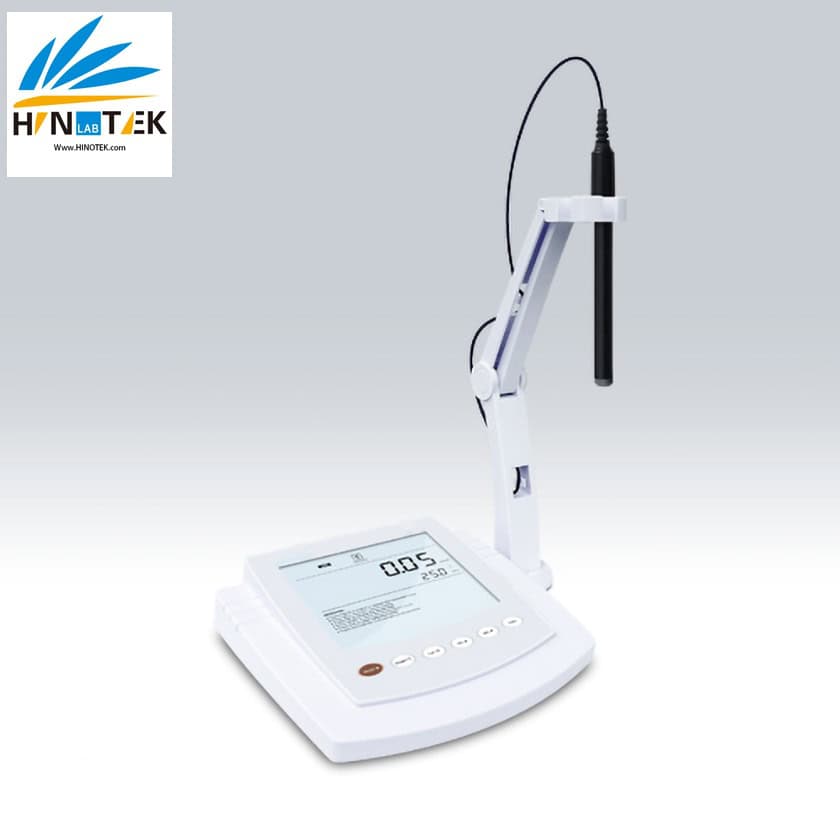
A Water Hardness Meter refers to a broad category of laboratory and field instruments—ranging from manual titrators to automated online analyzers—used to detect and calculate these concentrations. Modern digital meters have largely replaced traditional “soap tests” by providing precise measurements in units such as as , grains per gallon (), or German degrees ().
Chemical Foundations and Classification of Water Hardness
To understand the operation of a water hardness meter, one must first identify the chemical species being measured. Hardness is not a single chemical entity but a combined value often expressed in terms of calcium carbonate () equivalents.Total, Temporary, and Permanent Hardness
The behavior of hard water under varying temperatures dictates its classification into temporary and permanent components.
-
Temporary Hardness (Carbonate Hardness): This is caused by bicarbonate salts, specifically calcium bicarbonate () and magnesium bicarbonate (). It is labeled “temporary” because heating the water causes these bicarbonates to decompose and precipitate as insoluble carbonates, forming a hard scale in boilers and pipes. The equilibrium reaction for this process is: .
-
Permanent Hardness (Non-carbonate Hardness): This component results from sulfate, chloride, and nitrate salts of calcium and magnesium. These minerals remain in solution even when heated and require chemical treatment, such as ion exchange or lime-soda softening, for removal.
The relationship between these components is governed by the total alkalinity of the water sample. If total alkalinity equals or exceeds total hardness, all hardness is classified as temporary.
Standardization of Measurement Units
Analytical results must be reported in standardized units to ensure compliance with international industrial regulations. The following table provides the conversion factors used by digital hardness meters to translate molar concentrations into various regional units.
Water hardness levels are generally categorized based on the concentration of as defined by the U.S. Geological Survey (USGS) and the World Health Organization (WHO).
Scientific Principles of Digital Measurement
Digital water hardness meters utilize three distinct technological pathways: complexometric titration, ion-selective potentiometry, and photometric absorbance. The choice of technology is driven by the required precision, sample throughput, and potential for environmental interference.
Complexometric Titration (EDTA Method)
Complexometric titration using ethylenediaminetetraacetic acid (EDTA) is the recognized standard for precise total hardness determination. EDTA acts as a hexadentate ligand, forming highly stable, colorless 1:1 complexes with divalent metal ions.
The titration reaction is performed at a strictly controlled pH of , maintained by an ammonium buffer solution (). This specific pH is a compromise: it must be high enough to ensure the formation of stable metal-EDTA complexes but low enough to prevent the precipitation of or . The reaction is: where represents the sum of and , and is the disodium salt of EDTA.
Digital titrators improve upon manual methods by utilizing precision dosing pumps to dispense EDTA in increments as small as , identifying the endpoint through a potentiometric electrode or a photometric probe.
Ion-Selective Electrode (ISE) Potentiometry
Ion-selective electrodes function by measuring the electrical potential difference that develops across a specialized membrane when in contact with a target ion. A Calcium ISE typically uses a PVC membrane embedded with a specific ionophore that selectively binds ions.
The measured potential () is related to the ion activity according to the Nernst equation: In this formula, is the standard electrode potential, is the calcium ion activity, and is the electrode slope, which theoretically equals for divalent ions at .
The primary advantage of ISE-based hardness meters is their ability to provide real-time, reagent-free measurements. However, they measure ion activity rather than total concentration, requiring the use of an Ionic Strength Adjuster (ISA) to maintain a consistent background environment for accurate concentration reporting.
Photometric Absorbance Analysis
Photometric hardness meters utilize colorimetric reactions based on the Beer-Lambert Law. The meter measures the absorbance of a light beam at a specific wavelength after a color-developing reagent has been added to the sample.
where is absorbance, is incident light intensity, is transmitted intensity, is the molar absorptivity, is the ion concentration, and is the optical path length.
Common reagents used in this method include Calmagite and o-cresolphalein complexone, which yield violet-colored complexes. Automated photometric analyzers often perform a “reference” measurement on the untreated sample to eliminate errors caused by turbidity or natural water color before triggering the color reaction.
Internal Components and Hardware Architecture
The design of a digital water hardness meter integrates chemical sensing with advanced microelectronics to ensure data integrity and user accessibility.
Sensor and Probe Engineering
The probe is the most critical hardware component, serving as the transducer between chemical activity and electronic signals.
-
Electrode Membranes: ISE probes utilize PVC-based liquid membranes or solid-state crystals like Lanthanum fluoride for specific ion detection.
-
Reference Junctions: To maintain a stable reference potential, probes incorporate ceramic or porous Teflon junctions through which an internal electrolyte () slowly leaches.
-
Temperature Integration: Precision meters include an integrated thermistor, such as a , to enable Automatic Temperature Compensation (ATC). This is essential because the Nernstian slope of the electrode varies with the absolute temperature of the sample.
Circuitry and Signal Processing
The low-voltage, high-impedance signal from the sensor must be conditioned to prevent data loss.
-
High-Impedance Amplifiers: Specialized operational amplifiers with bias currents as low as are used to buffer the signal from the ISE membrane.
-
Analog-to-Digital Conversion: Modern instruments utilize -bit ADCs to provide the resolution necessary for detecting trace concentrations in ultra-pure water.
-
AC Excitation Logic: To prevent electrode polarization—which occurs when DC current causes ions to gather at the electrode surface—meters generate an AC square wave (typically ) to probe the solution impedance.
Control and Communication Modules
The internal MCU, such as an ARM-based ADuCM360 or an RL78/G11, manages the instrument’s firmware.
-
Linearization Algorithms: MCU-resident software applies non-linear compensation to the Nernstian curve, improving accuracy at the limits of detection.
-
Data Logging: Internal memory or SD card slots allow for the storage of thousands of data points, including timestamp, temperature, and hardness value.
-
Interface Protocols: High-end units support RS-485 Modbus RTU, Bluetooth, or Wi-Fi for integration into industrial SCADA systems or lab LIMS.
Critical Industrial Applications and Thresholds
The tolerance for water hardness varies by orders of magnitude depending on the specific industrial process. Failure to monitor these levels leads to mechanical degradation and financial losses.
Thermal Power and Boiler Operations
Boiler feedwater must be treated to achieve near-zero hardness to prevent scale formation. Scale acts as a thermal insulator, significantly reducing the efficiency of heat transfer surfaces. For example, of scale accumulation can result in a loss in heat transfer efficiency.
Persistent hardness in boiler systems leads to “hot spots,” where localized overheating causes the metal to bulge or rupture, resulting in catastrophic equipment failure and operational downtime.
Textile Processing and Dyeing
The textile industry requires soft water to ensure the solubility of dyes and the effectiveness of detergents. Hardness ions interact with anionic dye molecules, causing them to aggregate and precipitate as color specks.
-
Shade Matching: Inconsistent water quality is the primary cause of shade variation between fabric batches.
-
Chemical Efficiency: Hard water reacts with soaps to form “scum” (), which clings to fibers and makes them stiff and rough.
-
Process Limits: Optimal textile wet processing requires water with a hardness of less than (or ).
Pharmaceutical Manufacturing and Ultrapure Water
Pharmacopeial standards (USP, EP, JP) dictate the use of purified water with zero detectable hardness for parenteral drugs and diagnostics.
-
USP Purified Water: This grade requires a conductivity of at , ensuring that hardness ions are removed by reverse osmosis or deionization trains.
-
USP Water for Injection (WFI): WFI involves even stricter TOC and endotoxin limits, though the requirement for total ionic purity (zero hardness) remains fundamental.
-
Laboratory Grade Water: Standardized as Type I through Type IV by ASTM D1193, where Type I is the purest form with resistivity of .
Food and Beverage Production
In the beverage industry, hardness impacts the sensory properties and clarity of the finished product.
-
Spirits and Beer: High calcium levels can cross-link with beer proteins or precipitate in high-alcohol spirits, causing unsightly cloudiness or “chill haze”.
-
Canning: Calcium ions can harden the texture of peas and beans during the canning process, while soft water is required to maintain the desired tenderness.
-
Drinking Water Taste: The World Health Organization identifies as the ideal taste range for potable water, though levels exceeding are generally rejected by consumers.
Laboratory Practice: Calibration, Interference, and Maintenance
Achieving high-accuracy results with a digital hardness meter requires meticulous sample preparation and an understanding of the chemical environment of the test specimen.
Standard Operating Procedures for Calibration
Digital meters must be calibrated against certified reference materials to compensate for sensor aging and environmental drift.
-
ISE Multi-Point Calibration: Meters should be calibrated using two or more standard solutions that bracket the expected sample range, such as and . Standards are typically prepared through serial dilution to minimize volumetric errors.
-
Temperature Stabilization: Calibration standards and samples should be allowed to reach the same temperature (ideally ) before testing to minimize slope errors, even when using ATC-enabled meters.
-
Conditioning Protocols: New or dry-stored ISE probes must be soaked in a calcium solution for at least minutes to rehydrate the ion-selective membrane.
Management of Interfering Ions and Masking Agents
In complex matrices like wastewater or cooling tower blowdown, other ions may compete for the sensor’s membrane or the EDTA ligand.
| Interfering Species | Potential Impact | Corrective Masking Agent |
| , | Causes fading or sluggish color change at the endpoint |
Triethanolamine (TEA) |
| , , | Reacts with indicator or titrant to give false-high readings |
Potassium Cyanide () or Sodium Sulfide |
| Interferes with Eriochrome Black T color stability |
Hydroxylamine Hydrochloride |
|
| Low content | Results in an indistinct, blurry endpoint in titration |
Addition of a small amount of -EDTA to the buffer |
Maintenance and Troubleshooting of Probes
Probes are consumables with a finite lifespan, typically to months depending on usage intensity and sample harshness.
-
Reading Drift: If the meter displays continuously changing values in a stable sample, the cause is often a clogged reference junction or a depleted internal electrolyte. This is resolved by draining and refilling the electrode’s internal solution.
-
Slow Response Time: This indicates surface contamination or an aging membrane. Probes can often be “refreshed” by a brief soak in a solution followed by thorough rinsing in deionized water.
-
Physical Integrity: Membranes must be inspected for microscopic scratches or punctures. Even a hairline crack in an ISE membrane will cause the potential to “short out,” resulting in zero or erratic readings.
Benchtop vs. Portable Instrument Evaluation
Laboratory managers must select the instrument configuration that matches their specific operational throughput and precision requirements.
Benchtop Hardness Meters
These stationary units are the cornerstone of quality control laboratories and research departments.
-
Verifiable Precision: Benchtop models offer the highest repeatability because they operate in stable, vibration-free environments with regulated ambient temperatures.
-
Automation Support: Many benchtop units can be interfaced with autosamplers and peristaltic pumps, allowing for the unattended analysis of over samples per day.
-
Software Sophistication: They often include built-in GLP (Good Laboratory Practice) compliance features, such as user-ID tracking and encrypted data export.
Portable and Field-Ready Meters
Portable units are designed for on-site monitoring where transport to a lab is impractical.
-
Mobility and Speed: Essential for testing cooling towers, municipal supply lines, or remote environmental sites.
-
Ruggedization: Portable field meters typically feature IP67-rated waterproof housing, drop-resistant silicone grips, and backlit displays for low-light conditions.
-
Integrated Power: Utilizing high-capacity lithium-ion batteries, these units can operate for hours of continuous measurement in the field.
B2B Procurement and Market Dynamics
For scientific instrument distributors and procurement specialists, the water hardness meter market is characterized by a shift toward digital connectivity and stringent regulatory alignment.
Total Cost of Ownership (TCO) Analysis
The real cost of a hardness meter extends far beyond the initial purchase price.
-
Consumables: The annual cost of high-purity EDTA reagents, buffers ( ), and calibration standards can range from to for a high-volume lab.
-
Replacement Sensors: Probes are the most frequent point of failure. Choosing a system with modular, user-replaceable membrane caps rather than integral probes can reduce long-term maintenance costs.
-
Downtime Risk: In industrial process control, the cost of an inaccurate reading or a failed sensor can be measured in lost production hours and potential boiler damage.
Regional Market Trends and Emerging Growth
-
North America: Remains the largest market due to highly developed laboratory infrastructure and strict EPA oversight of municipal and industrial discharge.
-
Asia-Pacific: Led by China, India, and Vietnam, this region is witnessing the highest CAGR (projected at ) as urbanization and industrialization drive the adoption of smart water management technologies.
-
Latin America: Brazil (ABNT NBR 15784) and Mexico are emerging as key markets, with increasing demand for certified equipment in the agricultural and food safety sectors.
Global Standards Landscape in 2025
As of 2025, international standards have been updated to reflect the integration of IoT and automated sensing in water quality reporting.
-
EN ISO 23695:2025: Sets new requirements for the determination of ammonium and other ions using small-scale sealed tube methods, enhancing laboratory safety and efficiency.
-
NSF/ANSI 61-2025: Provides revised thresholds for leachate testing of water system components, impacting how meters are used to verify the health effects of plumbing materials.
-
EPA Method 130.1/130.2: These remain the primary legal references in the United States for the automated colorimetric determination of total hardness in drinking and surface waters.
Conclusion and Recommendations
The implementation of a digital water hardness meter is no longer a matter of simple measurement but a comprehensive strategy for resource optimization and regulatory compliance. For laboratory managers, the transition from manual titration to automated photometric or ISE systems provides a clear path to reducing human error and increasing analytical throughput.
Distributors and procurement specialists should prioritize instruments that offer multi-parameter capabilities (Hardness, , Conductivity), robust Automatic Temperature Compensation, and integrated data logging protocols. In the context of global water scarcity and the increasing complexity of industrial process water, the ability to maintain precise control over ionic concentrations is fundamental to the long-term sustainability of the modern manufacturing and scientific enterprise.