
 |
What Is a Heating Mantle? Complete B2B Technical and Sourcing Guide
Introduction to the Heating Mantle
A heating mantle is a standard piece of laboratory equipment. This device applies uniform heat to various scientific containers. The primary containers used are round-bottom flasks. This device is also known as an isomantle in laboratory environments. It consists of an insulated fabric jacket that houses electrical resistance wires. These resistance wires gently warm the target vessel. The design prevents direct contact between the glass vessel and an open flame. This physical isolation reduces the risk of glassware breakage during experiments.
Historically, laboratory heating relied heavily on open-flame burners. The Bunsen burner was a classic symbol of scientific testing. However, open flames are hazardous when organic solvents are present. Organic solvent vapors can ignite rapidly near a flame. During the mid-20th century, scientists developed the first heating mantles. Early manufacturing versions utilized asbestos as an insulation material. Modern manufacturers replaced asbestos with fiberglass and ceramic fiber materials. Modern models now include microprocessor controls and integrated stirring functions.
A heating mantle distributes heat evenly across the lower hemisphere of a flask. It eliminates localized hot spots. Localized hot spots can degrade sensitive chemical samples. They can also cause uneven boiling. Even heating is critical for processes like distillation and reflux. Today, university research labs, clinical facilities, and quality control departments rely on these instruments. The global scientific procurement market prioritizes these devices for their thermal efficiency and safety profile.
Core Operating Principles and Thermodynamics
The operating mechanism of a heating mantle is based on resistive electric heating. An electrical current passes through a high-resistance wire embedded in the mantle. This wire acts as a heating element. As the current flows, the wire converts electrical energy into thermal energy. This heat generation is governed by Joule’s First Law. The rate of heat generation is directly proportional to the square of the electrical current. It is also directly proportional to the resistance of the wire.
Heat transfer from the mantle to the glass flask occurs through direct conduction. This is the primary heat transfer method. Conduction requires physical contact between the woven nest of the mantle and the glass surface. The flexible fabric nest conforms to the curved glass surface. This close contact maximizes the heat transfer area.
The fundamental thermodynamic equation for the heat load is expressed as:
[katex]Q = m \times c \times \Delta T[/katex]
In this equation, the variable
$Q$
represents the total heat energy transferred in Joules. The variable
$m$
represents the mass of the liquid sample in kilograms. The variable
$c$
represents the specific heat capacity of the liquid in Joules per kilogram-Kelvin. The term $$\Delta T$$ represents the difference between the final temperature and the initial temperature.
The heat transfer rate through the glass wall is governed by Fourier’s Law of Thermal Conduction:
$$\frac{Q}{t} = \frac{k \times A \times (T_2 – T_1)}{d}$$
The term
$$\frac{Q}{t}$$represents the rat[span_129](start_span)[span_129](end_span)e of heat flow in Watts. The variable$$k$$
represents the thermal conductivity of the borosilicate glass container. The variable $$A$$ represents the cross-sectional contact surface area of the mantle nest. The term
$$T_2 – T_1$$ represents the temperature difference across the glass wall. The variable $$d$$ represents the thickness of the glass container.
The thermal resistance of the glass container is calculated as:
$$ R_{th} = \frac{d}{k \times A} $$
Air gaps between the flask and the mantle introduce convective heat transfer. Air is a poor conductor of thermal energy. This air barrier acts as a thermal insulator. The convective heat transfer rate is expressed as:
$$ Q = h \times A \times \Delta T \times t $$
The variable $ h $ represents the convective heat transfer coefficient of air. The variable $ t $ represents the elapsed time of the heating process. If an air gap is present, the heating elements must operate at a higher temperature to reach the liquid target temperature. This condition can damage the heating elements. It also decreases overall thermal efficiency.
For large industrial-scale processes, the overall heat transfer rate is evaluated using the logarithmic mean temperature difference:
$$ Q = U \times A \times \Delta T_{LM} $$
The variable $ U $ represents the overall heat transfer coefficient. The term$$\Delta T_{LM}$$ represents the logarithmic mean temperature difference across the heating mediums.
Structural Anatomy and Component Materials
A laboratory heating mantle is built using high-performance materials. These materials must withstand thermal cycling, chemical exposure, and physical impacts.
| Component Name | Primary Material | Technical Properties | Functional Role |
|---|---|---|---|
| Heating Element | Nichrome (Cr20Ni80 alloy) | High resistivity, high oxidation resistance | Generates thermal energy from electrical current |
| Inner Nest Fabric | Alkali-free glass fiber | High dielectric strength, temperature resistance | Cushions the glass flask and supports the heater |
| Insulation Layer | Aluminium silicate cotton | Low thermal conductivity, light weight | Directs thermal energy upward and protects the casing |
| Outer Housing | Cold-rolled steel with powder coating | Corrosion resistance, mechanical strength | Houses internal parts and provides support |
| Temperature Sensor | K-type Thermocouple or Pt100 RTD | High measurement accuracy, fast response | Monitors real-time thermal conditions |
| Control Board | Microprocessor with Solid State Relay | Proportional power modulation, duty cycle control | Regulates energy input to reach target temperature |
Heating Elements
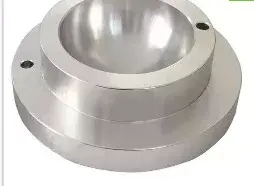 |
The heating element is the heart of the heating mantle. It is made from high-resistance alloys. The standard alloy is nichrome, which contains 80% nickel and 20% chromium (Cr20Ni80). This alloy has excellent electrical resistivity properties. It maintains mechanical stability at high operating temperatures. When heated, nichrome forms a protective layer of chromium oxide. This layer prevents further oxidation of the element. The maximum surface temperature of this element can reach 450°C.
Insulation Materials
An insulation layer surrounds the heating elements. The most common insulation material is aluminium silicate cotton. Some models utilize fiberglass insulation. These materials have low thermal conductivity. They minimize heat loss to the surroundings. They also protect the outer casing from reaching high temperatures. High-density ceramic fiber is used for high-temperature models. This material preserves thermal energy. It also reduces power consumption during long experimental runs.
Outer Housing and Casings
The outer casing protects the internal components. It is typically constructed from cold-rolled steel. This steel is coated with an anti-corrosive powder coating. The coating protects the metal from chemical splashes. It also resists bacterial growth in clinical environments. Some manufacturers use stainless steel for specific applications. Other models feature high-temperature polypropylene housings. Polypropylene housings are lightweight and do not corrode.
Thermocouples and Sensors
Accurate temperature readings are critical for organic chemistry. Modern heating mantles utilize K-type thermocouple probes. Some systems employ Platinum Resistance Temperature Detectors (Pt100 RTDs).
- Internal Sensors: These sensors are embedded directly in the fiberglass nest. They measure the outer temperature of the glass flask. This configuration prevents localized overheating.
- External Sensors: These sensors are mounted on an adjustable rack. The operator places the probe directly into the reaction mixture. This setup provides precise feedback on the liquid temperature. However, thermal lag can occur through the glass. The controller must modulate power to prevent the element from overshooting.
Technical Typology of Heating Mantles
Laboratory applications require different mantle configurations. Selecting the correct type improves efficiency.
Non-Stirred vs. Stirring Heating Mantles
- Non-Stirred Heating Mantles: These units are designed for straightforward heating tasks. They are ideal for distillation, evaporation, and general boiling. They do not contain a stirring motor. The operator must rely on natural convection to circulate the liquid. Alternatively, boiling chips can prevent thermal bumping.
- Magnetic Stirring Heating Mantles: These devices integrate a heating element with a magnetic stirrer. An electromagnetic drive is located under the hemispherical nest. This drive generates a rotating magnetic field. The field rotates a PTFE-coated magnetic stir bar inside the flask. The stirring action keeps the liquid in motion. It promotes uniform temperature distribution. This prevents localized thermal degradation of sensitive compounds.
Single-Position vs. Multi-Position Extraction Mantles
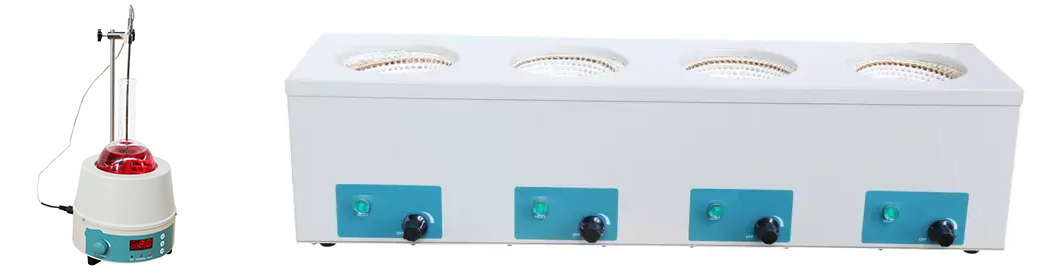 |
- Single-Position Heating Mantles: These compact benchtop devices accommodate a single flask. They are used for individual reaction setups. They are common in educational institutions and pilot research labs.
- Multi-Position Extraction Mantles: These systems feature multiple heating nests in a single frame. They typically contain 3 or 6 positions. Each position operates with independent temperature controls. This design is ideal for high-throughput testing. It is standard in Soxhlet extraction and Kjeldahl nitrogen digestion. It saves bench space and reduces electrical infrastructure needs.
Flexible Fabric Mantles vs. Rigid Metal-Housed Mantles
- Flexible Fabric Mantles: These heaters consist of a woven fiberglass exterior. They do not have a rigid metal frame. The operator suspends them from laboratory clamps or support stands. They are flexible and conform to irregular glassware. However, they are vulnerable to chemical spills.
- Rigid Metal-Housed Mantles: These mantles feature a metal casing around the insulation. The design provides high physical stability. It protects the heating elements from spilled liquids. Ventilation slots in the casing allow air circulation. This circulation keeps the outer chassis safe to touch during operation.
Heated Fabric Insulated Tops
Heated fabric top covers are specialized accessories. They wrap around the exposed neck of a round-bottom flask. The cover prevents evaporative cooling in the upper section of the flask. It applies gentle warmth to keep vapors from condensing prematurely. This cover is useful for distilling high-boiling-point liquids. It increases distillation speed and maintains a stable vapor path.
Comparative Analysis: Heating Mantle vs. Hot Plate vs. Oil Bath
Selecting the appropriate heating technology is a critical decision for laboratory managers. Each method has distinct characteristics.
Overview of Key Differences
The thermal contact between a heating device and a glass flask determines its overall efficiency.
- Heating Mantle: The curved fabric nest hugs the glass container. Heat transfer occurs through conduction across a large surface area. This keeps temperature gradients small. This configuration prevents localized thermal stress.
- Hot Plate: The physical contact with a round-bottom flask is minimal. Heat must transfer through a single contact point at the bottom. This creates high thermal gradients. The glass experiences high physical stress. This stress can crack the flask.
- Oil Bath: The oil liquid surrounds the entire flask. This provides high temperature uniformity. However, the oil introduces significant physical hazards.
Safety and Operational Hazards
Laboratory safety officers prioritize heating mantles over oil baths. Oil baths have several severe disadvantages:
- Slipperiness: Glassware retrieved from an oil bath becomes slippery. This slipperiness increases the risk of dropping flasks. Dropped flasks can spill hot chemicals.
- Water Spattering: Water can drip into a hot oil bath from a condenser. This water vaporizes instantly. The rapid vaporization causes the hot oil to splatter. Splattering oil can burn the operator.
- Thermal Degradation: Mineral oil degrades over time. It turns dark brown and emits harmful vapors. It also presents a serious fire hazard if it is heated past its flash point.
Heating mantles eliminate these oil hazards. The heating element is fully enclosed. This prevents chemical contact. The dry heating method is clean and requires no oil waste disposal.
Some laboratories utilize infrared radiation heating as an alternative. Infrared heaters heat the sample directly without physical contact. They stop radiating heat the instant the power is turned off. This reduces thermal overshoot. However, infrared systems are expensive. They also require specialized line-of-sight configurations.
Core Laboratory Applications and Workflows
Heating mantles are essential for diverse experimental procedures in chemical research.
Simple and Fractional Distillation
Distillation is the process of separating components based on boiling points. The heating mantle provides the steady energy input required.
Step-by-Step Distillation Setup
- Flask Setup: The operator mounts the round-bottom flask in the mantle. The flask is secured with a physical laboratory clamp.
- Solvent Entry: The operator fills the flask with the crude liquid mixture. Boiling chips are added to promote smooth bubble formation.
- Sensor Placement: The thermocouple sensor is adjusted. It is positioned at the top of the distillation column. This position monitors the temperature of the rising vapor.
- Temperature Entry: The setpoint is programmed into the digital PID controller. For ethanol distillation, the setpoint is set to 78°C.
- Vapor Rising: The heating element activates. The liquid reaches its boiling point. Vapors rise into the distillation head.
- Condensation: The vapor passes through a water-cooled condenser. The cold glass walls condense the vapor into liquid.
- Collection: The purified distillate flows into a receiving flask.
Reflux Reactions
Refluxing allows chemicals to react at high temperatures for long durations. The solvent is boiled continuously. The vapor is condensed back into the reaction vessel.
The heating mantle maintains a stable boiling point for hours. The PID controller adjusts the power output to match the rate of condensation. This stability prevents thermal excursions. Thermal excursions can destroy sensitive synthetic intermediates.
Natural Product Extraction
Researchers use heating mantles to extract active compounds from plants.
Curcumin Extraction Example
- Rhizomes of Curcuma caesia Roxb. are dried and powdered.
- The powder is mixed with absolute ethanol in a round-bottom flask.
- The flask is nested in a heating mantle.
- The mixture is heated under reflux for exactly 1 hour.
- Even heating ensures that the target curcumin does not degrade.
- After cooling, the solution is filtered and analyzed using a UV-VIS spectrophotometer.
Nanoparticle Synthesis
Nanoparticle synthesis requires precise thermal pathways. High-temperature control is critical for crystal growth.
Iron Oxide Nanoparticle Synthesis Example
- A plant peel extract is added to a precursor solution of iron salts.
- The color changes immediately from yellow to black.
- The solution is placed inside a heating mantle.
- The temperature is held at 80°C under continuous stirring.
- Fresh sodium hydroxide (NaOH) is added dropwise.
- The pH is raised to 10 to precipitate the iron oxide nanoparticles.
- The nanoparticles are cooled, collected by centrifugation, and washed.
- These particles are used to remediate lead-contaminated water.
Setup, Calibration, and Maintenance Protocols
Heating mantles require regular maintenance to operate safely and effectively.
Pre-Use Physical Inspection
The technician must inspect the apparatus before every use.
- Cord Check: Examine the electrical power cord for cuts or cracks.
- Fabric Check: Inspect the inner fiberglass fabric. Look for discoloration, fraying, or chemical residues.
- Grounding Check: Ensure the third grounding prong on the plug is intact.
Insulation Resistance Testing with a 500V Tester
The insulation materials inside heating mantles are highly hygroscopic. They absorb moisture from the surrounding air during storage. This moisture can lower electrical resistance.
The technician should perform an insulation resistance test before using a stored mantle.
- Isolation: Disconnect the mantle from the mains power supply.
- Connection: Connect a 500V insulation resistance tester (Megohmmeter) to the heating element terminals and the outer metal chassis.
- Measurement: Apply the 500V test signal. The resistance reading must be at least 5 MΩ.
- Drying Process: If the reading is below 5 MΩ, moisture is present. The operator must dry the mantle. The mantle can be placed in a warm, dry oven. Alternatively, run the mantle at a low voltage to evaporate the moisture.
- PAT Warning: Do not perform standard high-current Portable Appliance Testing (PAT) on these heaters. High test currents can permanently damage fiberglass-insulated heating elements.
Initial Bake-Out Procedure
New heating mantles contain manufacturing oils and lubricants. These compounds must be removed before standard laboratory use.
- Ventilation: Place the new heating mantle inside a functional chemical fume hood.
- Vessel Setup: Place an empty, dry borosilicate flask inside the nest.
- Heating: Power on the mantle and raise the temperature to 150°C.
- Smoke Dispersion: White smoke and an unpleasant odor will escape from the nest. This is normal.
- Completion: Maintain the temperature until the smoke stops completely. Allow the mantle to cool. The device is now ready for laboratory reactions.
Step-by-Step PID Calibration
PID calibration adjusts the control parameters to match the thermal mass of the reaction system. This process ensures precise temperature control.
- System Setup: Place a round-bottom flask filled with the target solvent into the heating mantle.
- Sensor Installation: Insert the external thermocouple probe into the liquid.
- Baseline Run: Set the controller to 100°C. Record the temperature profile. Note the temperature overshoot and the stabilization time.
- Auto-Tuning: Activate the PID auto-tuning sequence on the controller. The microprocessor will cycle the power to measure the system’s thermal lag.
- Manual Tuning: If the temperature oscillates, adjust the parameters manually:
- If the temperature overshoots the target, increase the derivative gain (K_d).
- If the temperature takes too long to stabilize, increase the proportional gain (K_p).
- Verification: Run the heating cycle again to verify the settings. The temperature should stabilize within ±0.3°C of the target setpoint.
- Memory Save: Save the calibrated parameters to the controller’s non-volatile memory.
Diagnostic Troubleshooting Matrix
Heating mantles can encounter operational issues. The following table provides solutions for common diagnostic scenarios.
| Observed Symptom | Potential Root Cause | Diagnostic Step | Corrective Action |
|---|---|---|---|
| The display screen is blank | No input power or a blown fuse | Use a multimeter to check the wall outlet voltage. Check the internal fuse. | Replace the fuse. Secure the electrical plug. |
| The unit does not heat | Broken heating element wire | Measure the resistance of the heating elements. An open circuit indicates a break. | Replace the heating element assembly. |
| Erratic temperature readings | Loose or oxidized thermocouple connections | Inspect the thermocouple plug and wiring terminals. | Clean the terminals and tighten the connections. |
| Continuous heating past setpoint | Failed solid state relay or control switch | Measure the voltage at the heating element when the control is turned off. | Replace the solid state relay immediately. |
| The stirring bar spins unevenly | Mismatched stir bar or high liquid viscosity | Verify the stir bar size matches the flask. Check liquid viscosity. | Use a smaller stir bar. Reduce stirring speed. |
Safety Hazards, OSHA Compliance, and Emergency Protocols
Laboratory managers must enforce strict safety rules to protect personnel.
OSHA Standards and Regulations
According to OSHA Standard 29 CFR § 1910.1450, every laboratory must maintain a written Chemical Hygiene Plan. This plan governs the safe use of electrical heating devices.
- Fume Hood Requirement: Operations involving volatile or flammable solvents must be performed inside a certified chemical fume hood.
- Hood Face Velocity: The fume hood must maintain an average face velocity of 80 \text{ to } 120 \text{ feet per minute} . This airflow prevents toxic vapors from escaping into the laboratory.
- Device Placement: The heating mantle must be positioned at least 6 \text{ inches} inside the fume hood face. This placement ensures stable laminar airflow. It also prevents turbulence that can escape the hood opening.
Overtemperature Protection and Relay Failures
Mechanical switches and solid-state relays can fail over time.
<div class=”warning-box”> <div class=”warning-title”>Relay Failure Danger</div> <p>A failed solid-state relay can get stuck in the closed position. This causes the heating element to run at full power continuously. This condition leads to thermal runaway. The temperature can exceed the autoignition point of the solvent. This presents a severe fire and explosion hazard.</p> </div>
Modern safety practices require secondary overtemperature protection.
- Independent Limiters: The heating mantle must be paired with an independent temperature limiter. This limiter monitors the system temperature.
- Power Cutoff: If the temperature exceeds a preset safety limit, the limiter cuts power to the heating elements. This cutoff occurs independently of the primary controller.
Emergency Procedures for Incidents
Laboratories must prepare detailed emergency response protocols.
- In Case of Fire:
- Shout the fire alert code.
- Activate the building fire alarm immediately.
- Disconnect the main power to the heating mantle if safe to do so.
- If the fire is small and contained in a glass container, smother it with a metal cover.
- Use a Class C dry chemical or carbon dioxide (\text{CO}_2) fire extinguisher. Never use water on electrical fires or hot oil baths.
- Chemical Spills on Skin:
- Immediately flush the affected skin area with running water.
- Continue flushing for at least 15 minutes.
- Remove contaminated clothing and jewelry during the rinsing process.
- Consult the chemical’s Safety Data Sheet (SDS) for specific instructions.
- Seek medical attention if irritation persists.
- Chemical Splashes in Eyes:
- Immediately rinse the eyes at an eyewash station.
- Force the eyelids open to ensure thorough washing.
- Flush the eyes continuously for at least 15 minutes.
- Remove contact lenses during the rinsing process. Do not waste time removing them before starting to rinse.
- Seek immediate medical attention.
B2B Procurement and Sourcing Strategy
Sourcing laboratory equipment requires evaluating quality, compliance, and logistics.
International Certification Alignment
Global scientific importers must verify that the heating mantles meet safety standards.
- CE Marking: Confirms the equipment complies with European health, safety, and environmental protection standards.
- ISO 9001: Verifies the manufacturer’s quality management systems are consistent. This standard ensures reliable product build quality.
- ISO 13485: Standardizes medical device manufacturing consistency. This standard is relevant for clinical and diagnostic testing labs.
OEM and Customization Capabilities
HINOTEK provides original equipment manufacturing (OEM) and custom development options.
- Sample Development: HINOTEK can develop custom heating mantles based on physical samples or technical drawings.
- Voltage Adaptation: Heating circuits can be designed to match specific regional power grids.
- Custom Form Factors: Nests can be molded to fit non-standard glassware. This capability supports specialized research setups.
Sourcing Considerations for Importers
- Supplier History: Prioritize manufacturers with long industry histories. HINOTEK has exported scientific equipment globally for over 20 years. This experience ensures high product reliability.
- Logistics Efficiency: Work with suppliers that utilize reliable shipping networks. This partnership ensures that fragile glassware and electronic instruments arrive undamaged.
- Volume Pricing: B2B distributors should request volume-based wholesale quotations. Bulk purchasing reduces unit shipping and importing costs.
Cite:
- The Ultimate Guide to Heating Mantles: Types, Sizes, and Prices – Goldleaf Scientific, https://www.goldleaflabs.com/blogs/articles/the-ultimate-guide-to-heating-mantles-types-sizes/
- Heating Mantle in Distillation, Reflux & Synthesis | FM-DHM-A104 Technical Review – Fison, https://www.fison.com/blog-description/a-technical-review-of-the-heating-mantle-for-distillation-reflux-and-synthesis-applications
- Applications of Heating Mantles in Scientific Research: Essential Tools for Precise Temperature Control – Gold One Supplies, https://www.goldone-supplies.com/applications-of-heating-mantles-in-scientific-research-essential-tools-for-precise-temperature-control/
- Heating And Stirring Mantles: Types, Uses, Care & Maintenance Guide – Simson Chemtech, https://www.simsonchemtech.com/blog-details/heating-and-stirring-mantles-types-uses-care-maintenance-guide
- Ethanol Distillation Heating Mantle with Timer and Temperature Display – ResearchGate, https://www.researchgate.net/publication/349671427_Ethanol_Distillation_Heating_Mantle_with_Timer_and_Temperature_Display
- Heating Mantles: Types, Uses, Care & Maintenance Guide – Simson Chemtech, https://www.simsonchemtech.com/blog-details/heating-mantles-types-uses-care-maintenance-guide