
Guide Navigation
- 1.0 An Essential Introduction to the Laboratory Fume Hood
- 2.0 The Core Principle: How a Fume Hood Achieves Containment
- 3.0 Anatomy of a Fume Hood: Understanding the Critical Components
- 4.0 A Comprehensive Guide to Fume Hood Types
- 5.0 Understanding Airflow Systems: Constant Air Volume (CAV) vs. Variable Air Volume (VAV)
- 6.0 Fume Hood vs. Biosafety Cabinet: Choosing the Correct Enclosure
- 7.0 Operational Excellence: Best Practices for Fume Hood Safety and Efficacy
- 8.0 Ensuring Performance: An Overview of Fume Hood Testing and Standards
|
|

1.0 An Essential Introduction to the Laboratory Fume Hood (View HINOTEK Fume Hood).
1.1 Defining the Fume Hood: The Primary Engineering Control
In the modern laboratory, where the manipulation of hazardous substances is a daily reality, ensuring personnel safety is paramount. The single most critical piece of equipment dedicated to this task is the laboratory fume hood, also referred to as a chemical fume hood or fume cupboard. A fume hood is a type of local exhaust ventilation (LEV) device, an engineered control designed to capture, contain, and exhaust hazardous fumes, vapors, gases, and airborne particulates generated by chemical procedures. Its primary function is to serve as a physical barrier and ventilation system, protecting laboratory personnel from chemical exposure and inhalation, which is one of the major routes of entry for toxic substances into the body.
Beyond mitigating inhalation hazards, a properly used fume hood provides a significant degree of protection against other common laboratory risks. The robust construction and movable sash act as a physical shield against chemical splashes, fires, and the projectiles that can result from unexpected or runaway reactions. By continuously removing flammable vapors, it also helps reduce the concentration of these substances below their lower explosive limits, thereby minimizing fire and explosion risks. For these reasons, the use of a fume hood is considered an essential work practice whenever handling substances with a low threshold limit value (TLV), high volatility (boiling point below 120°C), or any material that presents a significant inhalation hazard.
1.2 A Brief Historical Context
The concept of the fume hood is not a recent innovation but rather an evolution driven by over a century of experience in chemical safety. The first rudimentary fume hoods emerged in the early 1900s. These early models were simple enclosures, typically constructed from wood and glass, developed out of the pressing need to protect chemists and researchers from the harmful and often unknown gaseous by-products of their experiments. While technologically simple compared to modern systems, they established the fundamental principle of local exhaust ventilation that remains the core of fume hood design today. This historical perspective underscores the fume hood’s long-standing role as an indispensable tool for safe scientific discovery.
2.0 The Core Principle: How a Fume Hood Achieves Containment
The effectiveness of a fume hood is rooted in a simple yet powerful aerodynamic principle: creating a controlled, directional airflow to capture and remove airborne contaminants before they can escape into the laboratory environment. This is achieved by integrating the fume hood into a larger, building-wide ventilation system.
|
|
2.1 The Negative Pressure Principle
A fume hood functions by maintaining a workspace that is at a negative pressure relative to the surrounding laboratory. This is accomplished by a powerful, remote exhaust fan, usually located on the roof of the building, that is connected to the hood via a network of ductwork. When the fan is active, it continuously pulls a large volume of air from the laboratory room. This air enters through the front opening of the hood (the “face”), flows across the interior work surface, and exits through slotted openings, known as baffles, at the back of the enclosure. The contaminated air is then carried through the exhaust duct and expelled outside the building, typically high above the roofline, where it is diluted to safe concentrations in the atmosphere. This constant, inward flow of air ensures that any hazardous fumes or vapors generated inside the hood are immediately captured and transported away from the user’s breathing zone. The performance of this system, however, is not determined by the hood in isolation. It is fundamentally dependent on the building’s overall heating, ventilation, and air conditioning (HVAC) system. For a fume hood to draw air in, the laboratory must have a sufficient supply of replacement air, often called “make-up air”. If a room is too small, poorly ventilated, or contains too many exhaust devices, the fume hoods can become “starved” for air. This condition can drastically reduce the inward airflow, compromising the hood’s ability to contain contaminants and potentially causing fumes to escape into the lab. Furthermore, the entire system—from the hood itself to the ductwork and the fan on the roof—must be designed as an integrated unit. Improper installation or a mismatch between components can disrupt the building’s air balance, negatively impacting not only the performance of one hood but also that of other ventilation equipment throughout the facility. External factors such as open windows, pedestrian traffic, or even the placement of other lab equipment can create cross-drafts that disturb the delicate air curtain at the hood’s face, further highlighting the interconnectedness of the hood and its environment. Therefore, the selection and installation of a fume hood must be viewed as a comprehensive engineering decision that accounts for the entire facility’s infrastructure to ensure safety and functionality. 2.2 Key Airflow Dynamics ExplainedThe performance of a fume hood is quantified by several key aerodynamic parameters that work in concert to achieve effective containment.
|

3.0 Anatomy of a Fume Hood: Understanding the Critical ComponentsA modern fume hood is a sophisticated piece of equipment composed of several integrated parts, each with a specific function designed to maximize safety and containment. Understanding the role of each component is essential for both proper operation and maintenance.
|
 |
4.0 A Comprehensive Guide to Fume Hood Types
While all fume hoods operate on the same basic principles of containment, they are not a one-size-fits-all solution. The selection of a fume hood is a critical risk-assessment decision, as misapplication can lead to equipment failure and severe safety hazards, including explosions and toxic exposure. Different laboratory applications and chemical hazards demand specific engineering solutions, resulting in a range of standard and specialized hood types.
4.1 Standard Bench-Top Fume Hoods
The standard bench-top fume hood is the most prevalent type found in laboratories worldwide. It is a versatile workhorse designed for a wide array of general chemical procedures. These hoods are suitable for working with small to moderate quantities of chemicals that may be flammable, corrosive, or have low to high toxicity. They provide excellent general-purpose protection and serve as the baseline from which more specialized designs are derived.
4.2 Specialized Fume Hoods for High-Hazard Applications
Certain chemical procedures involve hazards that a standard fume hood is not equipped to handle. In these cases, using a specially engineered hood is not an option but a mandatory safety requirement.
4.2.1 Perchloric Acid Hoods
- The Hazard: Perchloric acid (HClO4), especially when heated or in concentrations above 70%, presents a unique and severe explosion risk. When heated, its vapors can travel through the exhaust system and condense on the interior surfaces of the hood and ductwork. These condensed perchlorates can react with organic materials, metal dust, or other residues to form highly shock-sensitive, crystalline metallic perchlorate salts. These crystals are dangerously unstable and can detonate violently when subjected to impact, friction, or even the normal vibrations of the ventilation system.
- Essential Design Features: To mitigate this catastrophic risk, perchloric acid hoods are engineered with specific, non-negotiable safety features. The most critical of these is an integrated water wash-down system. This system consists of a series of internal spray nozzles designed to thoroughly rinse the entire interior of the hood, the baffles, and the full length of the exhaust ductwork. This wash-down must be performed regularly, typically after each use, to prevent the accumulation of explosive residues. Additionally, these hoods and their ductwork must be constructed from materials highly resistant to the corrosive effects of the acid, such as Type 316 stainless steel or unplasticized polyvinyl chloride (PVC). The exhaust ductwork must be dedicated solely to the perchloric acid hood, with no connections to other exhaust systems, and should be designed to be as short and straight as possible to ensure effective rinsing and drainage. Using a standard fume hood for heated perchloric acid is a grave violation of safety protocols that can lead to devastating consequences.
4.2.2 Radioisotope Hoods
- The Hazard: Working with radioactive materials requires stringent containment to protect personnel from radiation exposure and to prevent the contamination of the laboratory and the environment. The primary challenge is ensuring that all surfaces can be easily and effectively decontaminated.
- Essential Design Features: Radioisotope fume hoods are specifically designed for this purpose. Their defining feature is a one-piece, seamless interior liner constructed from Type 304 or 316 stainless steel. The interior corners are coved, meaning they are rounded rather than sharp 90-degree angles. This seamless, coved design is a critical functional requirement, not an aesthetic choice. It eliminates joints, seams, and crevices where radioactive particles could otherwise accumulate and become trapped, making the process of decontamination significantly easier, faster, and more effective. The work surface is also an integral part of this stainless steel liner and is typically reinforced to support the substantial weight of lead bricks or other shielding materials used for protection against gamma radiation.
4.3 Ductless (Recirculating) Fume Hoods: An Objective Analysis
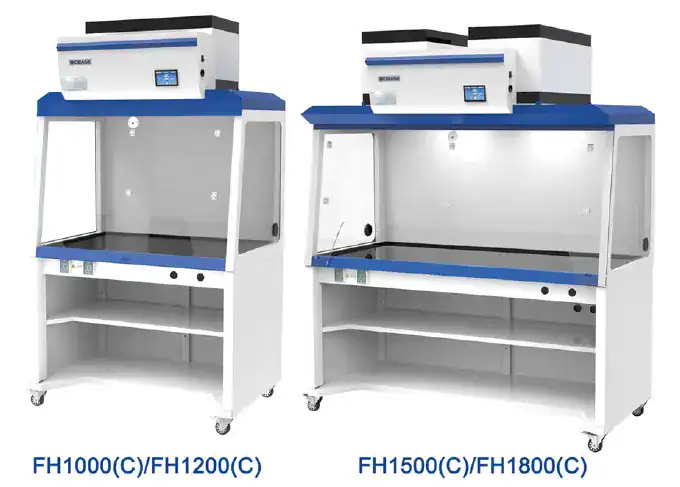 |
Ductless fume hoods represent a fundamentally different approach to ventilation. Instead of exhausting contaminated air to the outside, they are designed to clean the air and recirculate it back into the laboratory.
- Principle of Operation: A ductless hood uses an internal fan to pull air from the lab into the enclosure. This air then passes through a set of filters—typically a primary activated carbon filter to adsorb chemical vapors and sometimes a HEPA filter to capture particulates—before being discharged back into the room.
- Significant Limitations and Safety Concerns: While the prospect of eliminating complex ductwork is appealing, ductless hoods come with significant limitations and safety risks that make them unsuitable for most research applications. Many leading safety organizations and academic institutions strongly discourage or prohibit their use for anything other than handling small quantities of nuisance-level vapors and dusts. The primary concerns are:
- Filter Saturation and Breakthrough: The single greatest risk is that the carbon filter will become saturated with chemicals without warning. Once saturated, it can no longer capture vapors, leading to a “breakthrough” where hazardous substances are pumped directly back into the laboratory. Predicting the saturation point is extremely difficult in a typical research environment where a variety of chemicals in different concentrations are used, making a reliable filter change schedule nearly impossible to establish.
- Chemical Incompatibility: Activated carbon filters are not universal. They are ineffective at capturing certain chemicals, such as low molecular weight compounds, ammonia, and carbon monoxide. Using the hood with an incompatible chemical provides no protection.
- Fire Hazard and Hazardous Waste: A filter saturated with flammable solvents can become a serious fire hazard. Furthermore, once saturated, the filters themselves are considered hazardous waste and must be disposed of according to strict environmental regulations, which is a costly and logistically complex process. The filters themselves are also expensive, with replacement costs often running from $600 to $1,200 each.
The consensus among safety professionals is that the risks associated with ductless hoods for general chemical work far outweigh their benefits. The choice of a fume hood must be driven by a rigorous hazard analysis, and for the vast majority of chemical procedures, a fully ducted system remains the only acceptable solution for ensuring personnel safety.
4.4 Comparative Analysis of Fume Hood Types
To aid in the selection process, the following table provides a direct comparison of the primary fume hood types based on their intended application and key design features.
| Hood Type | Primary Application | Key Construction Features | Critical Limitations / Safety Considerations |
| Standard Bench-Top | General laboratory chemistry with a wide range of volatile, toxic, or flammable chemicals. | Chemical-resistant liner (e.g., epoxy, phenolic resin), safety glass sash, baffles for uniform airflow. | Must NOT be used for heated perchloric acid, significant radioisotope work, or hydrofluoric acid without specific modifications. |
| Perchloric Acid | Work involving heated perchloric acid. | Integrated water wash-down system for hood and ductwork, acid-resistant materials (Type 316 SS or PVC), dedicated exhaust system. | Risk of catastrophic explosion if used for heated perchloric acid. Must not be used for organic solvents or other combustibles. |
| Radioisotope | Handling of radioactive materials, especially those that pose a contamination risk. | One-piece, seamless Type 304/316 stainless steel liner with coved corners for easy decontamination. Reinforced work surface for lead shielding. | Standard hoods are difficult to decontaminate effectively due to seams and joints where radioactive material can accumulate. |
| Ductless (Recirculating) | Handling of small quantities of non-hazardous, nuisance-level powders or vapors. | Internal fan and filter system (typically activated carbon and/or HEPA). No connection to external ductwork. | High risk of filter saturation and chemical breakthrough. Not suitable for toxic, reactive, or unknown substances. High operational cost. |
5.0 Understanding Airflow Systems: Constant Air Volume (CAV) vs. Variable Air Volume (VAV)
Beyond the physical type of fume hood, the design of its airflow control system is a critical factor that has profound implications for safety, energy consumption, and long-term operational costs. The two primary systems are Constant Air Volume (CAV) and Variable Air Volume (VAV). The choice between them is a major strategic decision for any facility.
5.1 Constant Air Volume (CAV) Systems
- How it Works: A Constant Air Volume (CAV) system is the traditional and more straightforward approach to fume hood ventilation. As its name implies, the system is designed to exhaust a constant, unchanging volume of air at all times, regardless of whether the sash is open or closed. This means the exhaust fan runs at a constant speed. A direct consequence of this design is that the face velocity is inversely proportional to the sash height; as the sash is lowered, the same large volume of air is pulled through a smaller opening, causing the face velocity to increase significantly. To prevent dangerously high velocities when the sash is nearly closed, most modern CAV hoods incorporate a “bypass” feature—a grille located above the sash that opens to allow room air to enter the hood and maintain a more stable exhaust volume.
- Pros: The primary advantages of CAV systems are their simplicity and lower initial cost. They have fewer complex components, making them easier to install, balance, and maintain.
- Cons: The major drawback of CAV systems is their profound energy inefficiency. Because they are always exhausting the maximum design volume of air, they are constantly removing large quantities of conditioned (heated or cooled) air from the laboratory, 24 hours a day. This conditioned air must then be replaced by the building’s HVAC system, leading to extremely high energy consumption and operational costs. One study estimated that a single CAV fume hood can cost approximately $5,500 per year just in energy to condition its replacement air.
5.2 Variable Air Volume (VAV) Systems
- How it Works: A Variable Air Volume (VAV) system is a more advanced and intelligent design engineered for energy efficiency. VAV systems incorporate sensors that continuously monitor the position of the fume hood sash. This information is fed to a controller that automatically adjusts the speed of the exhaust fan or a damper in the ductwork. As the user lowers the sash, the system reduces the volume of air being exhausted to maintain a constant, optimal face velocity. When the sash is fully closed, the exhaust volume is reduced to a minimum level required for basic ventilation, dramatically cutting energy use.
- Pros: The foremost advantage of VAV systems is their exceptional energy efficiency. By exhausting only the volume of air necessary to maintain a safe face velocity, they can reduce the energy consumption of a fume hood by 70% or more compared to a CAV system. This translates into substantial long-term operational cost savings and a much smaller environmental footprint, often resulting in a rapid return on investment (ROI) despite the higher initial cost. VAV systems also enhance safety by maintaining a constant and stable face velocity, regardless of sash position, avoiding the fluctuations inherent in CAV systems.
- Cons: The main disadvantages are the higher upfront capital cost for the hood and its sophisticated control system, and increased complexity. VAV systems have more moving parts, sensors, and electronics that require specialized installation and regular maintenance to ensure long-term reliability.
The decision between CAV and VAV is a classic total cost of ownership (TCO) calculation. While CAV systems are less expensive to purchase, their lifetime operational costs are vastly higher. VAV systems, though requiring a greater initial investment, pay for themselves over time through energy savings. However, there is a critical factor that determines whether these savings are ever realized: user behavior. A VAV system can only save energy if users consistently close the sash when the hood is not in active use. If sashes are habitually left open, a sophisticated VAV hood operates in a de facto CAV mode, wasting energy and nullifying the financial investment. Therefore, choosing VAV technology must be accompanied by a commitment from laboratory management to implement and enforce strict user protocols and training programs, such as a “Shut the Sash” campaign. This transforms the fume hood from a simple piece of safety equipment into a key element of a facility’s financial and sustainability strategy.
For example, the FH1000(A) series from HINOTEK features 9 adjustable air speed levels.
5.3 CAV vs. VAV Fume Hood Systems: A Comparative Overview
| Feature | Constant Air Volume (CAV) | Variable Air Volume (VAV) |
| Airflow Principle | Exhausts a constant volume of air at all times. | Varies the exhaust volume based on sash position. |
| Face Velocity | Variable; increases as the sash is lowered. | Constant; maintained at a set point regardless of sash position. |
| Energy Efficiency | Low; highly energy-intensive due to constant maximum exhaust. | High; significant energy savings by reducing exhaust volume. |
| Upfront Cost | Lower initial purchase and installation cost. | Higher initial purchase and installation cost. |
| Operational Cost | Very high due to wasted conditioned air. | Significantly lower due to energy savings. |
| System Complexity | Simple, with fewer components and easier maintenance. | Complex, with sensors, controllers, and variable-speed fans requiring maintenance. |
| Safety Profile | Provides basic safety, but face velocity can fluctuate. | Enhanced safety due to stable and consistent face velocity. |
| Ideal Use Case | Labs with very few hoods, constant-demand processes, or strict budget limitations on initial capital. | Labs with multiple hoods, variable usage patterns, and a focus on long-term operational savings and sustainability. |
6.0 Fume Hood vs. Biosafety Cabinet: Choosing the Correct Enclosure
A common and potentially dangerous point of confusion in laboratory design and practice is the distinction between a chemical fume hood and a biological safety cabinet (BSC). While they may appear superficially similar, they are fundamentally different devices designed to handle entirely different types of hazards. Using one in place of the other can compromise safety, contaminate experiments, and expose personnel to unnecessary risks.
6.1 The Fundamental Difference: Protection Focus
The core difference lies in what each device is designed to protect.
- Chemical Fume Hood: Its sole purpose is to protect the user from exposure to chemical hazards such as toxic gases, volatile solvents, and corrosive vapors. It offers no protection for the experiment or product inside the hood from contaminants present in the laboratory air.
- Biosafety Cabinet (BSC): Its purpose is threefold. A BSC is designed to protect the user, the product/experiment, and the environment from exposure to biological agents (e.g., bacteria, viruses, cell cultures) and other hazardous particulates.
6.2 Contrasting Airflow and Filtration
These different protection goals are achieved through distinct airflow patterns and the use of specialized filtration.
- Fume Hood: A fume hood operates with a simple, continuous inflow of unfiltered laboratory air. The air is drawn from the room, across the work surface where it picks up chemical contaminants, and is then exhausted directly out of the building through the ductwork. This design effectively protects the user but means that the experiment is constantly bathed in non-sterile room air.
- Biosafety Cabinet: The defining feature of a BSC is its use of High-Efficiency Particulate Air (HEPA) filters. In a Class II BSC, the most common type, two sets of HEPA filters are used. One filter cleans air drawn into the cabinet, which then flows downward in a sterile, laminar pattern over the work surface, protecting the product from contamination. At the same time, an air curtain is created at the front opening, preventing contaminants from escaping and protecting the user. The air exhausted from the cabinet also passes through a HEPA filter, which traps any hazardous biological agents, thus protecting the environment.
6.3 Application Mismatches: A Critical Safety Warning
The distinct designs of these enclosures lead to critical application mismatches that must be avoided.
- Never use a fume hood for sterile work. Procedures that require aseptic conditions, such as cell culture or microbiology, will be immediately contaminated by the unfiltered room air that is constantly flowing into a fume hood.
- Never use a standard BSC for volatile or toxic chemicals. HEPA filters are designed to capture particulates (like microbes) and are not effective at trapping chemical gases and vapors. Using volatile chemicals in a BSC can lead to several dangerous scenarios: the vapors may pass directly through the filter and be recirculated back into the lab, exposing the user; they can saturate and damage the filter media; or they can build up to flammable concentrations within the cabinet. While certain types of BSCs (e.g., Class II, Type B2) are hard-ducted and can be used for microbiological work that also involves small amounts of chemicals, a chemical fume hood is always the proper choice when chemical vapors are the primary hazard.
6.4 Fume Hood vs. Biosafety Cabinet (BSC) – A Quick Reference Guide
This table provides a concise summary to prevent dangerous and costly errors in equipment selection, serving as an invaluable resource for anyone outfitting a new laboratory space.
| Feature | Chemical Fume Hood | Biosafety Cabinet (BSC) |
| Primary Function | Personnel protection from chemical hazards. | Personnel, product, and environmental protection from biological hazards. |
| Protects | User | User, Product, Environment |
| Airflow Pattern | Inward flow of unfiltered room air, exhausted outside. | Vertical laminar flow of HEPA-filtered air over work surface; HEPA-filtered exhaust. |
| Filtration Method | Typically none (ducted models); exhaust is vented directly outside. | HEPA filters for both supply and exhaust air. |
| Exhaust | Vented outside the building (ducted models). | Often HEPA-filtered and recirculated into the room (Class II, Type A2). |
| Typical Applications | Handling volatile solvents, toxic gases, corrosive acids, odorous materials, chemical reactions. | Cell culture, microbiology, handling infectious agents, work requiring a sterile environment. |
7.0 Operational Excellence: Best Practices for Fume Hood Safety and Efficacy
A fume hood is not an infallible safety device; its performance is critically dependent on the actions and discipline of the user. A state-of-the-art hood can be rendered ineffective by improper work practices. Adherence to established safety protocols is just as crucial as the mechanical function of the fan. The user and the hood form a dynamic system where proper technique is essential to actualize the potential for safety.
7.1 Before You Begin Work
Preparation is the first step to ensuring a safe procedure. Before introducing any chemicals into the hood, perform the following checks:
- Verify Performance: Always confirm that the fume hood is turned on and operating. If the hood is equipped with an airflow monitor or alarm, check that it indicates a safe face velocity (e.g., a green light or a digital readout within the acceptable range). If no monitor is present, you can perform a quick qualitative check by holding a lightweight piece of paper, like a lab wipe, near the opening and observing if it is pulled inward by the airflow. Do not let go of the wipe, as it can be drawn into the ductwork and cause a blockage.
- Check Certification: Look for the certification sticker, which is usually on the front of the hood. Ensure that the hood has been inspected and certified by a qualified technician within the last year. Do not use a hood that is out of certification or has a “Do Not Use” tag.
- Lower the Sash: Adjust the sash to the proper working height. This is typically 18 inches (45 cm) and is often marked on the side frame of the hood with arrows or a label. Working with the sash at this height ensures the design face velocity is achieved and provides a physical barrier between you and your work.
- Wear Appropriate PPE: Don all necessary Personal Protective Equipment (PPE) before you begin. This includes, at a minimum, safety glasses or goggles, a lab coat, and appropriate chemical-resistant gloves.
7.2 During the Procedure
How you work inside the hood directly impacts its ability to contain fumes. The smooth, protective airflow is like a calm river; obstacles and improper movements can create turbulence, like boulders in the river, causing contaminants to spill out.
- The 6-Inch Rule: This is the single most important user practice. All work, equipment, and chemical containers must be kept at least 6 inches (15 cm) back from the plane of the sash opening. Working too close to the front edge places you in a zone of turbulent air where contaminants are most likely to escape.
- Minimize Obstructions: Do not clutter the hood with unnecessary equipment or bottles. Excessive items disrupt airflow patterns and can block the rear baffles, severely compromising containment. If you must place large equipment inside the hood, elevate it 2 to 3 inches off the work surface using blocks or stands. This allows air to flow underneath the equipment to the lower baffle slot, preventing the creation of a large “dead spot”.
- Avoid Storage: A fume hood is a ventilated workspace, not a storage cabinet. Permanent storage of chemicals and equipment inside the hood is a dangerous practice that impedes airflow, increases the risk of fire, and can interfere with safe experimental work.
- Use Slow, Deliberate Movements: Avoid fast arm and body movements in and out of the hood. Rapid motions can disrupt the air curtain at the face of the hood and pull vapors out into the laboratory.
- Never Put Your Head Inside: The sash is a safety barrier. At no point should your head ever enter the plane of the hood opening. Keep the sash positioned below your face (for vertical sashes) or between you and your work (for horizontal sashes) at all times.
7.3 After Work is Complete
Proper procedure does not end when the experiment is finished.
- Close the Sash: As soon as you are finished working in the hood, lower the sash completely. This practice provides maximum safety by containing the materials inside and is the most critical step for energy conservation in facilities with VAV systems.
- Good Housekeeping: Clean up any spills immediately. Remove all materials that are not required for the next procedure and store them in their proper locations. Maintain a clean and organized work surface inside the hood.
8.0 Ensuring Performance: An Overview of Fume Hood Testing and Standards
To ensure that a fume hood provides adequate protection, its performance must be regularly verified through standardized testing. Several regulatory and advisory bodies establish the guidelines and standards for laboratory ventilation and fume hood performance.
8.1 Key Regulatory and Advisory Bodies
In the United States and internationally, the following organizations are instrumental in defining laboratory safety standards:
- OSHA (Occupational Safety and Health Administration): The OSHA standard 29 CFR 1910.1450, “Occupational exposure to hazardous chemicals in laboratories,” legally requires that employers ensure fume hoods and other protective equipment are functioning properly.
- ANSI/AIHA (American National Standards Institute / American Industrial Hygiene Association): The ANSI/AIHA Z9.5 standard, “Laboratory Ventilation,” is a comprehensive consensus standard that provides detailed design and performance criteria. It is widely recognized as the authoritative guide for best practices in laboratory ventilation.
- NFPA (National Fire Protection Association): NFPA 45, “Standard on Fire Protection for Laboratories Using Chemicals,” provides requirements for hood construction, location, and fire safety features to minimize fire hazards.
- ASHRAE (American Society of Heating, Refrigerating and Air-Conditioning Engineers): ASHRAE sets the industry’s primary performance testing standard, ASHRAE 110, which provides a method for quantitatively evaluating a hood’s containment capabilities.
8.2 The Gold Standard: ASHRAE 110 Performance Testing
The ASHRAE 110 standard, “Methods of Testing Performance of Laboratory Fume Hoods,” is the universally accepted protocol for evaluating the containment performance of a fume hood. It is used by manufacturers during the design and development phase, by certifiers during commissioning and annual inspections, and as a diagnostic tool to troubleshoot performance issues.
It is crucial to understand that ASHRAE 110 is a testing method, not a pass/fail safety standard. It provides a reproducible, quantitative way to measure a hood’s performance under specific conditions, allowing for comparison between different models or for tracking the performance of a single hood over time. The results of the test are then compared against the performance criteria set by other standards, like ANSI Z9.5, or the institution’s own safety policies. The ASHRAE 110 test consists of three primary components:
- Face Velocity Measurement: A technician uses a calibrated thermal anemometer to take a series of airflow measurements across the face of the hood opening. This data is used to calculate the average face velocity and to check for uniformity, ensuring there are no significant “dead spots” or excessively high-velocity zones.
- Smoke Visualization: This is a qualitative test where a source of visible smoke is generated inside the hood. The technician observes the smoke patterns to assess the stability of the airflow, identify areas of turbulence, and visually confirm that all smoke is captured and exhausted effectively. The test can reveal containment issues caused by poor hood design or adverse room conditions, such as cross-drafts.
- Tracer Gas Containment Test: This is the quantitative core of the standard. A mannequin is placed in front of the hood to simulate the position of a user. A tracer gas, traditionally sulfur hexafluoride (SF6), is released inside the hood at a controlled rate from a diffuser. A highly sensitive detector probe is placed in the mannequin’s “breathing zone,” continuously monitoring for any escaped tracer gas. The results are reported as the average concentration of escaped gas in parts per million (ppm), providing a precise, quantitative measure of the hood’s containment capability under various test conditions.
8.3 The Importance of Annual Certification
A fume hood is a dynamic system subject to wear and changes in the building’s ventilation. Therefore, its performance must be verified on a regular basis. Industry standards and regulatory bodies mandate that fume hoods be professionally tested and certified at several key intervals: upon initial installation, after any significant repairs or modifications to the hood or the building’s HVAC system, and at least annually thereafter. This regular certification process is essential to ensure that the hood continues to provide the necessary level of protection for laboratory personnel throughout its operational life.
If you are ready to find the right Fume Hood for your laboratory, please browse our complete product range: Fume Hood
This guide is maintained by HINOTEK’s core technical team, comprised of senior engineers and application scientists with over two decades of hands-on experience in fields such as microscopy, centrifugation, and spectrophotometry. We are committed to ensuring that every piece of information in this guide—from instrument principles and technical specifications to laboratory procurement advice—maintains the highest level of accuracy and timeliness.
This content is regularly reviewed and updated to reflect the latest industry standards and technological advancements. We value feedback from the global scientific community. Should you have any questions or suggestions, or wish to discuss any technical details, please do not hesitate to contact our expert team at [email protected].
Works cited
- en.wikipedia.org, https://en.wikipedia.org/wiki/Fume_hood
- Fume Hoods – Environmental Safety and Health – University Of Maryland, Baltimore County, https://safety.umbc.edu/fume-hoods/
- guide to laboratory/chemical fume hoods – Environmental Health …, https://www.tntech.edu/safety/pdf/A_GUIDE_TO_LABORATORY_FUME_HOODS.pdf
- Fume Hoods – Environment, Health & Safety, https://ehs.wisc.edu/labs-research/chemical-safety/chemical-safety-guide/fume-hoods/
- A Chemical Fume Hood | SUNY Geneseo, https://www.geneseo.edu/chemstockroom/chemical-fume-hood
- What is a fume hood? How do fume hoods work? – Best Technology, https://www.besttechnologyinc.com/wet-bench/what-is-a-fume-hood-how-do-fume-hoods-work/
- Fume Hoods | Environmental Health & Safety (EHS), https://ehs.utexas.edu/working-safely/equipment-safety/fume-hoods
- Chemical Fume Hood Safe Work Practices – Division of Research Safety, https://drs.illinois.edu/Page/SafetyLibrary/ChemicalFumeHoods
- Everything About Fume Hoods – Uses & Types – Labkafe, https://www.labkafe.com/blog/fume-hood-definition-working-principle-types-labkafe/
- Fume Hoods | UW Environmental Health & Safety, 2025, https://www.ehs.washington.edu/chemical/fume-hoods