
 |
Introduction: The Central Role of Precise Temperature Control in Scientific Research
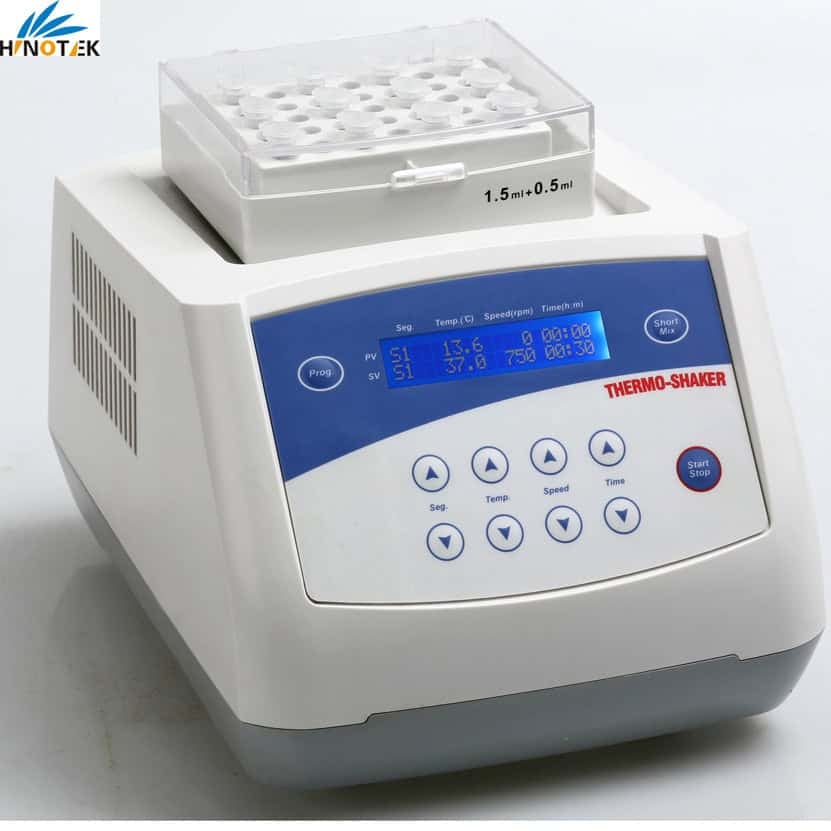
In the landscape of modern scientific research, the ability to precisely control temperature is not merely a convenience—it is a fundamental prerequisite for accuracy, reproducibility, and valid outcomes. A laboratory dry bath (View HINOTEK Dry Bath Category), also known as a dry block heater or dry bath incubator, is a microprocessor-controlled benchtop instrument engineered to provide this exact thermal regulation for samples held in various laboratory vessels. Its defining characteristic, which distinguishes it from traditional water baths, is its reliance on a “dry” heating method. Instead of immersing samples in a liquid medium, a dry bath utilizes solid, machined metal blocks to transfer thermal energy, an approach that brings a distinct set of advantages in cleanliness, safety, and operational efficiency.
This instrument is an indispensable tool across a vast spectrum of scientific disciplines. In molecular biology, it facilitates critical steps in DNA amplification and enzyme reactions. In clinical diagnostics, it ensures the stable conditions required for coagulation studies and immunoassays. For biochemists and pharmaceutical developers, it is essential for everything from protein denaturation to drug stability testing. The integrity of temperature-sensitive experiments hinges on the reliability of such equipment. This guide provides an exhaustive exploration of the laboratory dry bath, covering its core operating principles, components, diverse applications, and best practices for selection and maintenance, empowering researchers, lab managers, and procurement staff to make informed decisions.
The Core Principle: How Dry Baths Achieve Stable and Uniform Temperatures
The efficacy of a laboratory dry bath is rooted in fundamental principles of physics and precision engineering. Its ability to maintain a stable and uniform thermal environment for samples is achieved through a combination of efficient heat transfer, advanced material science, and sophisticated electronic control.
Mechanism of Heat Transfer
The primary mechanism governing a dry bath’s function is thermal conduction. An internal electrical heating element generates thermal energy, which is transferred directly to a large, machined block of metal. This block, in turn, conducts the heat to the walls of the sample tubes, plates, or vials that are seated within its precisely drilled wells. This direct solid-to-solid contact is the cornerstone of the “dry” heating method.
Material Science of the Block
The choice of material for the heating block is critical to the instrument’s performance. Blocks are almost universally fabricated from high-grade aluminum or aluminum alloys. Aluminum is selected for its excellent thermal conductivity, a property that allows it to absorb heat from the element rapidly and distribute it relatively evenly throughout its mass. This ensures that all wells within the block reach the target temperature quickly and maintain a consistent thermal environment.
The PID Microprocessor—The Engine of Precision
While the metal block provides the medium for heat transfer, the precision of a modern digital dry bath is governed by its electronic brain: the Proportional-Integral-Derivative (PID) controller. This microprocessor-based system operates as a continuous, high-speed feedback loop. A sensor embedded within the block constantly measures its temperature and relays this information to the PID controller. The controller compares this real-time temperature to the user-defined setpoint and makes instantaneous, predictive adjustments to the power supplied to the heating element.
This intelligent control algorithm is what separates digital dry baths from their analog predecessors. Unlike a simple on/off thermostat that leads to temperature overshooting and undershooting, a PID controller anticipates thermal changes, allowing the system to hold a set temperature with exceptional stability, often within ±0.1∘C.1 This leap in control technology eliminates the need for constant external monitoring with a thermometer, a common and tedious requirement for older analog models, thereby ensuring highly reproducible experimental conditions.
The reliance on solid-state conduction is the source of the dry bath’s most significant advantages but also its primary performance trade-offs when compared to a water bath. The aluminum block has a much lower thermal mass and specific heat capacity than a large volume of water. Consequently, a dry bath requires significantly less energy and time to reach its target temperature, with typical heat-up times of just 15 to 30 minutes. However, this same physical principle presents a challenge in heat transfer to the sample. Water baths utilize both conduction and convection, creating a circulating liquid that envelops the sample container for 360-degree surface contact. This method is highly efficient at transferring heat into the sample and creating a uniform thermal environment. A dry bath, relying solely on conduction through limited physical contact points, can result in slower sample equilibration and the potential for minor temperature gradients due to insulating air gaps between the tube and the block wall. Therefore, the selection of a heating instrument is a decision based on a fundamental physical trade-off: choosing between the rapid instrument setup, superior hygiene, and safety of a dry bath versus the maximum thermal uniformity and sample heating efficiency of a water bath.
Anatomy of a Laboratory Dry Bath: A Component-by-Component Breakdown
A laboratory dry bath is a synthesis of robust mechanical design and sophisticated electronics. Understanding its individual components is key to appreciating its functionality, performance, and operational requirements.
Control Unit and User Interface
The user’s primary interaction point is the control unit, which has evolved significantly over time.
- Analog Controls: Older models feature simple analog knobs for setting temperature, which lack precision and require external thermometers for verification.
- Digital Controls: The modern standard is a digital controller with a bright LED or LCD screen. This interface provides a clear, real-time display of both the user’s setpoint and the actual measured block temperature, alongside controls for a timer.
- Advanced Touchscreen Interfaces: High-end models feature programmable touchscreen displays. These allow users to create, save, and recall complex multi-step protocols, set password-protected user profiles, and visualize temperature ramps, greatly enhancing workflow automation and reproducibility.
Heating and Cooling Systems
At the core of the instrument is its thermal engine.
- Heating Element: A resistive heating element is integrated into the base of the unit, directly coupled to the block chamber to ensure efficient heat transfer.
- Cooling Systems: Advanced models that offer sub-ambient temperature control incorporate active cooling systems. These may include traditional refrigeration coils or, more commonly, solid-state Peltier thermoelectric modules. Peltier devices use the thermoelectric effect to create a temperature differential, allowing for precise heating and cooling from the same component without moving parts or refrigerants, making them ideal for compact benchtop instruments.
Block Chamber (Well)
The block chamber is the precisely machined cavity within the instrument’s chassis designed to accept the heating blocks. It is typically constructed from a single piece of stainless steel for durability, corrosion resistance, and ease of cleaning. A critical operational and safety note is that this chamber is engineered exclusively for use with solid metal blocks and must never be filled with water, oil, or any other fluid, as this can cause irreparable damage to the electronics and create a severe electrical hazard.
Housing and Safety Features
The external chassis and integrated safety mechanisms are designed to protect both the user and the instrument.
- Housing: The external case is constructed from durable materials like powder-coated steel or chemically resistant plastic to provide stability and a long service life in a demanding lab environment.
- Over-Temperature Protection: A non-negotiable safety feature is an independent circuit that automatically cuts power to the heating element if the temperature exceeds a preset safety limit, preventing thermal runaway and potential hazards.
- Audible Alarms: Most digital units feature audible alarms to alert the user when a timed cycle is complete or if a fault condition, such as an over-temperature event, has occurred.
- Lids and Covers: Many dry baths include or offer optional lids. These serve a dual purpose: they protect users from accidentally touching the hot block surface, and they create an insulated microenvironment around the samples, which improves temperature uniformity and stability by minimizing heat loss to the ambient environment.
The Modular Heart: A Deep Dive into Dry Bath Blocks
The defining feature that grants a dry bath its immense versatility is its system of modular, interchangeable blocks. These blocks are not mere accessories; they are the functional core of the instrument, directly interfacing with the samples.
Materials and Manufacturing
Dry bath blocks are precision-engineered components designed for optimal thermal performance.
- Material: They are machined from a single, solid piece of high-grade, nonporous aluminum or a similar aluminum alloy. This monolithic construction, free of welds or seams, ensures the most efficient and uniform heat conduction possible.
- Surface Treatment: The aluminum is often anodized, a process that creates a hard, corrosion-resistant oxide layer on the surface. This treatment enhances durability and protects the block from minor spills and wear over time.
- Machining: The wells for the sample vessels are drilled with extremely tight tolerances to ensure a snug fit. This close contact minimizes the insulating air gap between the vessel wall and the block, maximizing the efficiency of conductive heat transfer. Many blocks also feature alphanumeric labeling for easy sample identification.
Block Configurations
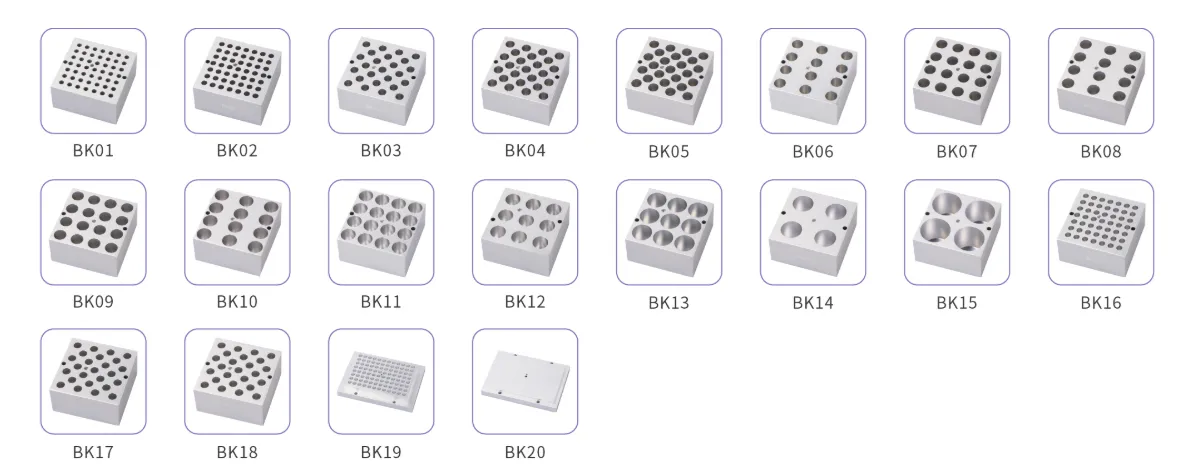 |
The true power of the dry bath system lies in the vast library of available block configurations, allowing a single base unit to accommodate a wide array of laboratory workflows. Common formats include blocks designed for:
- 0.2 mL PCR tubes, strips, or 96-well plates
- 0.5 mL, 1.5 mL, and 2.0 mL microcentrifuge tubes
- 15 mL and 50 mL conical centrifuge tubes
- Standard test tubes of various diameters (e.g., 10 mm, 13 mm)
- Specialized vessels like cuvettes, vials, or ampules
Fixed vs. Interchangeable Blocks
When selecting a dry bath, one of the first decisions is whether to choose a unit with fixed or interchangeable blocks.
- Fixed-Block Models: These units come with a permanently installed block configuration. They are an excellent choice for dedicated, high-throughput applications where the sample format never changes, such as a clinical lab running the same assay repeatedly.
- Interchangeable-Block Models: These are the most common type, offering maximum flexibility. The blocks can be easily lifted out and swapped in seconds, allowing the instrument to adapt to the changing needs of a dynamic research environment.
The modularity of the interchangeable block system is a key element of the product’s design and directly impacts its total cost of ownership (TCO). Manufacturers often sell the base heating unit separately from the blocks, which makes the initial capital investment in the instrument appear lower. However, each block required for a specific workflow must be purchased as a separate line item. For a laboratory with diverse and evolving experimental needs, the cumulative cost of acquiring a comprehensive library of blocks can significantly exceed the cost of the base unit itself. This “unbundling” strategy necessitates a strategic approach from lab managers and procurement staff. A simple price comparison of base units is insufficient. A thorough needs assessment must be conducted to forecast all current and future block requirements, and the total cost of the complete system—base unit plus all necessary blocks—must be factored into the budget. For a lab with a single, unchanging protocol, a fixed-block model might offer a lower TCO. In contrast, for a multi-user research lab, the higher upfront investment in a flexible, interchangeable system is a necessary and worthwhile expenditure.
A Spectrum of Capabilities: Types and Advanced Models of Dry Baths
The dry bath platform has evolved from a simple heater into a range of specialized instruments, each tailored to specific laboratory needs. Understanding this spectrum of capabilities is crucial for selecting the right tool for a given application.
Standard Digital Dry Baths
This is the foundational and most common type of dry bath. It provides precise heating, typically in a range from approximately 5°C above ambient temperature up to 130°C or 150°C.1 Equipped with a digital PID controller, it is the workhorse for countless routine applications like enzyme reactions, sample thawing, and incubation.
Heating and Cooling (Refrigerated) Dry Baths
These advanced models incorporate an active cooling system, such as Peltier elements or refrigeration coils, enabling them to achieve and maintain temperatures below the surrounding room temperature. This capability is indispensable for a variety of molecular biology protocols. For example, DNA ligation reactions are often performed at 16°C to balance enzyme activity with the stability of annealed DNA ends. A cooling dry bath can hold this temperature for hours or overnight without requiring a dedicated cold room or messy ice buckets. Similarly, they are used to rapidly chill samples to 4°C or even -20°C to halt enzymatic reactions or for temporary sample storage.
Shaking and Mixing Dry Baths (Thermo Mixers)
Also known as thermo mixers, these units integrate an orbital or linear shaking mechanism with temperature control. The ability to agitate samples while heating is critical for applications that require suspension of solids, uniform mixing of reagents, or aeration. Common uses include small-scale bacterial or yeast cell cultures, dissolution studies, and various immunoassays where binding kinetics are improved with gentle mixing. Shaking speeds are typically variable, with some models reaching up to 1,000 rpm.
Programmable and Gradient Dry Baths
These models offer the highest level of automation and control for complex thermal protocols.
- Programmable Dry Baths: These units allow users to create, store, and execute multi-step programs that define a sequence of different temperatures and hold times. This is invaluable for automating procedures like certain PCR-related steps (e.g., a 95°C denaturation followed by a 60°C annealing step) or complex enzymatic assays without manual intervention.
- Gradient Dry Baths: A gradient dry bath can simultaneously maintain a range of different temperatures across the wells of a single block. This feature is a powerful tool for optimizing reaction conditions. For instance, a researcher can test multiple annealing temperatures for a PCR primer pair in a single experiment, quickly identifying the optimal temperature for specificity and yield.
High-Throughput and Multi-Block Systems
Designed for labs with high sample volumes, these larger instruments can accommodate two, four, or even more blocks simultaneously. This dramatically increases sample throughput compared to a single-block unit. The most advanced multi-block systems, such as Benchmark’s IsoBlock, feature independent temperature controllers for each block position. This allows a single instrument to function as multiple, distinct dry baths, enabling a user to run several different experiments, each at its own specific temperature, at the same time.
Performance Benchmarks: Understanding Key Technical Specifications
When evaluating and comparing dry baths, it is essential to understand the key technical specifications that define their performance. These metrics provide an objective measure of the instrument’s precision, stability, and efficiency.
- Temperature Range: This specifies the lowest and highest temperatures the instrument can achieve and maintain. A typical heating-only model may have a range of Ambient +5°C to 150°C, while a heating/cooling model might offer a range of -10°C to 105°C.
- Temperature Accuracy: This metric describes how closely the average temperature of the block matches the setpoint on the display. It is typically expressed as a deviation, such as ±0.5∘C at a specific temperature (e.g., 37°C). High accuracy ensures that the experiment is being conducted at the intended temperature.
- Temperature Stability: Stability measures the fluctuation of temperature at a single point in the block over time once thermal equilibrium has been reached. A high-stability instrument, with a rating like ±0.1∘C, will hold its target temperature with minimal deviation, which is critical for long incubation periods.
- Temperature Uniformity: This specification indicates the maximum temperature variation between different wells within the same block at a given setpoint. A uniformity of ±0.2∘C means that no two sample wells will differ in temperature by more than 0.4∘C. Good uniformity is vital for ensuring that all samples in an experiment are subjected to identical thermal conditions.
- Heat-Up/Cool-Down Rates: This measures how quickly the instrument can change temperatures. It is often expressed as the time taken to go from ambient temperature to a high setpoint (e.g., from 25°C to 100°C in less than 15 minutes). Rapid rates improve laboratory efficiency by reducing wait times between experiments.
To aid in the selection process, the following table synthesizes typical performance specifications for different classes of dry baths, providing a clear comparison of their capabilities.
| Specification | Standard Digital Dry Bath | Heating/Cooling Dry Bath | Shaking Dry Bath (Thermo Mixer) |
| Temperature Range | Ambient +5°C to 130°C/150°C | -20°C to 105°C | Ambient +5°C to 105°C |
| Temperature Accuracy | ±0.2∘C to ±0.5∘C | ±0.1∘C to ±0.5∘C | ±0.2∘C to ±0.5∘C |
| Temperature Stability | ±0.1∘C to ±0.5∘C | ±0.1∘C to ±0.2∘C | ±0.2∘C to ±0.5∘C |
| Temperature Uniformity | ±0.2∘C to ±1.0∘C | ±0.2∘C to ±0.5∘C | ±0.2∘C to ±0.5∘C |
| Typical Heat-Up Time | < 20 minutes (30°C to 130°C) | Variable; typically < 15 minutes (heating) | < 20 minutes (30°C to 100°C) |
| Key Applications | Enzyme reactions, DNA denaturation, sample thawing | DNA ligation, enzyme deactivation, cold storage | Cell culture, dissolution studies, immunoassays |
Note: Values are representative and may vary by manufacturer and specific model. Data synthesized from sources, and.
Dry Baths in Action: Core Laboratory Applications and Protocols
The true value of a dry bath is demonstrated in its daily use. Below are detailed protocols for common laboratory procedures where the dry bath’s precision, cleanliness, and convenience are essential for success.
Molecular Biology
Molecular biology workflows are replete with temperature-sensitive steps, making the dry bath an indispensable tool.
Detailed Protocol: Restriction Enzyme Digestion
Restriction enzymes are used to cut DNA at specific recognition sites, a foundational technique in molecular cloning. Most restriction enzymes have an optimal activity temperature, commonly 37°C. A dry bath provides a stable and contamination-free environment for this incubation.
- Preparation: On ice, prepare a reaction mix in a microcentrifuge tube containing DNA substrate, the appropriate 10X reaction buffer, and nuclease-free water. Keep the temperature-sensitive restriction enzyme stock on ice at all times.
- Pre-heat Dry Bath: Set a dry bath equipped with a block for microcentrifuge tubes to 37°C (or the enzyme’s specific optimal temperature). Allow the block to fully equilibrate.
- Initiate Reaction: Add the restriction enzyme to the reaction mix last. Gently mix by pipetting up and down a few times, then briefly centrifuge to collect the contents at the bottom of the tube.
- Incubation: Place the tube into the pre-heated dry bath and incubate for the recommended time, typically 30-60 minutes.
- Inactivation (Optional): To stop the reaction, many enzymes can be heat-inactivated. Adjust the dry bath temperature to 65°C or 80°C (per the enzyme’s specifications) and incubate for 20 minutes.
Detailed Protocol: Bacterial Heat Shock Transformation
This protocol introduces plasmid DNA into chemically competent bacteria. Its success depends on a rapid and precisely timed temperature shift from ice-cold to 42°C.
- Preparation: Thaw an aliquot of chemically competent E. coli cells on ice. Add 1-5 µL of plasmid DNA or ligation reaction to the cells.
- Pre-heat Dry Bath: Set a dry bath with the appropriate block to exactly 42°C. Ensure it has reached and stabilized at this temperature.
- Ice Incubation: Gently mix the cell/DNA mixture and incubate on ice for 20-30 minutes.
- Heat Shock: Transfer the tube from the ice directly into the 42°C dry bath block. Incubate for exactly 30-45 seconds. This timing is critical and should not be estimated.40 The dry bath provides the stable, accurate temperature required for this step.
- Recovery: Immediately transfer the tube back to ice for 2 minutes. Then, add sterile, antibiotic-free recovery medium (e.g., SOC or LB broth) and incubate at 37°C with shaking for 1 hour before plating on selective agar plates.
Detailed Protocol: DNA Ligation
DNA ligation joins DNA fragments together using the enzyme T4 DNA Ligase. This reaction is often performed at a sub-ambient temperature (e.g., 16°C) to optimize the balance between enzyme activity and the annealing of DNA ends. A cooling dry bath is the ideal instrument for this procedure.
- Preparation: On ice, set up the ligation reaction in a microcentrifuge tube containing the vector and insert DNA, 10X T4 DNA Ligase buffer, and water. Add the T4 DNA Ligase last.
- Set Dry Bath Temperature: Set a cooling dry bath to 16°C and allow it to equilibrate.
- Incubation: Mix the reaction gently and place the tube in the 16°C dry bath. Incubate for several hours or overnight (12-16 hours). The cooling dry bath will reliably maintain this temperature for the entire duration without user intervention.
- Inactivation: After incubation, the reaction can be stopped by heat inactivation at 65°C for 10 minutes using the same dry bath. The ligated product is then ready for transformation.
Clinical and Biochemical Assays
In clinical and biochemical settings, dry baths are routinely used to incubate samples at physiological temperature (37°C) for a wide range of assays, including:
- Enzyme kinetics studies: Maintaining a constant temperature is crucial for measuring reaction rates accurately.
- Coagulation tests: Blood plasma samples are incubated at 37°C to assess clotting times.
- Immunoassays: Many binding steps in assays like ELISA are performed at controlled temperatures to ensure consistent results.
General Laboratory Procedures
Detailed Protocol: Bacterial Culture Incubation
For small-scale liquid cultures (e.g., 5-10 mL), a shaking dry bath serves as a compact and convenient alternative to a large floor-model incubator shaker.
- Preparation: In a sterile culture tube, inoculate the appropriate volume of sterile liquid medium (e.g., LB broth) with a single bacterial colony or a small volume of starter culture.
- Set Dry Bath Conditions: Set a shaking dry bath equipped with a block for culture tubes to 37°C and a shaking speed of 200-250 rpm.
- Incubation: Loosely cap the culture tube to allow for air exchange and place it in the shaking dry bath.
- Growth: Incubate overnight (12-16 hours). The combination of controlled heat and vigorous agitation provides the necessary conditions for optimal aerobic bacterial growth.
Dry Bath vs. Water Bath: A Critical Comparative Analysis
The decision between using a dry bath and a water bath is a common one in the laboratory. The choice depends on a careful evaluation of the specific requirements of the application, as each instrument offers a distinct profile of advantages and disadvantages rooted in its method of heat transfer.
Contamination and Hygiene
This is the most significant differentiator and the primary advantage of the dry bath. Water baths, which are open reservoirs of warm water, are notorious breeding grounds for bacteria, fungi, and other microorganisms. This poses a constant risk of cross-contamination to samples, especially in sensitive applications like cell culture or RNA work where enzymatic degradation is a concern. In contrast, dry baths operate without any liquid medium, virtually eliminating the risk of waterborne contamination. Furthermore, the solid metal blocks can be easily removed and sterilized by autoclaving, making the dry bath the unequivocal choice for any work requiring aseptic conditions.
Heat Transfer and Uniformity
In this category, the water bath has a distinct physical advantage. The circulating water provides convective heat transfer and envelops the sample container, ensuring maximum surface area contact. This results in highly efficient heat transfer to the sample and exceptional temperature uniformity throughout the sample volume. Dry baths, relying on conduction through limited contact points, can be slower to bring the sample itself to temperature and may exhibit slight temperature gradients within the sample liquid. This limitation can be partially mitigated by features like heated lids, which create a more uniform thermal environment, or by ensuring a snug fit between the tube and the block well.
Operational Efficiency and Maintenance
The dry bath excels in day-to-day convenience and speed. It heats up to the target temperature in minutes (typically 15-30), whereas a water bath can take an hour or more. This rapid startup saves valuable time in a busy lab. Maintenance for a dry bath is minimal, usually limited to wiping down the blocks and chamber. Water baths, however, require constant attention: regular draining, cleaning to remove microbial growth, and refilling with distilled water, making them far more labor-intensive.
Safety and Convenience
Dry baths offer a significantly safer operating environment. There is no hot water to spill, which eliminates the risk of burns or scalding. They are also ideal for heating open-topped vessels like test tubes or PCR plates, as the blocks hold them securely in an upright position. Attempting to heat an unsealed container in a water bath risks dilution or contamination of the sample and is generally not recommended.
Vessel Flexibility
The water bath’s main advantage in flexibility is its ability to accommodate virtually any size or shape of container that can be safely submerged, from large bottles to irregularly shaped bags. A dry bath’s utility is strictly limited by the availability of a block that matches the specific sample vessel. If a compatible block does not exist for a particular container, the dry bath cannot be used.
The following table provides a direct, head-to-head comparison to summarize these critical trade-offs.
| Criterion | Dry Bath | Water Bath |
| Contamination Risk | Extremely Low. No liquid medium. Blocks are autoclavable. | High. Water is a medium for microbial growth. |
| Temperature Uniformity | Good. Relies on conduction; can have minor gradients. | Excellent. Convection and full surface contact ensure high uniformity. |
| Instrument Heat-Up Time | Fast (15-30 minutes). | Slow (1-2 hours). |
| Sample Heating Rate | Slower. Limited by conductive heat transfer. | Faster. Efficient heat transfer via liquid. |
| Maintenance Requirements | Low. Simple wipe-down cleaning. | High. Requires regular draining, cleaning, and refilling. |
| Vessel Compatibility | Limited. Requires specific blocks for each vessel type. | High. Accommodates almost any size or shape of sealed container. |
| Operational Safety | High. No risk of spills or scalding. Securely holds open vessels. | Moderate. Risk of hot water spills and burns. |
A Practical Guide to Selecting the Right Dry Bath for Your Laboratory
Choosing the right dry bath requires a systematic assessment of your laboratory’s specific needs. By answering the following questions, you can create a clear profile of the ideal instrument for your applications, ensuring you invest in a tool that enhances, rather than hinders, your workflow.
- What are your temperature requirements?
- Heating Only vs. Heating and Cooling: Do your protocols exclusively require temperatures above ambient, or do you perform applications like DNA ligation (16°C) or enzyme deactivation (4°C) that necessitate sub-ambient control? This is the primary decision point between a standard model and a more expensive cooling model.
- Temperature Range and Precision: What is the maximum temperature your applications demand (e.g., 100°C for boiling vs. 130°C for denaturation)? What level of accuracy and stability is required? Clinical assays may demand higher stability (±0.1∘C) than general sample thawing.
- What is your sample throughput?
- Number of Samples: How many samples do you process simultaneously? A low-throughput workflow may be perfectly served by a compact, single-block unit. A high-throughput screening lab will require a two-block, four-block, or even a multi-unit setup to meet demand. Consider future needs as well as current capacity.
- What types of vessels do you use?
- Inventory of Labware: Make a comprehensive list of every tube, vial, and plate format used in your temperature-sensitive protocols (e.g., 0.2 mL PCR tubes, 1.5 mL microtubes, 50 mL conicals, 96-well plates). This inventory will determine the specific blocks you need to purchase.
- Fixed vs. Interchangeable Blocks: If your lab uses only one or two tube types for a dedicated process, a fixed-block unit may be more cost-effective. If your needs are diverse and change frequently, the flexibility of an interchangeable block system is essential.
- Do you need advanced functionality?
- Shaking/Mixing: Do any of your protocols, such as cell culture or dissolution assays, require agitation during incubation? If so, a shaking dry bath (thermo mixer) is necessary.
- Programmability: Do you run complex, multi-step temperature profiles? A programmable unit can automate these workflows, saving time and reducing the potential for manual error.
- Gradient Control: For optimization work, such as determining the ideal annealing temperature for a new set of PCR primers, a gradient dry bath can accelerate discovery by testing multiple temperatures in a single run.
- How critical is sanitation?
- Aseptic Workflows: For applications like cell culture reagent preparation, RNA work, or handling sterile samples, the ability to maintain an aseptic environment is paramount. Ensure the model you choose has easily removable blocks that are specified as autoclavable.
Operational Best Practices: Use, Maintenance, and Calibration
Proper operation and routine maintenance are essential for ensuring the long-term accuracy, reliability, and safety of your laboratory dry bath. Adhering to best practices will protect your investment and the integrity of your experimental results.
Proper Setup and Daily Operation
- Placement: Position the unit on a sturdy, level work surface that can withstand the heat it produces. Ensure there is adequate clearance—at least 6 inches (15.2 cm)—from vertical surfaces to allow for proper air circulation and prevent overheating of the internal components.
- Power: Always connect the unit to a properly grounded electrical outlet that matches the voltage specified for the model (e.g., 120V or 230V).
- Block Installation: A block must always be present in the well(s) when the unit is in operation. Running the heater without a block can affect performance and potentially damage the instrument. Ensure the block is seated firmly in the well to maximize thermal contact.
- Vessel Fit: Use the correct block for your sample vessel. A snug fit is crucial for efficient heat transfer. A loose fit creates an insulating air gap, which will slow down sample heating and can lead to a significant difference between the block temperature and the actual sample temperature.
Cleaning and Decontamination
- Routine Cleaning: Before cleaning, always turn off the unit and allow it to cool completely to room temperature. Wipe the external surfaces and the block with a soft, damp cloth. For more thorough cleaning of the blocks, use a mild detergent solution and a soft brush. Ensure blocks are completely dry before placing them back into the unit.
- Spill Management: Remove spills promptly after the unit has cooled. For spills inside the wells, use a cotton swab lightly dampened with 70% ethanol or isopropyl alcohol (IPA).
- Decontamination: For biological spills, use a suitable disinfectant like 70% ethanol or a 1:100 dilution of bleach, applied with a cloth or swab. Never pour liquids directly into the block wells or the chamber, as this can seep into the electronics and cause permanent damage.
A Step-by-Step Guide to Temperature Calibration
Regular temperature calibration is vital to ensure the instrument’s accuracy. This process verifies that the temperature displayed on the control unit matches the actual temperature of the block.
- Standard Protocol:
- Preparation: Place a block in the dry bath. In one or more wells (e.g., center and corners for uniformity checks), add a thermally conductive liquid like glycerol or mineral oil to ensure good contact with the thermometer probe.
- Set Temperature: Turn on the unit and set it to a commonly used temperature (e.g., 37°C).
- Stabilization: Allow the block to heat up and stabilize at the set temperature for at least 15-30 minutes.
- Measurement: Insert a calibrated, traceable reference thermometer into the liquid-filled well. Ensure the probe is immersed to the proper depth and is not touching the bottom or sides of the well.
- Record Readings: Once the reference thermometer reading is stable, record both the reference temperature and the temperature displayed on the dry bath’s control panel.
- Repeat: Repeat this process at multiple points across your typical operating range (e.g., a low, mid, and high temperature).
- Frequency and Acceptance Criteria:
- Frequency: Calibration should be performed on a regular schedule, such as monthly, or after any maintenance or repair.
- Acceptance Criteria: A typical acceptance criterion is that the displayed temperature must be within ±1∘C of the reading from the calibrated reference thermometer. If the deviation exceeds this limit, the unit may need to be recalibrated according to the manufacturer’s instructions or serviced by a qualified technician.
It is critically important to recognize the distinction between instrument calibration and true sample temperature. The standard calibration procedure described above ensures that the instrument’s display accurately reflects the temperature of the metal block. However, this is not the same as the temperature of the liquid inside your sample tube. Due to thermal lag and the insulating properties of the plastic tube and any air gaps, the sample liquid temperature will often be slightly different from the block temperature, especially during heat-up and cool-down phases. For routine applications, this small difference is often negligible. However, for highly sensitive enzymatic assays or critical experiments, it is best practice to determine this offset. This can be done by placing a thin, calibrated thermocouple probe directly into a “dummy” sample tube containing the same liquid volume as your experimental samples. By monitoring this probe, you can determine the true sample temperature under your exact experimental conditions and adjust the dry bath’s setpoint accordingly to achieve the desired temperature within your sample. Some advanced dry bath models even include an external probe for this very purpose, allowing the control loop to be driven by the actual sample temperature rather than the block temperature.
Conclusion: The Indispensable Role of the Modern Dry Bath
The laboratory dry bath has evolved far beyond its origins as a simple analog heater. Today, it stands as a sophisticated, microprocessor-controlled workstation, integral to the success of modern scientific research. Its development reflects a broader trend in laboratory instrumentation toward greater precision, automation, and safety.
The core value proposition of the modern dry bath is its ability to deliver on three critical laboratory needs simultaneously. First, it provides superior precision, with digital PID controllers capable of maintaining temperatures with exceptional stability and accuracy. Second, it offers unparalleled cleanliness and safety, eliminating the persistent contamination risks and physical hazards associated with traditional water baths. Finally, it enhances operational efficiency, with rapid heat-up times and minimal maintenance requirements that save researchers valuable time and effort. Through its modular design and the availability of advanced models with cooling, shaking, and programmable capabilities, the dry bath has become a versatile and adaptable platform. It is a cornerstone technology for any laboratory committed to achieving reliable, reproducible, and contamination-free results in the countless temperature-sensitive applications that drive scientific discovery forward.
If you are ready to find the right Dry Bath for your laboratory, please browse our complete product range: Dry Bath
This guide is maintained by HINOTEK’s core technical team, comprised of senior engineers and application scientists with over two decades of hands-on experience in fields such as microscopy, centrifugation, and spectrophotometry. We are committed to ensuring that every piece of information in this guide—from instrument principles and technical specifications to laboratory procurement advice—maintains the highest level of accuracy and timeliness.
This content is regularly reviewed and updated to reflect the latest industry standards and technological advancements. We value feedback from the global scientific community. Should you have any questions or suggestions, or wish to discuss any technical details, please do not hesitate to contact our expert team at [email protected].
Works cited
- All Information about Dry Heating Baths – MRC Lab, https://www.mrclab.com/all-information-about-dry-heating-baths
- Dry Block Heaters – Efficiency and Precision | Thermoline Scientific, https://www.thermoline.com.au/blog/dry-block-heaters-efficiency-and-precision
- hardydiagnostics.com, https://hardydiagnostics.com/115002#:~:text=The%20Programmable%20Heating%20Blocks%20are,tubes%2C%20plates%2C%20and%20containers.
- sicweb.com,https://sicweb.com/blog/116-laboratory-digital-and-analog-dry-baths#:~:text=A%20Dry%20Bath%20is%20a,%2C%20biochemistry%2C%20and%20genetic%20laboratories.
- Laboratory dry baths for heating and cooling samples – Lab Equipment – Stellar Scientific, https://www.stellarscientific.com/dry-baths/
- Dry Baths – Amerigo Scientific, https://www.amerigoscientific.com/instrument/dry-baths.html