
 |
I. Principles and Classification of Centrifuges
1. Working Principle
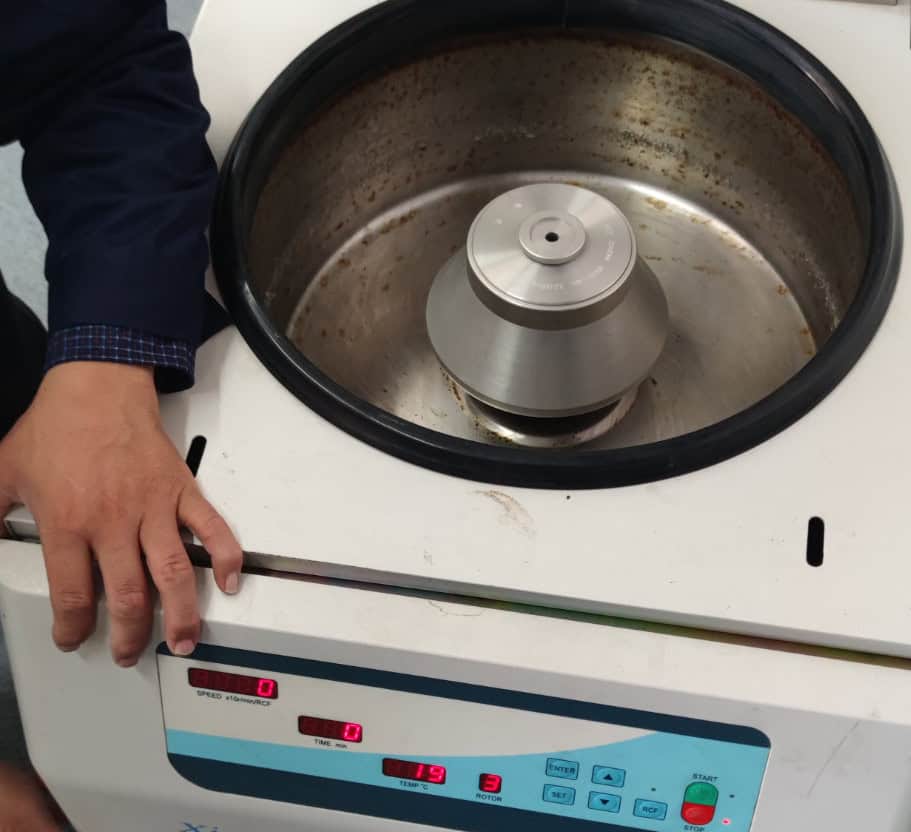
A centrifuge (View HINOTEK Centrifuge Category) utilizes centrifugal force to separate components within a liquid-solid or liquid-liquid mixture. This separation is achieved based on the differences in sedimentation coefficients, mass, and density of the substances when subjected to high-speed rotation.
2. Classification
To meet diverse research requirements, centrifuges are categorized as follows:
-
By Speed: Low-speed, High-speed, and Ultracentrifuges.
-
By Temperature Control: Refrigerated centrifuges and Ambient (Constant Temperature) centrifuges.
-
By Capacity: Micro-centrifuges, Large-capacity, and Super-large capacity centrifuges.
-
By Design: Benchtop (Tabletop) models and Floor-standing models.
II. Standard Operating Procedures (SOP)
Proper operation is critical for data accuracy and equipment longevity.
-
Rotor Balancing: Before operation, centrifuge tubes and their contents must be precisely balanced using a scale. The weight difference must not exceed the range specified in the manufacturer’s manual. Never load an odd number of tubes. Tubes must be placed symmetrically to ensure even load distribution around the rotor.
-
Pre-cooling: For sub-ambient temperature centrifugation, the rotor should be pre-cooled in a refrigerator or within the centrifuge chamber before use.
-
Active Monitoring: Never leave the centrifuge unattended during the start-up phase. Monitor the instrument for abnormal noise or vibration. If an anomaly occurs, stop the run immediately.
-
Speed and Life-cycle Limits: Every rotor has a maximum allowable speed and a cumulative service life limit. Consult the manual and maintain a Rotor Log to track usage hours. Rotors exceeding their limit must be de-rated (operated at lower speeds) as per safety regulations.
-
Tube Selection and Filling:
-
Choose tubes based on the chemical nature and volume of the sample.
-
Open tubes: Do not overfill to prevent leakage, which causes rotor corrosion and imbalance.
-
Ultracentrifuge tubes: These often require being filled to the brim to prevent the plastic from collapsing under high G-forces.
-
-
Post-Run Care: After each use, inspect, clean, and dry the rotor. Rotors are precision components; handle them with care to avoid scratches or impact damage. Apply a layer of protective wax if the rotor will be stored for an extended period.
III. Safety Protocols and Regulatory Guidelines
Safety is paramount; uncontrolled centrifugal force can lead to catastrophic equipment failure.
-
Lid Management: The lid must remain closed during pre-cooling. After the run, remove the rotor, wipe the chamber dry, and leave the lid open to allow moisture to evaporate.
-
Rotor Caps: Ensure the rotor cap is tightened securely. Never place a cap loosely on the rotor, as it can become a projectile if the motor starts.
-
The “Gap Test”: After tightening the rotor cap, manually check for any gaps between the rotor and the lid. If a gap exists, re-tighten until flush.
-
Emergency Response: In case of emergency, do not simply pull the power cord; press the STOP button.
-
Material Integrity: Prohibited use of low-quality, aged, deformed, or cracked centrifuge tubes.
-
Final Checks: The last user of the day must perform a routine safety inspection before leaving the facility.
IV. Operational Precautions
Most lab accidents involve high-speed moving parts. To prevent the centrifuge from “walking” off the bench or causing glass-shard injuries, follow these steps:
-
Cushioning: Ensure the bottom of the tube sleeves are equipped with proper cotton padding or rubber cushions.
-
Symmetry: If only one sample is available, use a “blank” tube filled with water of equal mass for balance.
-
Startup: Only start the motor after the main lid is fully latched.
-
Deceleration: Allow the rotor to come to a complete stop naturally or via the braking system before opening the lid. Never use external force to stop a spinning rotor.
-
Low-Speed Applications: In industrial and academic research, low-speed centrifuges (approx. 4000 RPM) like the Model 80-2B or TDL-4 are common for preliminary sample analysis due to their stability and low center of gravity.
V. Routine Maintenance and Care
A proactive maintenance schedule ensures the reliability of your HINOTEK equipment.
-
Pre-start Check: Disconnect power and release the brake. Manually rotate the drum to ensure it spins freely without obstruction.
-
Startup Sequence: Power on and start clockwise. Standard acceleration to full speed typically takes 40–60 seconds.
-
Break-in Period: New equipment should be run empty for approximately 3 hours to verify stability.
-
Load Management: Ensure material is distributed uniformly. Never exceed the rated capacity.
-
Lubrication & Inspection: Every 6 months, lubricate rotating parts. Inspect bearings for wear, check the braking system, and ensure there are no oil leaks from the bearing housing.
-
Environment Fit: Use only corrosion-resistant models for highly corrosive materials. Non-explosion-proof centrifuges must never be used in flammable or explosive environments.
Technical Note from HINOTEK: Always refer to the specific model’s manual for precise torque settings and chemical compatibility charts. Regular maintenance not only ensures safety but also preserves the validity of your experimental data.
For more information about centrifuge, visit What Is A Centrifuge and How Does It Work? The Definitive Guide for Laboratory Professionals Centrifuge