
 |
Centrifuge Operation Basics: From Principles to Safe Operation
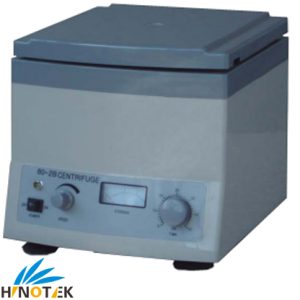
In modern laboratories, the centrifuge is an indispensable tool for substance separation. By leveraging differences in particle size, density, and medium viscosity, centrifuges effectively separate suspended particles from liquids. This guide delves into centrifuge working principles, specifically the critical relationship between Relative Centrifugal Force (RCF) and Revolutions Per Minute (RPM), and explains how to select the right rotor and centrifuge tube consumables. Furthermore, we will share essential steps to ensure safety during centrifugation, including correct balancing methods and troubleshooting tips. Mastering these basics will not only improve your lab’s efficiency but also safeguard personnel.
1. Centrifuge Basics
1.1 Centrifuge Separation Principles
A centrifuge separates suspended particles in a liquid based on particle size and density, medium viscosity, and rotor speed. It is widely used in laboratories to isolate biological components from raw extracts.
In a solution, gravity (Relative Centrifugal Force, RCF) causes particles denser than the solvent to sink, while those less dense float to the top. Centrifugation exploits these minute density differences. As the centrifuge rotor spins around its central axis, it generates centrifugal force, pushing particles away from the axis of rotation. When this force exceeds the liquid’s buoyancy and the frictional resistance of the particles, sedimentation occurs.
1.2 Relative Centrifugal Force (RCF)
Relative Centrifugal Force (RCF), also known as g-force, quantifies the gravitational force exerted on the centrifuged sample. This force is generated by the rotor’s rotation and applied outward onto the centrifuge tubes. RCF accounts for both the rotation speed (Revolutions Per Minute, RPM) and the distance from the center of rotation (rotor radius, r). RCF is the standard unit of measurement because it remains constant regardless of the centrifuge’s rotor size.
RCF=1.118×10⁻⁵×r×(RPM)2
where RCF is the relative centrifugal force in units of gravity (x g), r is the rotational radius in centimeters (cm), and RPM is the rotational speed in revolutions per minute.
RCF is directly proportional to the square of the rotor speed (RPM) and the rotor radius. As a critical parameter, RCF determines the gravitational force applied to sample particles, directly impacting separation efficacy. When using centrifuges with different rotor radii, setting the same RCF value ensures the centrifugation intensity remains identical.
1.3 RCF vs. RPM
Key Takeaway: RCF measures the gravitational force applied to the sample, whereas RPM merely measures the speed at which the rotor completes one full revolution per minute.
While RPM is a helpful metric, it cannot accurately measure the force exerted on a sample. For instance, if you set a centrifuge to 5000 RPM, the actual g-force applied will vary drastically depending on the specific centrifuge or rotor size used. Because RCF incorporates the rotor’s radius into its calculation, it accurately determines the applied gravitational force. Therefore, experimental procedures should always record RCF, not RPM.
If your centrifuge panel only allows RPM input, you must use standard conversion formulas to calculate RCF, which requires knowing your specific rotor’s radius (usually provided by the manufacturer). Fortunately, most modern lab centrifuges allow users to set both RPM and RCF.
2. Centrifuge Rotors
2.1 Rotor Types
 |
There are two primary rotor designs: Fixed-Angle Rotors and Swing-Bucket Rotors.
- Fixed-Angle Rotor: Holds centrifuge tubes at a fixed angle relative to the axis of rotation, typically up to 45°. Particles sediment along the side and bottom of the tube. Because they lack moving parts and experience less metal stress than swing-bucket designs, fixed-angle rotors can achieve much higher RCFs and withstand longer centrifugation times.
- Swing-Bucket Rotor: Allows tubes to swing outward from a vertical resting position to a horizontal position during centrifugation. Particles sediment directly at the bottom of the tube. A complete set includes the rotor body, buckets, and adapters. Their main advantages are large capacity and high flexibility.
2.2 Rotor Bottom Types
 |
Rotor bottoms typically feature round or conical (pointed) designs—a detail often overlooked. Round-bottom rotors are designed for round-bottom tubes, and conical-bottom rotors are for conical tubes.
Placing a conical tube into a round-bottom rotor decreases the maximum centrifugal force the tube can withstand, potentially leading to tube rupture. The same risk applies when placing round-bottom tubes into conical rotors.
To resolve mismatches between rotor bottoms and tubes, you can:
- Change the rotor to match the tube bottom.
- Use a custom adapter inside the rotor that fits both the rotor’s exterior and the tube’s interior.
- Change the centrifuge tube to match the rotor.
3. Ensuring Centrifuge Safety
- 1. Place on a Solid, Level Surface: Always ensure the centrifuge rests on an appropriate, stable lab bench before operation.
- 2. Balance the Centrifuge: Running an unbalanced centrifuge can cause catastrophic equipment damage and endanger personnel. The total mass of each opposing tube must be as close as possible, which is critical at high RCFs. Note: Balance tubes by mass (weight), not volume. Equal volumes of different solutions may have different densities.
- 3. Never Open the Lid While the Rotor is Spinning: While many modern centrifuges feature a “safety interlock” that cuts power, the rotor will continue spinning due to inertia until friction brings it to a halt.
- 4. Stop Immediately if the Centrifuge Wobbles: Slight vibration is normal, but excessive shaking is dangerous. First, verify that the tubes are correctly balanced. If the issue persists, halt usage and contact the manufacturer for maintenance.
4. Rotor Balancing Methods
Properly balancing the weight of centrifuge tubes is fundamental to preventing instrument damage and ensuring safe operation. The core principle of balancing is symmetry, ensuring the rotor’s center of gravity remains on the axis of rotation. Here are 4 common methods:
 |
-
- Center Symmetry (Even Numbers): When the sample quantity is an even number 2n (n is a positive integer), place tubes symmetrically opposite each other.
 |
-
- Triangular Symmetry (Multiples of 3): When the sample quantity is 3n (e.g., 3, 6, 9), place them in a symmetrical triangular formation.
 |
-
- Triangular + Center Symmetry: When the sample quantity is an odd number like 3+2n (e.g., 5, 7, 11), combine the triangular and center symmetry methods.
- Using a Blank Balance Tube: If you only have 1 sample, or N-1 samples (where N is the number of rotor holes), you must prepare a blank tube filled with water or a similar density liquid to balance the rotor symmetrically.
5. Centrifuge Tube Troubleshooting
 |
5.1 Tube Bottom Deformation After Centrifugation
This usually occurs when the rotor shape does not match the tube bottom. Prevent this by switching to a compatible rotor or using an appropriate adapter.
5.2 Liquid Leakage During Operation or Storage
Potential causes include:
- Mismatched caps: The tube body and cap do not fit securely (rare with high-quality consumables).
- Extreme temperatures: For ultra-cold storage, use specialized cryovials. For high-heat conditions, opt for glass tubes.
- Solvent interactions: Highly volatile solvents (e.g., chloroform, dichloromethane, hexane, ethyl acetate, methanol) are prone to leaking. Use glass bottles for long-term storage of these chemicals.
5.3 Tube Cracking After Centrifugation
If a tube ruptures, verify the following:
- Is the rotor fully compatible with the tube?
- Did the applied RCF exceed the tube’s maximum tolerance?
- Was a single-use disposable tube reused?
Identifying the root cause and taking corrective measures will prevent future disruptions to your experimental workflow.
To learn more about the principles, types, and applications, please read our detailed guide: What Is A Centrifuge?