
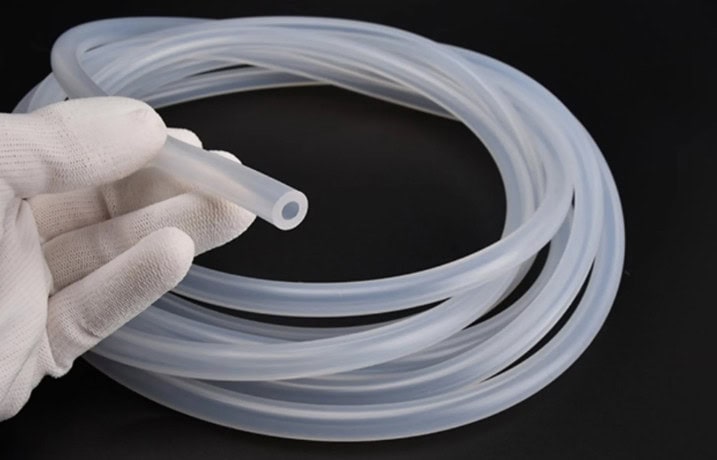
 |
Why Your Peristaltic Pump Requires Dedicated Silicone Tubing & How to Select the Right One
A peristaltic pump system is composed of three critical components: the driver, the pump head, and the tubing. Among these, the tubing is the primary consumable. Many users ask: “Since they are all silicone hoses, why must I use dedicated peristaltic pump tubing?”
The Unique Performance of Peristaltic Pump Silicone Tubing
Unlike standard industrial or food-grade silicone hoses, dedicated pump tubing is tailored for the “roller-squeeze” mechanism. The core differences lie in four key areas:
1. Fatigue Resistance & Compression Set
Standard Tubing: Meets basic elasticity needs but prone to permanent deformation and wall collapse after prolonged compression, leading to flow failure.
HINOTEK Dedicated Tubing: Utilizes a specialized formula to endure high-frequency cycles (tens to hundreds of times per minute). It features a low compression set and rapid “rebound” capability, preventing flow instability or leakage caused by tube deformation.
2. Pressure & Abrasion Durability
While standard hoses offer some wear resistance, they lack the raw material integrity required for pump-head dynamics. Dedicated tubing handles higher back-pressures and viscous or particle-laden media without clogging, ensuring continuous and stable fluid delivery.
3. Targeted Mechanical Strength
Standard silicone hoses have lower tensile and tear strength, making them suitable only for static, low-pressure applications. In contrast, peristaltic pump tubing is 3 to 5 times more wear-resistant. This prevents the tube from rupturing or “spallation” (shedding internal particles) under constant roller friction.
4. Application Scenarios & Certifications
Standard hoses are typically for general industrial drainage. Dedicated pump tubing is used in laboratories, pharmaceuticals, and food industries where fluid purity is paramount. HINOTEK offers models that meet:
- FDA Food Grade and USP Class VI Medical Grade certifications.
- Platinum-curing process: Eliminates precipitates and prevents contamination of sensitive samples or drugs.
A Professional Selection Guide for Pump Tubing
01 Pressure Resistance: Select the appropriate pressure rating based on your system requirements to ensure safe fluid delivery.
02 Chemical Compatibility: Analyze the properties of the pumped media. Ensure the tubing material is chemically resistant to avoid corrosion or degradation.
03 Dimensional Accuracy: Purchase precise sizes based on your pump head model. Proper wall thickness and inner diameter are vital for compatibility and accuracy.
04 Cost-Effectiveness: While prioritizing quality for critical experiments, evaluate the price-to-performance ratio to choose a high-durability solution that reduces the frequency of replacement.
Want to know more information about Peristaltic Pump? Visit our page: What is a peristaltic pump? Principles, Applications, and Selection.
Looking for high-performance laboratory solutions?
Explore HINOTEK’s range of professional lab equipment at www.HINOTEK.com